So, you’ve dropped some serious cash on a beast of a graphics card. Your PC is lit up like a Christmas tree, ready to pump out insane frame rates. But when you load up your favourite game… it just feels… meh. What’s the deal? Chances are, your monitor is the bottleneck. In South Africa, overlooking your display is a common mistake, but understanding gaming monitor performance is the key to unlocking the true power you’ve already paid for.
Why Gaming Monitor Performance is Your Secret Weapon
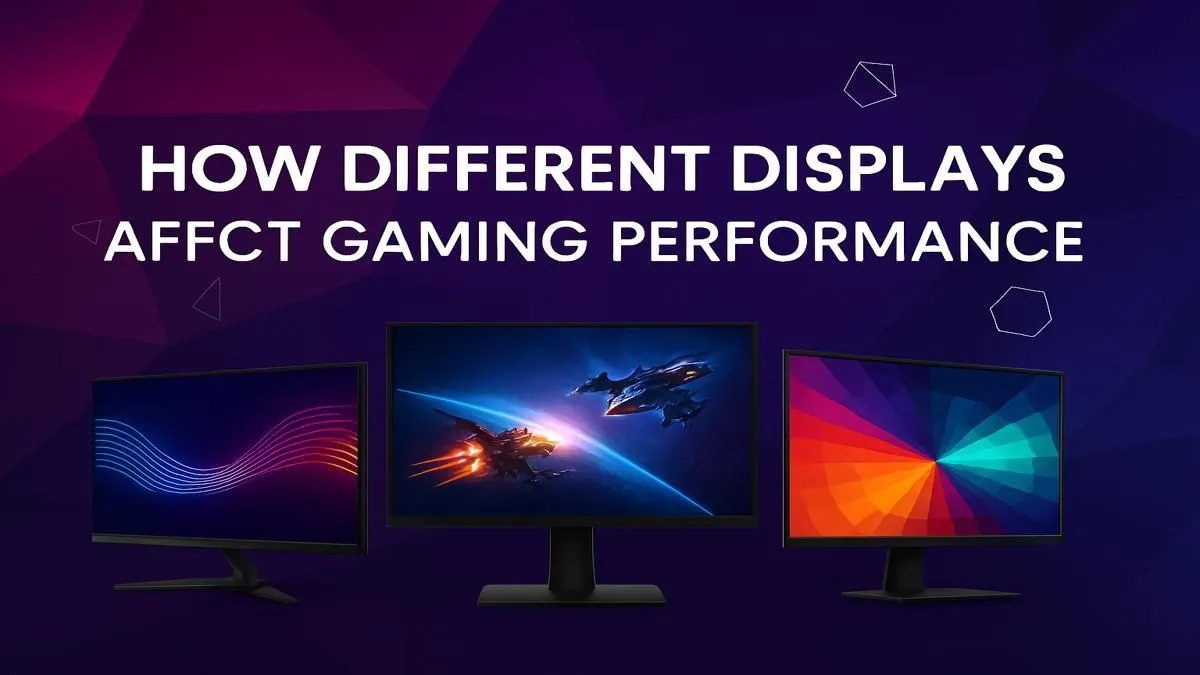
Think of your gaming rig as a high-performance race car. Your GPU is the engine, but your monitor is the tyres and suspension... it’s where the power actually meets the road. A basic 60Hz office monitor paired with an RTX 4080 is like putting budget tyres on a Ferrari. You simply can't use all that power. True gaming monitor performance isn't just about pretty colours; it’s about translating your PC's raw speed into a tangible advantage on screen. 🚀
This is true whether you're building a desktop rig from scratch or looking for a complete package. The display technology in the best gaming laptop deals is often a major selling point for a reason—it directly impacts your entire experience.
The Refresh Rate Revolution: From 60Hz to Victory
Let's get straight to the point. Your monitor's refresh rate, measured in Hertz (Hz), is the number of times it updates the image per second. Your game might be running at 150 frames per second (FPS), but if your monitor is only 60Hz, you're only seeing 60 of those frames. The rest are just… gone.
What does the jump to a higher refresh rate feel like?
- 60Hz: The old standard. It's fine for browsing, but in fast-paced games, motion can look blurry and choppy.
- 144Hz / 165Hz: This is the sweet spot for most competitive gamers. The difference is immediate and massive. Aiming is smoother, tracking moving targets is easier, and the overall game feels incredibly responsive.
- 240Hz+: The top tier for esports pros. The gains are smaller than the jump from 60Hz to 144Hz, but for those who need every possible edge, it can make a difference.
Upgrading your display is one of the most significant improvements you can make to how your games feel.
Pro Tip: Unlock Your Hertz ⚡
Just plugging in your new high-refresh-rate monitor isn't enough! Right-click your desktop, go to 'Display settings' > 'Advanced display settings', and make sure the refresh rate is set to its maximum value (e.g., 144Hz). You'd be surprised how many gamers forget this and play on 60Hz for months!
Response Time: Banishing Ghosts and Motion Blur
If refresh rate is about smoothness, response time is all about clarity. Measured in milliseconds (ms), it’s how quickly a pixel can change from one colour to another (typically grey-to-grey). A slow response time creates a blurry trail behind moving objects, a phenomenon gamers call "ghosting." 👻
In a fast-paced shooter, ghosting can obscure an enemy peeking from behind a corner, getting you eliminated. For gaming, you want a response time of 5ms or less, with 1ms being the ideal for competitive play. This focus on speed is what separates a gaming display from other high-performance screens, like those found on powerful workstation laptops, which often prioritise colour accuracy over raw pixel speed.
The Final Piece: Adaptive Sync (G-Sync & FreeSync)
Ever seen a weird horizontal line tear across your screen during intense action? That’s called screen tearing. It happens when your GPU's frame rate isn't synchronised with your monitor's refresh rate.
This is where Adaptive Sync technology comes in.
- NVIDIA G-Sync
- AMD FreeSync
Both technologies do the same core job: they force your monitor to adjust its refresh rate in real-time to match the FPS your graphics card is producing. The result? No tearing, less stutter, and buttery-smooth gameplay. It’s a crucial feature that completes the gaming monitor performance puzzle, ensuring all your components work together in perfect harmony.
Ready to See the Difference?
A great monitor doesn't just make your games look better—it makes you play better. Stop letting your screen be a bottleneck. Explore our massive range of laptop specials and high-performance monitors to find the perfect display to dominate your game.