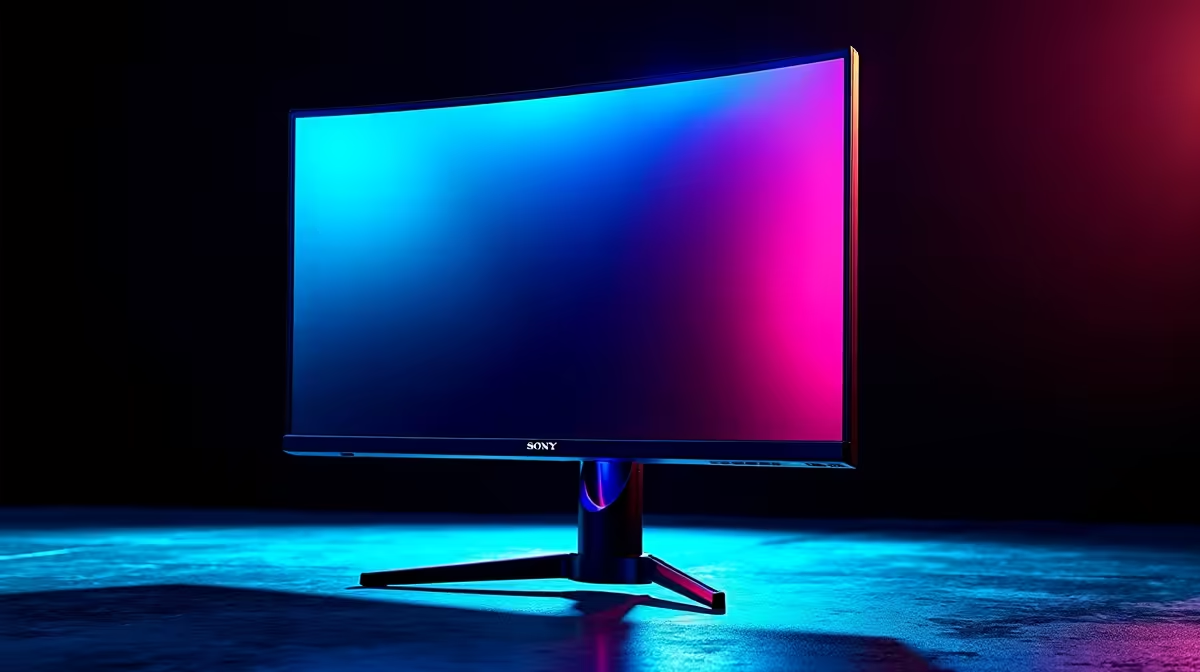
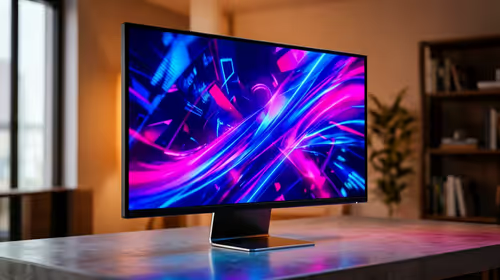
You’ve seen the "HDR" sticker on the box, promising visuals so real you could touch them. But on your new edge-lit monitor, the shadows in Helldivers 2 look… grey? And bright skies feel washed out? You're not imagining it. This is the infamous edge-lit gamma shift, a common frustration with many affordable HDR displays. We went hands-on to demystify this HDR myth, so you can spend your hard-earned Rands wisely. ✨
What is Edge-Lit Backlighting Anyway?
Before we dive into gamma, let's talk about the hardware. Most modern LCD monitors need a backlight to create an image. In an edge-lit display, LEDs are placed along the borders of the screen, and a special panel diffuses that light across the entire display.
This design is brilliant for creating incredibly thin and affordable screens. It's the reason we have so many sleek and budget-friendly options on the market. But, this method of lighting has a few inherent compromises, especially for high-contrast scenes. You can see this design across a wide variety of our PC monitors, from entry-level to mid-range.
The "Edge-Lit Gamma Shift" Problem Explained
So, what’s the big deal? The issue comes down to two things: local dimming and gamma.
- Local Dimming: This is a feature where the monitor tries to dim parts of the backlight to create deeper blacks. On an edge-lit screen, the "zones" it can control are large vertical or horizontal bands. This means dimming a small dark area might also dim the bright areas next to it, causing a blooming or halo effect.
- Gamma: In simple terms, gamma controls the screen's brightness curve… how it transitions from pure black to pure white.
When you combine limited local dimming with an aggressive HDR signal, you get the dreaded edge-lit gamma shift. The monitor struggles to show bright highlights right next to deep shadows. The result? Blacks appear grey and elevated, colours can look washed out, and the overall image loses its depth. This is especially noticeable when viewing the screen from even a slight angle.
So, Is HDR on Edge-Lit Monitors a Myth? 🚀
Not a total myth, but it's a massive compromise. The "HDR" label can be misleading. Many entry-level HDR monitors are certified as VESA DisplayHDR 400. This standard doesn't actually require any local dimming, which is crucial for true high dynamic range.
Essentially, the monitor can accept an HDR signal, but it lacks the hardware to display it properly. The backlight simply can't get bright enough for highlights or dim enough for shadows. When browsing all our gaming monitors, it's worth checking the detailed specs beyond just the "HDR" badge. Sometimes, a higher resolution can even make these backlight issues more apparent on lower-end stunning 4K monitors if the panel technology isn't up to scratch.
Check the VESA Spec! 🔧
When shopping, look for VESA DisplayHDR 600 or higher. This certification guarantees a higher peak brightness and, most importantly, requires the monitor to have some form of local dimming. It's a much better indicator of a true HDR experience than the basic HDR400 rating.
What's the Alternative? Finding Your Perfect Picture
If true HDR is out of your budget, don't stress. A top-tier SDR (Standard Dynamic Range) monitor will give you a far better gaming experience than a poor HDR one. Instead of chasing the HDR sticker, focus on these key specs:
- Panel Type: IPS panels offer the best colour accuracy and viewing angles, while VA panels provide superior contrast for deeper blacks.
- Refresh Rate: For gaming, 144Hz or higher is the sweet spot for buttery-smooth gameplay.
- Response Time: Look for 1ms (GtG) to minimise motion blur and ghosting.
For many gamers, immersion comes from more than just contrast. The enveloping view of curved monitors can pull you into the game world more effectively than mediocre HDR. And for those who need a second screen for Discord or streaming on the go, even modern portable monitors offer great colour without pretending to be HDR champs. Lastly, ensure your setup is perfect with the right monitor accessories, as a good quality cable is essential for a stable, high-refresh-rate signal.
The Evetech Verdict: Our Advice for SA Gamers
Here’s the bottom line: don't let marketing hype fool you. A noticeable edge-lit gamma shift can ruin an otherwise great panel. For most South African gamers, your money is better spent on a monitor with a high refresh rate, excellent colour accuracy, and a fast response time.
If your heart is set on HDR, save up for a display with Full-Array Local Dimming (FALD), Mini-LED, or OLED technology. For everyone else, a fantastic SDR experience is well within reach. You can often find a brilliant 1440p 165Hz IPS monitor for a great price in our best PC monitor deals. Choose wisely, and happy gaming!
Ready to See the Difference?
The world of monitors is complex, but understanding tech like edge-lit gamma shift helps you make a smarter choice. Explore our massive range of gaming monitors and find the perfect display to conquer your world.