Stage 4 hits. The power dies, and your screen goes black. Your inverter kicks in, but the real enemy is your PC’s slow boot time. By the time your old hard drive finally loads Windows and you reconnect to the server, the round is lost… and so is your patience. For South African gamers, a high-speed SSD isn't just a luxury; it's an essential tool for surviving the loadshedding schedule and staying competitive. ⚡
Why Loadshedding is a Hard Drive’s Worst Nightmare
Traditional Hard Disk Drives (HDDs) rely on spinning platters and a mechanical arm to read data. When the power is suddenly cut, this process can be violently interrupted, leading to two major problems for gamers:
- Painfully Slow Reboots: An HDD can take several minutes to boot up, run its checks, and load your game. During a 2-hour loadshedding slot, every second counts.
- Risk of Data Corruption: Sudden power loss can corrupt files, including your operating system or precious game saves.
This is where upgrading to one of Evetech's modern solid-state drives makes a world of difference.
The SSD Advantage: Your Secret Weapon Against Power Cuts
High-speed SSDs for gaming use flash memory, like a massive USB drive. They have no moving parts, making them incredibly fast and resilient. When the power returns, an SSD-equipped PC can boot up and be ready to game in under 20 seconds.
Imagine this: the power drops, your inverter takes over, and you're back on the Discord voice channel before your teammates even realise you were gone. That’s the power of an instant-on system. This rapid recovery transforms loadshedding from a game-ending disaster into a minor inconvenience. Reputable manufacturers offer a wide variety of options, from the budget-friendly and dependable options from Kingston to high-performance drives for serious enthusiasts.
Choosing the Right High-Speed SSD for Gaming
Not all SSDs are created equal. Here’s a quick breakdown to help you choose the best fit for your rig:
NVMe M.2 vs. SATA SSDs
- SATA SSDs: These look like small, 2.5-inch hard drives. They are a fantastic and affordable upgrade from any HDD, offering speeds up to 600MB/s. They are universally compatible with older and newer PCs.
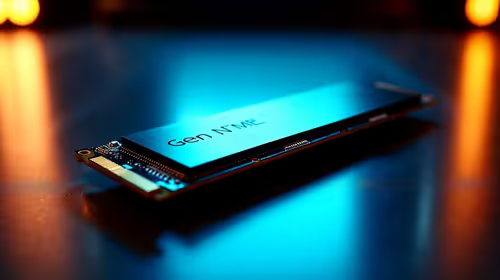
- NVMe M.2 SSDs: These are the pinnacle of performance. They look like a stick of RAM and plug directly into the motherboard, delivering mind-blowing speeds that can exceed 7,000MB/s. For the fastest possible boot and game-load times, an NVMe drive is the undisputed champion. You can find excellent performance-focused Corsair drives in this category.
Cloning Made Easy 🔧
Upgrading doesn't mean starting from scratch! Most SSDs from top brands like ADATA come with free cloning software (like Acronis True Image). This lets you copy your entire Windows installation, games, and files from your old drive to your new SSD without having to reinstall everything. It’s a massive time-saver.
How Much Storage Do You Need?
Modern games are huge. Call of Duty alone can swallow over 200GB. While a 500GB SSD is a good starting point for your operating system and a couple of favourite titles, we strongly recommend aiming higher. Investing in a spacious 2TB SSD ensures you have ample room for your entire library without constantly having to uninstall games to make space. When you consider the value, larger drives from top brands like ADATA often provide a better price-per-gigabyte.
The bottom line is clear. In the age of constant power interruptions, using high-speed SSDs for gaming is no longer just about shaving a few seconds off a loading screen. It's about resilience, recovery, and reclaiming your precious gaming time from loadshedding. Don't let a slow boot cost you another match. 🚀
Don't Let Loadshedding Win. A slow PC is a liability when the power is unpredictable. Upgrade to a lightning-fast SSD and get back in the game before the next round starts. Explore our massive range of solid-state drives and find the perfect upgrade for your rig.