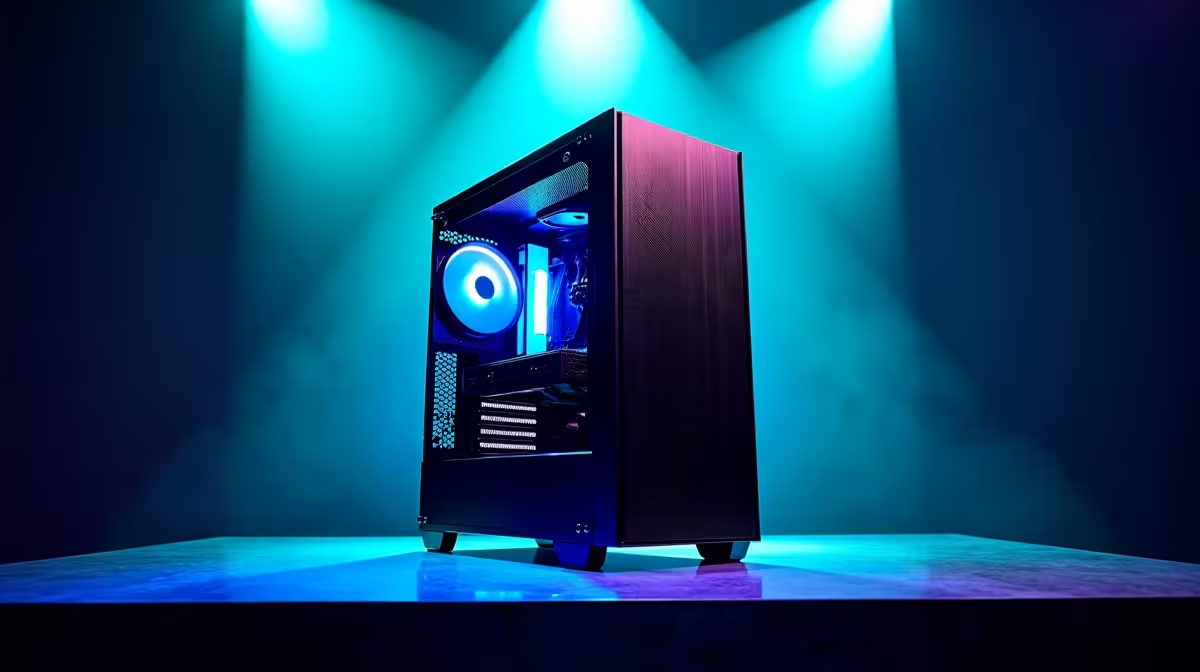
That sudden, dreaded silence. The lights flicker, your screen goes black, and a cold feeling washes over you. Was your game saved? Was that critical project file open? In South Africa, this isn't a rare disaster... it's just Tuesday. Effective an outage-ready PC protection is no longer a luxury for tech enthusiasts; it's a fundamental requirement for keeping your high-performance DeepSeek PC safe, fast, and ready for action when the power returns.
Everyday Reliability
It’s not just the sudden shutdown that poses a threat. The real danger often lies in the moments the power comes back on. This can create a power surge—a short, intense spike in voltage that can fry sensitive components like your motherboard, PSU (Power Supply Unit), and even your expensive graphics card.
Beyond the surge, there are other risks:
- Data Corruption: Abruptly cutting power can corrupt system files or, even worse, your game saves. Imagine losing hours of progress in Elden Ring or your entire Windows installation refusing to boot.
- Component Stress: Repeated sudden power cycles put unnecessary strain on all your PC's components, potentially shortening their lifespan.
- Hard Drive Damage: For those still using mechanical hard drives (HDDs), a sudden power loss can cause the read/write head to crash onto the platter, causing physical damage and permanent data loss.
Essential Hardware for PC Safety During Power Cuts
You wouldn't navigate a Highveld thunderstorm without an umbrella, so why leave your PC exposed? Investing in the right hardware is the single most important step you can take.
The Uninterruptible Power Supply (UPS) 🛡️
A UPS is your non-negotiable first line of defence. It's essentially a big battery that your PC plugs into. When an unexpected outage occurs, the UPS instantly switches to its battery, giving you precious minutes to save your work, exit your game, and shut down your machine safely. It also provides surge protection and "cleans" the power, ensuring your PC gets a stable voltage.
Choosing the Right UPS 💡
Look for the VA (Volt-Ampere) rating on a UPS. To find the right size for your rig, use an online power supply calculator to estimate your PC's total wattage, then add the wattage of your monitor. Choose a UPS with a VA rating that comfortably exceeds this total. A 1000VA-1500VA unit is a great starting point for most modern gaming PCs.
The Surge Protector Plug
Think of a surge protector as a gatekeeper. It sits between the wall socket and your UPS (or PC, if you don't have a UPS). Its job is to absorb and divert smaller, everyday power spikes. While it won't save you from a direct lightning strike or a massive post-power-restoration surges, it's an affordable and crucial layer of security. Warning: A simple multi-plug is NOT a surge protector! Make sure it explicitly states "surge protection" on the packaging.
Is Your PC Built to Handle the Pressure?
While protection is key, the resilience of your core components matters too. A high-quality power supply unit in a well-built machine is better equipped to handle minor fluctuations. Whether you're running one of the latest powerhouse NVIDIA GeForce gaming PCs, you need to know your investment is shielded.
The same logic applies to Team Red enthusiasts. The incredible performance from today's AMD Radeon gaming PCs demands clean, stable power to run at its peak without risking component integrity.
And for professionals whose livelihoods depend on their hardware, protecting a custom-built workstation PC isn't just about preventing hardware damage... it's about safeguarding countless hours of valuable work. Current prices and availability are best checked in the relevant Evetech category.