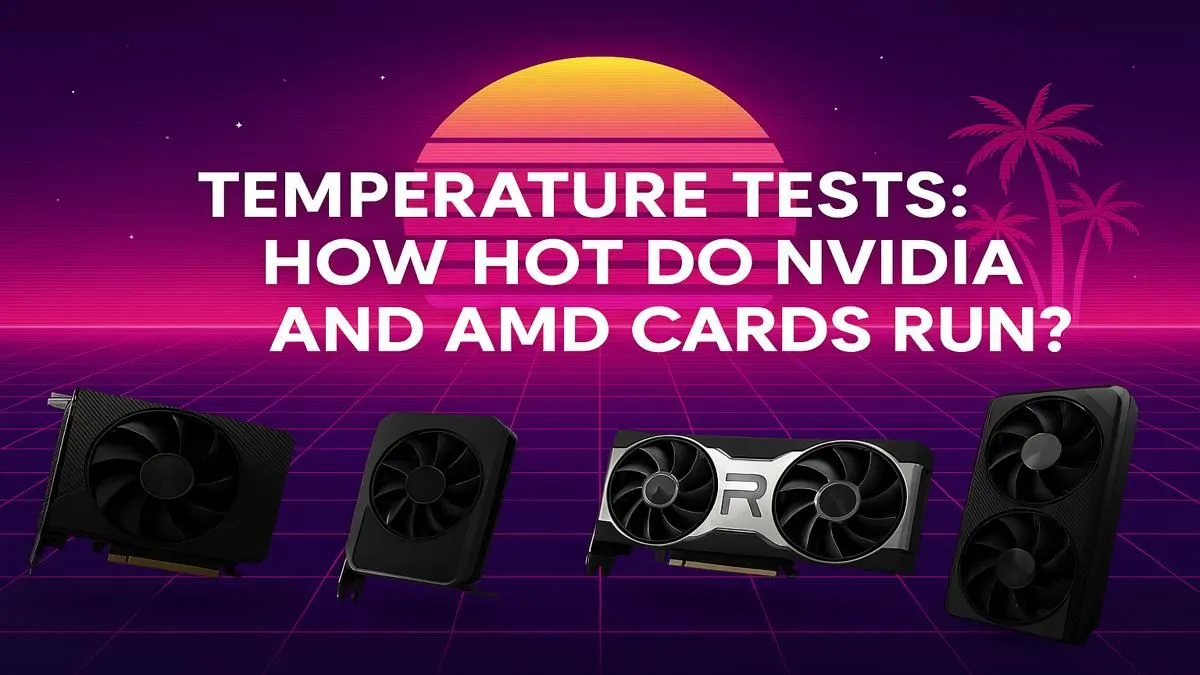
Is your gaming PC starting to feel more like a mini-braai after a long session? We've all been there. You're deep in a firefight in Helldivers 2, and the fans on your rig start screaming louder than your teammates. It's a classic sign your graphics card is working hard. But what is a normal GPU temp, and when should you start to worry? This guide breaks down the ideal NVIDIA vs. AMD temperature ranges for South African gamers.
Understanding Your GPU's Temperature
Before we dive into specifics, let's get one thing straight: GPUs are designed to get warm. Every time you render a beautiful landscape in Baldur's Gate 3 or push for 144 FPS, your graphics card is performing billions of calculations a second. This process generates heat as a byproduct.
A safe GPU temperature depends on several factors:
- Ambient Temperature: A hot day in Durban will naturally lead to higher PC temps than a cool evening in Cape Town.
- Case Airflow: How well does your PC case breathe? Good airflow can drop temperatures significantly.
- GPU Model: A high-end RTX 4090 will produce more heat than a budget-friendly card.
- Workload: Gaming is demanding, but tasks like video rendering can push your card even harder.
What's a Normal GPU Temp for NVIDIA GeForce Cards?
For decades, NVIDIA has been a powerhouse in the graphics world. When it comes to temperature, their cards are generally very predictable. For most modern NVIDIA GeForce graphics cards, you can expect the following ranges:
- Idle Temperature: 30°C to 50°C. This is when you're just browsing the web or sitting on your desktop.
- Gaming Load Temperature: 65°C to 85°C. This is the sweet spot where your card is performing optimally without overheating.
If your NVIDIA card is consistently pushing past 85°C, it will likely start to "thermal throttle"—automatically reducing its performance to cool down. Anything above 90-95°C is a red flag that needs immediate attention. 🔧
What's a Normal GPU Temp for AMD Radeon Cards?
AMD has made incredible strides with its RDNA architecture, offering fantastic performance. However, their temperature reporting can sometimes confuse new users. Many modern AMD Radeon graphics cards report two key metrics:
- GPU Temperature (Edge Temp): This is similar to NVIDIA's measurement. Under load, a normal GPU temp for an AMD card is also in the 65°C to 85°C range.
- Junction Temperature (Hotspot): This measures the hottest single point on the GPU die. This temperature is designed to be higher and can safely reach up to 110°C on some models, according to AMD.
So, don't panic if you see a high Junction Temperature! As long as your main GPU temp is under control, your card is operating as intended. ✨
How to Check Your GPU Temp 🌡️
The easiest way to monitor your GPU temperature is with software. AMD's own Adrenalin software has a great performance overlay (press CTRL+SHIFT+O in-game). For NVIDIA users, or for more detailed stats, free tools like MSI Afterburner or HWMonitor are excellent. They give you a real-time look at your temps, fan speed, and clock speeds.
Simple Steps to Lower Your GPU Temperature
If you're finding your card is running a bit too hot for comfort, don't stress. Here are a few simple things you can do to bring that GPU temperature down:
- Clean Your PC: Dust is the enemy of cool components. A quick clean of your case fans and GPU heatsink with compressed air can work wonders.
- Improve Case Airflow: Ensure your case fans are pointing the right way (intake at the front/bottom, exhaust at the back/top). Sometimes, even just taking the side panel off can show you if poor airflow is the culprit.
- Set a Custom Fan Curve: Using a tool like MSI Afterburner, you can tell your GPU fans to spin up earlier and faster, keeping heat at bay before it becomes a problem.
- Consider an Upgrade: If your card is a few years old and struggling with modern games, it might just be working too hard. Newer cards are often far more efficient, running cooler and quieter. If you think it's time, it's always worth checking out the best graphics card deals to see what's available. 🚀
Ready for a Cooler, Faster Gaming Experience?
Understanding your normal GPU temp is the first step to peak performance. If your card is constantly hitting its limits, it might be time for an upgrade. Explore our massive range of graphics cards and find the perfect model to keep your frames high and your temps low.