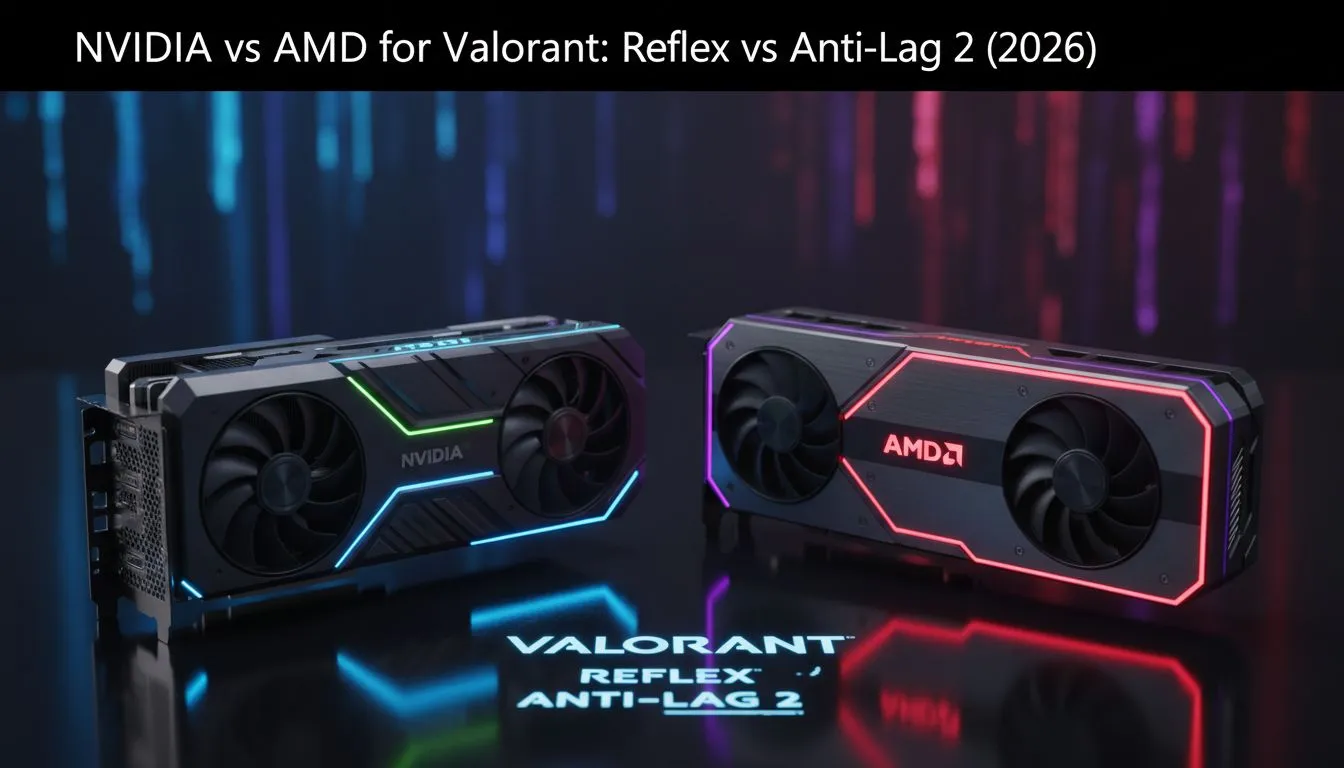
In the high-stakes world of Valorant, a single millisecond determines if you clutch the round or head back to the lobby. For South African players battling varying ping levels, choosing between NVIDIA Reflex vs AMD Anti-Lag 2: Best for Valorant (2026) is more than just a spec preference... it is a tactical necessity. Let’s break down which tech keeps your crosshair snappy. ⚡
Understanding System Latency in 2026
System latency is the delay between clicking your mouse and seeing that Vandal headshot register on screen. Both NVIDIA and AMD have refined their tech to near-perfection this year. If you are just starting your competitive journey, even our budget gaming PCs now support these features to give you a fighting chance against the pros.
Reflex and Anti-Lag 2 both aim to reduce the "click-to-display" pipeline... but they go about it in slightly different ways. NVIDIA focuses on tight integration between the GPU and the game engine. AMD has shifted toward a similar in-game implementation to ensure frame pacing remains consistent even during heavy utility usage.
Why NVIDIA Reflex Still Leads for Valorant
Reflex remains the gold standard for Riot’s tactical shooter. By synchronising the CPU and GPU, it effectively eliminates the render queue. This results in significantly lower input lag... which is vital when holding tight angles on Bind or Haven. When browsing the best gaming PC deals, you will notice most competitive players lean toward RTX cards for this specific advantage. 🚀
Valorant Latency Tip ⚡
Always enable 'Reflex Low Latency' to 'On + Boost' in your Valorant settings if you have an NVIDIA card. This keeps your GPU clock speeds high even when the CPU is the bottleneck. It ensures the lowest possible response times during intense site executes when abilities are flying everywhere.
AMD Anti-Lag 2: The Worthy Challenger
AMD has closed the gap significantly in 2026. Unlike the original driver-level version, Anti-Lag 2 is integrated directly into the Valorant game code. This allows for better synchronisation and fewer frame-time stutters. For those looking at buy-pcs-under-r20k, AMD builds offer incredible value without sacrificing that crisp, responsive feel in a firefight.
Hardware Requirements for Competitive Play
To truly feel the difference between these technologies, your hardware needs to keep up. A low-latency signal is wasted on a slow 60Hz office monitor. If you are aiming for 360Hz or higher to compete at the top of the Radiant leaderboard, you should consider our buy-pcs-above-r20k category. This ensures your frame times stay consistent and your hardware never holds you back. ✨
Final Verdict: NVIDIA Reflex vs AMD Anti-Lag 2: Best for Valorant (2026)
NVIDIA Reflex currently offers a slightly more mature ecosystem with better peripheral support... but AMD is right on its heels with aggressive pricing. If you want a plug-and-play experience that just works, checking out the latest pre-built PC deals is the fastest way to upgrade your setup before the next Premier season kicks off. 🔧
Ready to Dominate the Leaderboards? The battle between NVIDIA and AMD is fierce, but your choice depends on your budget and performance goals. Explore our massive range of gaming PC specials and find the perfect machine to give you the competitive edge in Valorant.