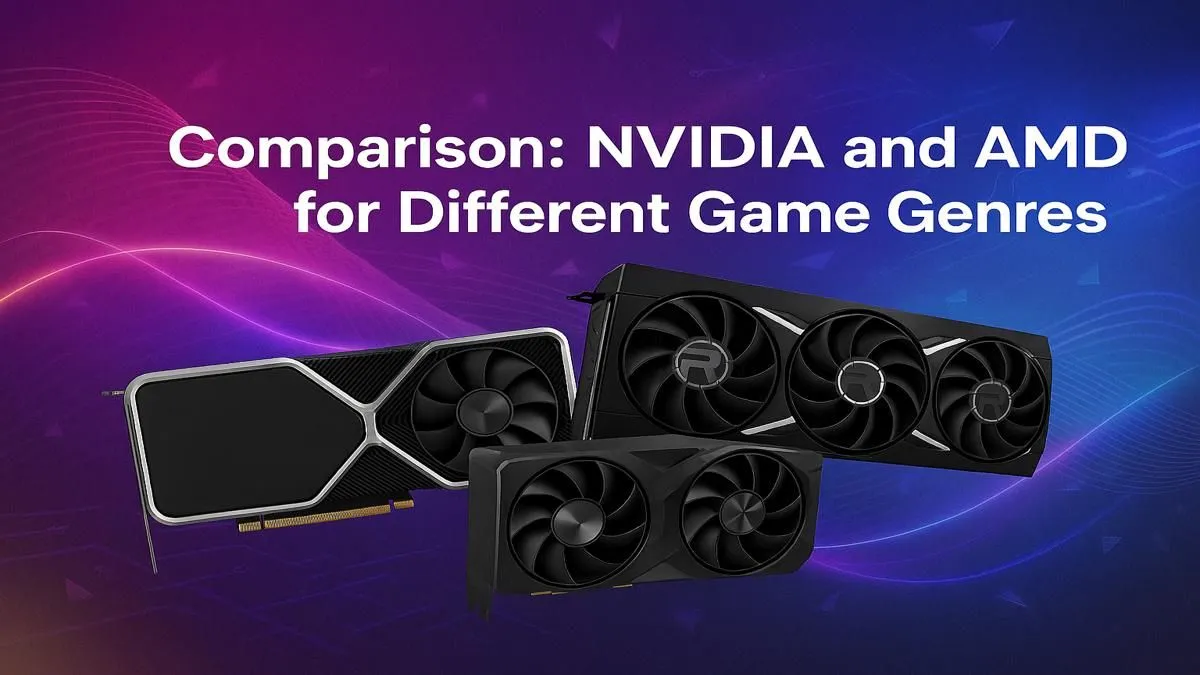
Choosing a new graphics card in South Africa feels like picking a side in a lifelong rivalry: Team Green or Team Red. The NVIDIA vs AMD gaming debate is more than just brand loyalty; it's about matching the GPU's strengths to the games you love most. Are you chasing buttery-smooth frames in Apex Legends or breathtaking visuals in Cyberpunk 2077? Your answer will point you to the right card for your rig and your budget. Let's settle the score.
The Core Difference: NVIDIA vs AMD Gaming Philosophy
At a high level, the battle between NVIDIA and AMD often boils down to features versus raw performance. NVIDIA has historically pushed the boundaries with proprietary tech like DLSS (AI-powered upscaling) and industry-leading ray tracing performance, which simulates realistic lighting. They offer a polished, feature-rich experience.
On the other hand, AMD has earned a reputation for incredible rasterization performance (the traditional way of rendering game graphics) and competitive pricing. They champion open standards like FidelityFX Super Resolution (FSR), which works on a wider range of hardware. The AMD vs NVIDIA for gaming decision isn't about one being definitively better, but which philosophy aligns with your priorities.
Matching Your GPU to Your Favourite Game Genre
The best way to choose between Team Green and Team Red is to look at the games you actually play. A card that excels in one area might not be the optimal choice for another.
For Competitive Shooters & High-Refresh Rate Gaming 🎯
Games: Valorant, CS:GO, Apex Legends, Call of Duty
In the competitive scene, every frame counts. The goal here is maximum FPS at 1080p or 1440p to get the smoothest gameplay and quickest reaction times. Both brands deliver fantastic high-refresh-rate performance, but this is where AMD's Radeon series often presents incredible value, offering exceptional raw performance for your Rand. Technologies like AMD's Anti-Lag are also designed to reduce input latency, giving you a critical edge.
For AAA Cinematic Epics & Ray Tracing ✨
Games: Cyberpunk 2077, Alan Wake 2, Portal with RTX
If you're here for the eye candy—stunning visuals, realistic lighting, and cinematic immersion—NVIDIA currently holds the advantage. Their dominance in ray tracing performance is undeniable. When you enable features like DLSS 3 with Frame Generation, NVIDIA's powerful GeForce GPUs can deliver a visually spectacular and surprisingly smooth experience, even with all the graphical settings cranked to the max.
Easy Game Optimisation 🔧
NVIDIA and AMD offer software suites (GeForce Experience and AMD Software: Adrenalin Edition) that can scan your game library and suggest optimal settings with a single click. It's a fantastic starting point for balancing performance and visual quality without spending hours in settings menus.
The Final Verdict: Which GPU Wins in South Africa?
So, who wins the NVIDIA vs AMD gaming showdown? The real winner is you, the gamer. The competition is so fierce that there's a perfect card for almost every budget and playstyle.
- Choose NVIDIA if: You want the best-in-class ray tracing, access to DLSS 3 Frame Generation, and a mature ecosystem of features for streaming and content creation.
- Choose AMD if: You prioritise incredible rasterization performance for your money, prefer open-source technologies like FSR, and mainly play competitive titles where raw FPS is king.
Ultimately, the best decision comes from looking at current performance benchmarks for your favourite games and seeing what fits your budget. To get the best performance for your ZAR, it's always smart to check out the latest graphics card deals and find that sweet spot between price and power. 🚀
Ready to Power Up Your Rig? The NVIDIA vs AMD gaming debate comes down to your games, your budget, and the features you value most. The best GPU is the one that's right for you. Explore our massive range of graphics cards and find the perfect engine for your gaming adventures.