Staring at a loading screen while your mates are already dropping into the action? It’s a classic frustration for South African gamers. The culprit might be your storage drive. But with all the jargon out there, choosing between NVMe and SATA SSDs can feel like a mission. Let's cut through the noise and show you exactly what the NVMe vs SATA speed difference means for your rig and your gaming experience.
Understanding the Core Difference: NVMe vs SATA
Think of it like this: a SATA SSD is like a reliable bakkie on a well-paved road. It’s a massive upgrade from an old, slow hard drive and gets the job done efficiently. An NVMe SSD, however, is a Formula 1 car on a dedicated racetrack. 🏎️ It's built for one thing: pure, unadulterated speed.
The real difference lies in the technology they use to communicate with your PC.
- SATA (Serial ATA) uses an older protocol (AHCI) designed for spinning hard drives. It's limited to a single lane for data.
- NVMe (Non-Volatile Memory Express) was built from the ground up for modern flash storage, using the PCIe bus to create multiple lanes for data. This direct connection to the motherboard obliterates the bottlenecks SATA faces.
Whether you're building a new PC or upgrading an old one, understanding these fundamentals is key to choosing from the wide range of SSDs available today.
The Speed Showdown: An Infographic in Words
Numbers don't lie. While benchmarks can vary, the performance gap in the NVMe vs SATA speed debate is staggering. Here’s a quick breakdown of the typical maximum sequential read speeds you can expect:
- Traditional Hard Drive (HDD): ~150 MB/s
- SATA III SSD: ~550 MB/s
- PCIe 3.0 NVMe SSD: ~3,500 MB/s
- PCIe 4.0 NVMe SSD: ~7,000+ MB/s
- PCIe 5.0 NVMe SSD: A blistering 12,000+ MB/s 🚀
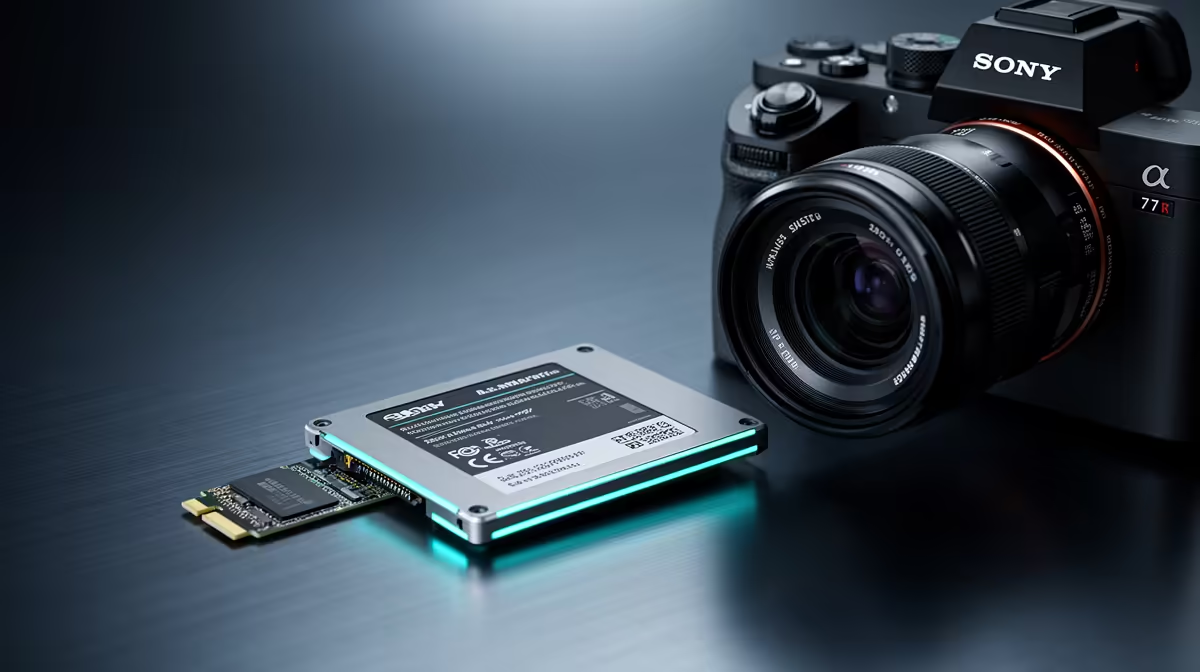
As you can see, even an entry-level NVMe drive is about six times faster than a top-tier SATA SSD. For budget builds or secondary storage for your massive game library, a reliable 2.5-inch SATA SSD still offers fantastic value for money.
Check Your Motherboard! 🔧
Before you buy an NVMe drive, make sure your motherboard has an M.2 slot that supports the NVMe protocol (not just SATA). Check your mobo's manual or specs page online to confirm compatibility and avoid a costly mistake!
What Does NVMe vs SATA Speed Mean for Your Gaming?
So, how does this insane NVMe speed vs SATA performance translate into your daily gaming sessions in SA?
It's all about access. Games are constantly loading textures, models, and map data from your drive. A faster drive means less waiting and a smoother experience.
- Drastically Reduced Loading Times: Jump into levels in games like Baldur's Gate 3 or Cyberpunk 2077 seconds faster than your friends on older drives.
- Smoother Open Worlds: A fast NVMe drive helps eliminate annoying texture pop-in as you sprint or drive through massive game worlds, keeping you immersed.
- Snappier System: Your entire PC feels more responsive. Windows boots in a flash, applications open instantly, and file transfers are over before you can blink. ✨
Is an NVMe SSD Always the Right Choice?
For your primary drive? Absolutely. The performance improvement in the SATA vs NVMe comparison is undeniable. Installing your operating system and your most-played games on an NVMe drive is one of the most impactful upgrades you can make to your PC. For this critical role, investing in one of the latest blazing-fast NVMe SSDs makes perfect sense.
However, SATA still has its place. For storing a large library of games you don't play every day, or for media files and backups, a larger-capacity SATA SSD provides a cost-effective solution without compromising too much on the benefits over a mechanical hard drive.
Ready to Upgrade Your Speed? The difference between NVMe and SATA speed is clear. Stop waiting and start playing. Check out our latest SSD deals in South Africa for performance that leaves lag in the dust.