Stuttering frames in the middle of a tense firefight in Apex Legends? Or maybe your beautiful world in Baldur's Gate 3 feels more like a slideshow? You're not alone. For South African gamers, getting silky-smooth performance is the ultimate goal. The secret often lies in a delicate dance between your two most critical components. This guide will show you exactly how to optimize CPU and GPU for gaming, ensuring your rig runs at its absolute peak. 🚀
Why CPU and GPU Optimization is Key for Smooth Gameplay
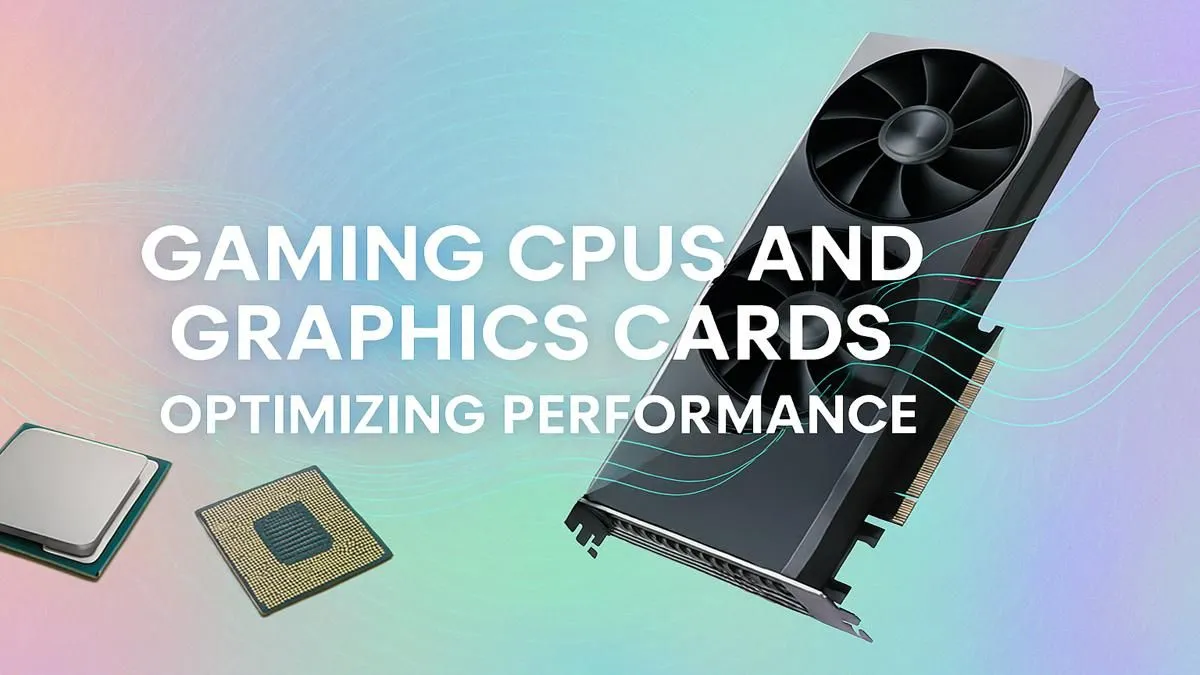
Think of your PC as a team. Your Central Processing Unit (CPU) is the coach—it handles game logic, physics, AI, and tells the rest of the system what to do. Your Graphics Processing Unit (GPU) is the star player—it takes those instructions and renders the stunning visuals you see on screen. When they work in harmony, you get high frame rates and a flawless experience.
But if one is significantly slower than the other, you get a "bottleneck." This is where performance chokes. For example, a powerful GPU paired with an old CPU means the GPU is sitting around waiting for instructions. Effective CPU and GPU optimization is all about making sure both parts of your team are pulling their weight. Getting this balance right starts with choosing the right CPU processor for your specific gaming needs from the get-go.
Quick Software Fixes to Optimise Your CPU and GPU
Before you think about spending any Randelas on new hardware, there are several free and easy software tweaks that can provide a serious performance boost. Learning how to optimize your CPU and GPU for gaming on the software side is the first, most crucial step.
Update Your Graphics Drivers
This is non-negotiable. NVIDIA, AMD, and Intel constantly release driver updates that include performance improvements, bug fixes, and optimisations for new games. Keeping your drivers current is the single easiest way to ensure your GPU is running as the developers intended.
Adjust In-Game Settings 🔧
Every game's settings menu is a powerful tool. Here’s a quick breakdown:
- Resolution: Primarily GPU-bound. Lowering from 4K to 1440p can drastically increase frames per second (FPS).
- Shadow Quality: Often a heavy load on both the CPU and GPU. Dropping this from "Ultra" to "High" can give you a nice FPS bump with minimal visual impact.
- Texture Quality: This mainly affects your GPU's VRAM. If you have a card with plenty of VRAM (e.g., 8GB+), you can usually keep this high.
- Anti-Aliasing: Techniques like MSAA are very GPU-intensive. Consider using less demanding alternatives like FXAA or TAA if your frames are suffering.
Pro Gamer Tip ⚡
into your GPU's control panel (NVIDIA Control Panel or AMD Software: Adrenalin Edition). Look for settings like "Power Management Mode" and set it to "Prefer maximum performance." This ensures your card doesn't throttle down during intense gaming sessions, giving you every last drop of power.
Tweak Your Operating System
Windows has built-in features that can help.
- Enable Game Mode: In Windows 10 and 11, this setting prioritises system resources for your game.
- Use the Ultimate Performance Power Plan: This keeps your CPU running at higher clock speeds.
- Close Background Apps: Make sure unnecessary browsers, launchers, or other programs are closed to free up CPU and RAM resources.
Is it Time for an Upgrade? Identifying a Bottleneck
What if you’ve tried all the software tricks and your performance still isn't where you want it? It might be time to look at your hardware. The key is to identify which component is holding you back.
You can use monitoring software like MSI Afterburner to watch your component usage while gaming.
- CPU at 100%, GPU at 60%? You have a CPU bottleneck. Your processor can't keep up with your graphics card. An upgrade to one of the latest Intel Core processors could be the solution.
- GPU at 100%, CPU at 50%? You have a GPU bottleneck. This is actually ideal in most cases, as it means your graphics card is being fully utilised. But if the FPS is too low, you need a more powerful GPU.
- Both near 100%? Your system is well-balanced... but it may simply not be powerful enough for the games and settings you're trying to run.
For CPU-intensive tasks and modern gaming, exploring the capabilities of powerful AMD Ryzen CPUs is also a fantastic option, renowned for their multi-core performance. A hardware refresh is the final step to truly optimize your CPU and GPU for gaming and eliminate performance ceilings for good. ✨
Ready to Unleash Your PC's True Power? Software tweaks can only go so far. When you're ready to eliminate bottlenecks for good, a strategic upgrade is the ultimate solution. Explore our massive range of PC components and find the perfect hardware to dominate the competition.