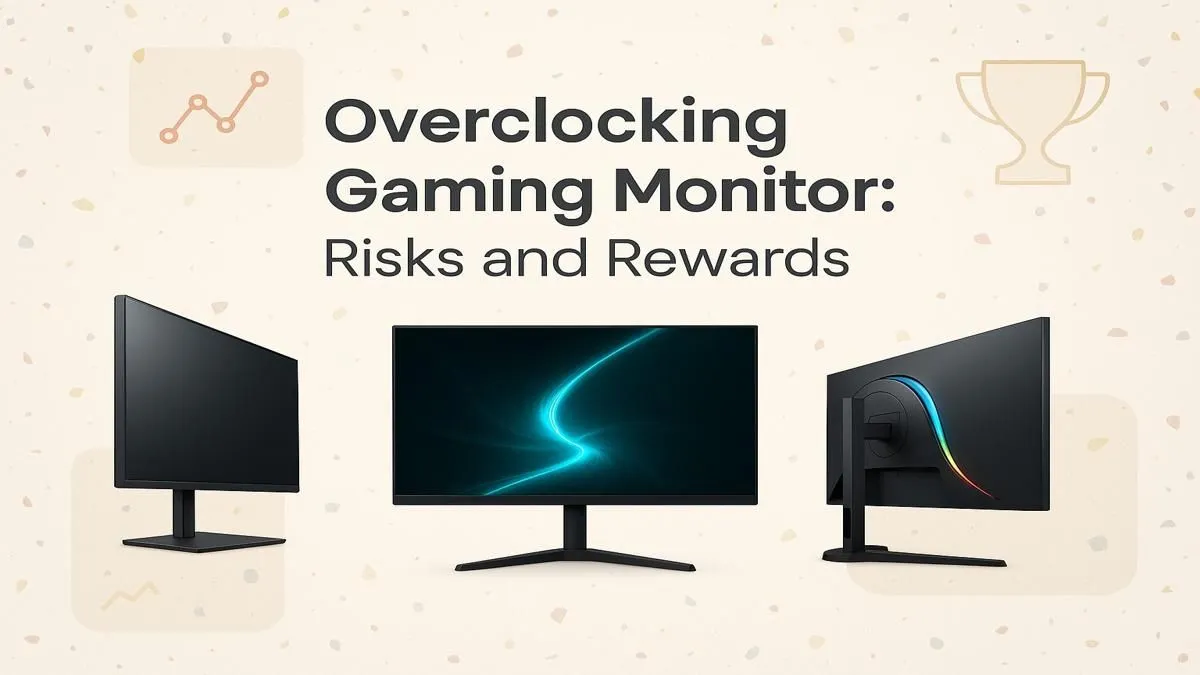
Staring at your screen, you swear you clicked first. But the killcam tells a different story. In competitive games like Valorant or Apex Legends, every millisecond counts, and a standard 60Hz monitor can feel like you’re playing in yesterday’s news. What if you could squeeze extra performance from your current display for free? That's the tempting promise when you decide to overclock monitor refresh rates. It's a path to smoother gameplay... but it's not without its pitfalls.
What is Monitor Overclocking, Really?
Think of it like tuning a car's engine. Your monitor arrives from the factory set to a specific, guaranteed-stable refresh rate (e.g., 60Hz). To overclock your monitor means to manually push its internal hardware to refresh the image more times per second—say, from 60Hz to 75Hz. 🚀
This isn't some dark magic. It's done through your graphics card's software (like NVIDIA Control Panel or AMD Software) by creating a custom resolution profile with a higher refresh rate. The goal is to find the highest stable frequency your specific panel can handle without causing issues. While many displays have some headroom, the specs on many PC monitors are set for a reason: long-term stability.
The Potential Rewards: Why Bother?
So, why risk it? The primary reward is smoother motion. The jump from 60Hz to just 75Hz is noticeable, making mouse movements feel more responsive and reducing motion blur.
- Competitive Edge: Faster screen updates mean you see enemy movements a fraction of a second sooner.
- Better Visuals: Gameplay looks and feels more fluid, making for a more immersive experience. This is especially satisfying on today's immersive curved monitors.
- It's Free: It costs nothing but time to try and get a performance boost.
For gamers on a tight budget, learning how to overclock a monitor can be a temporary solution to gain a slight edge while saving up for a true high-refresh-rate display.
The Inescapable Risks of an Overclocked Monitor
Before you dive in, you need to understand the trade-offs. Pushing your hardware beyond its certified limits is a gamble. The risks of an overclock monitor setup are real and can be costly.
Voiding Your Warranty
This is the big one. The moment you run your monitor outside of its factory specifications, you likely void its warranty. If the panel dies a week later—even from an unrelated issue—the manufacturer may refuse to cover it.
Visual Glitches and Artifacts 👾
A failed overclock isn't always dramatic. More often, it results in annoying visual problems:
- Frame Skipping: The monitor claims it's running at a higher refresh rate, but it's actually dropping frames, resulting in stuttery motion.
- Artifacts: You might see weird lines, flickering, or incorrect colours on screen.
- Black Screens: Pushing too far can simply cause the monitor to display nothing until you revert the settings. This is especially true for demanding high-resolution 4K and 5K monitors that are already working hard.
Reduced Lifespan
Running components hotter and faster than they were designed for can shorten their lifespan. While it might not kill your monitor overnight, an aggressive overclock could shave months or even years off its operational life.
Crucial Test: Is Your Overclock Legit? ⚡
you apply an overclock, you MUST test for frame skipping. Go to a website like testufo.com frameskipping. If the test shows any issues, your overclock is not stable, and you're getting a worse experience, not a better one. Lower the refresh rate by 1-2Hz and test again. A high-quality DisplayPort cable from our range of [monitor accessories](https: www.evetech.co.za PC-Components buy-monitor-accessories-368) is also non-negotiable for stable, high-refresh-rate signals.
Is It Worth It in 2024?
Years ago, monitor overclocking was a popular trick. But today, the landscape is different. High-refresh-rate gaming monitors are more affordable than ever. The small, uncertain gains from overclocking a 60Hz panel to 72Hz pale in comparison to the guaranteed, buttery-smooth experience of a native 144Hz or 165Hz display. You also don't have to worry about stability issues or a voided warranty.
Instead of spending an afternoon wrestling with settings and tests for a minor boost, that time could be better spent weighing the risks against browsing all gaming monitors for a guaranteed upgrade. And for LAN parties or travel, trying to replicate a tricky overclock is a hassle; sometimes a dedicated portable monitor is a much simpler solution.
The bottom line: While you can overclock a monitor, the question is should you? For most South African gamers, the risk isn't worth the small reward anymore.
Ready for a Guaranteed Performance Boost?
Monitor overclocking is a gamble, but a brand-new, high-refresh-rate monitor is a sure thing. Stop worrying about stability and warranties. Explore our massive range of gaming monitors and find the perfect panel to dominate the competition.