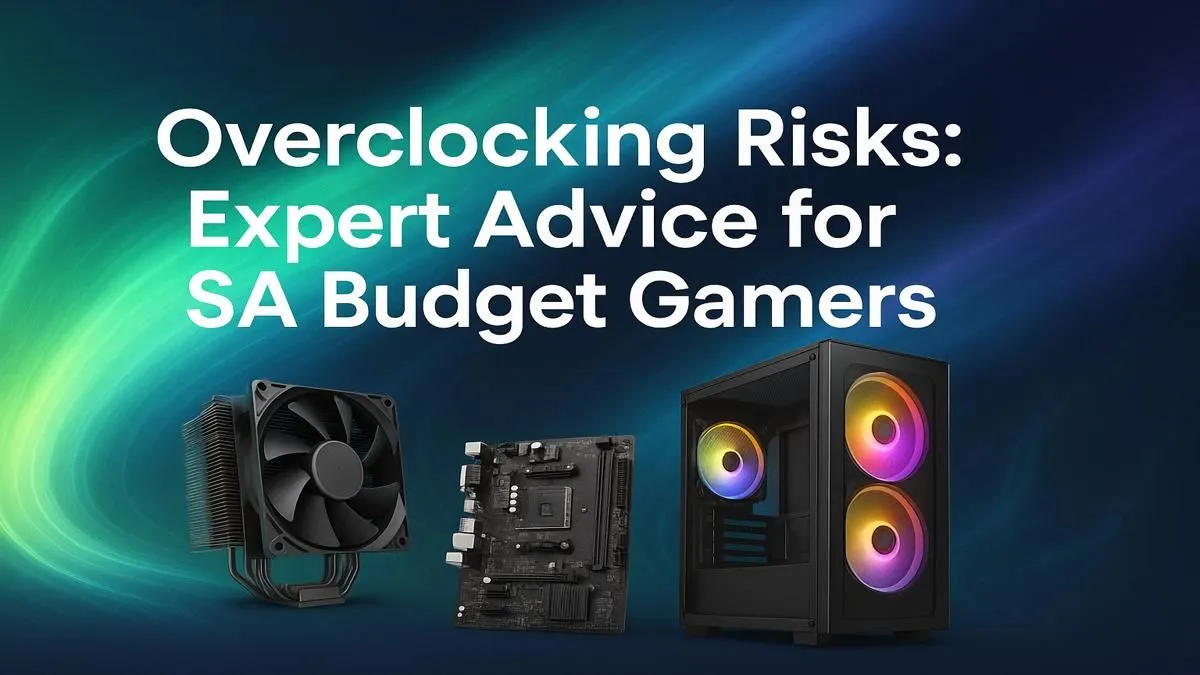
Tempted to squeeze some extra juice from your PC? We get it. The idea of 'free' performance by overclocking is tempting, especially when you're building on a tight budget here in South Africa. But before you start tweaking voltages and clock speeds, it’s crucial to understand the very real overclocking risks. Is a potential 5% performance boost worth jeopardising your entire rig? Let's dive in and see if it's a smart move for your budget PC. ⚡
Understanding the Overclocking Gamble
At its core, overclocking is the process of manually forcing a component—usually your CPU or graphics card—to run faster than its official factory speed rating. Think of it like tuning a car's engine. You're pushing the hardware beyond its certified limits to extract more power.
For enthusiasts with high-end cooling and motherboards, this can be a rewarding hobby. However, for a typical budget PC, it introduces a level of risk that often isn't justified by the minor performance gains. The dangers of overclocking are not just theoretical; they can have real, expensive consequences.
The Major Overclocking Risks You Can't Ignore
Before you even consider touching those BIOS settings, you need to be aware of the potential downsides. These overclocking risks can turn your dream budget build into a very expensive paperweight.
🔥 Heat: The Silent Killer
The number one enemy of any PC component is heat. When you increase a CPU's frequency and voltage, it generates significantly more thermal energy. Your stock or budget cooler, designed for standard operation, might not be able to cope. This can lead to thermal throttling (where the CPU slows itself down to prevent damage), defeating the whole purpose of overclocking, or worse… permanent hardware damage.
📉 System Instability
An unstable overclock is a recipe for frustration. You might experience random crashes, the infamous Blue Screen of Death (BSOD), or data corruption. Imagine being in the final circle in Warzone only for your PC to crash because your overclock wasn't 100% stable. This instability is one of the most common overclocking risks and can be incredibly difficult to diagnose and fix.
voided Warranties
This is a big one for anyone on a budget. Most manufacturers, including Intel and AMD, state that their standard warranty does not cover damage caused by running their products outside of published specifications. If you push your CPU too far and it fails, you're on your own. That's a costly gamble to take with a brand-new component.
Is Overclocking Worth It for a Budget SA Build?
So, we come to the big question: is overclocking worth it for your setup? For the vast majority of South African gamers with budget to mid-range PCs, the answer is likely no.
Modern CPU processors from both Intel and AMD are incredibly efficient and feature sophisticated boost technologies that automatically push performance to safe limits when needed. The small, often unnoticeable, frame rate increase you might get from a manual overclock simply doesn't outweigh the risks of instability, heat damage, and a voided warranty. Your money and time are better spent elsewhere.
Smarter Alternatives to Risky Overclocking
Instead of trying to force extra performance out of an entry-level part, a much safer and more effective strategy is to invest in slightly better hardware from the get-go. The performance difference between CPU tiers is far more significant and reliable than any risky overclock.
For example, the real-world gaming and productivity jump you get by choosing a solid Intel CPU like a Core i5 over an i3 is massive and comes with guaranteed stability and warranty coverage. You get more cores, higher boost clocks, and a better overall experience without any of the headaches.
The Safest 'Overclock' 🚀
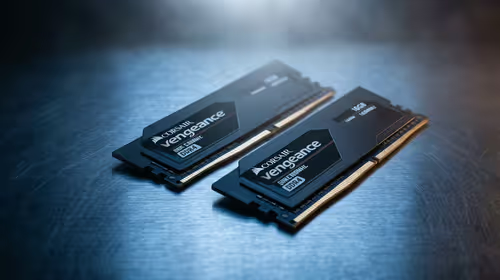
Before you even think about manual CPU overclocking, make sure you've enabled XMP (for Intel) or EXPO DOCP (for AMD) in your BIOS. This one-click setting runs your RAM at its advertised speed, not the slower default. It's a safe, stable, and often significant performance boost, especially for gaming, with virtually zero risk.
Similarly, the value offered by today's AMD CPUs is exceptional. A processor like a Ryzen 5 offers fantastic multi-core performance that will serve you well in gaming and content creation for years to come, all while running efficiently within its designed thermal limits. A smart purchase is always better than a risky tweak.
Ultimately, overclocking is a fascinating field for those with the budget for premium components and the time to test extensively. But for the everyday gamer building a reliable rig in SA, focusing on a balanced build with quality components is the undisputed path to victory. ✨
Ready for a Real Performance Boost?
Instead of gambling with overclocking risks, make a guaranteed upgrade. A new CPU can offer a massive, stable leap in performance for gaming and productivity. Explore our massive range of CPU processors and find the perfect heart for your rig today.