Staring at a render progress bar that barely moves... every South African video editor knows the pain. You've heard the whispers in tech forums about a free performance upgrade: overclocking. But is pushing your hardware to its limits actually a smart move for creative work? Is overclocking for video editing a secret weapon, or a recipe for disaster? Let's find out.
The Core Concept: What is Overclocking?
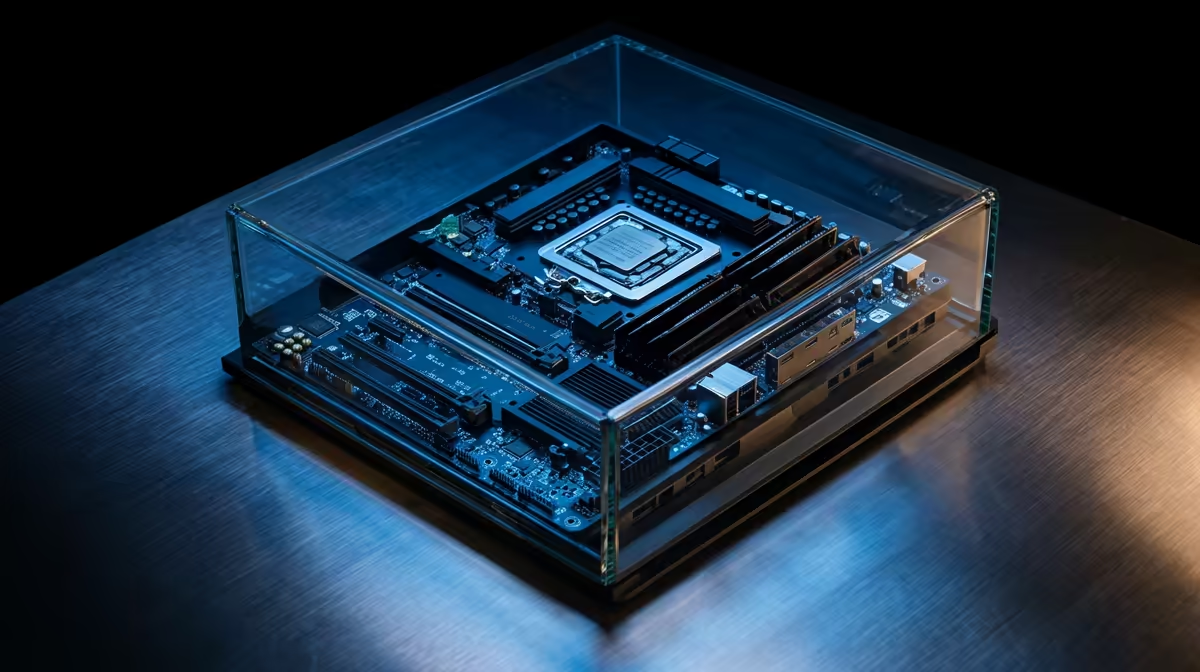
In simple terms, overclocking is the process of manually increasing the clock speed of your components—usually your CPU or GPU—beyond the manufacturer's default settings. Think of it as tuning your car's engine. The factory gives you a safe, reliable speed, but with a bit of tweaking (and proper cooling), you can unlock extra horsepower. ⚡
For video editors, this "horsepower" directly translates to how fast your computer can process information, which is critical for demanding tasks.
The Performance Boost: Overclocking for Video Editing
When it works, the performance boost from overclocking can be noticeable. It targets the exact bottlenecks that slow down your creative workflow.
Faster Renders & Exports
This is the big one. Your CPU does the heavy lifting when exporting your final video. A higher clock speed means it can process each frame faster, shaving valuable minutes or even hours off your render times. Processors with many cores, like those found in our powerful AMD Ryzen PCs, benefit immensely from this as every core gets a speed bump.
Smoother Timeline Playback
Ever tried scrubbing through 4K footage with colour grades and effects, only for it to lag and drop frames? A snappy single-core performance, often a strong suit for the CPUs in custom Intel PC deals, is crucial here. Overclocking your CPU can make your timeline feel more responsive, allowing for a smoother, more intuitive editing experience.
Accelerated Effects & GPU-Intensive Tasks
Modern editing software like Adobe Premiere Pro and DaVinci Resolve uses the graphics card (GPU) to accelerate effects, transitions, and even encoding. Pushing your GPU's clock speed can significantly speed up these tasks. Whether you're running a beastly rig from our NVIDIA GeForce gaming PCs range with CUDA acceleration or a machine from our lineup of AMD Radeon gaming PCs, a stable GPU overclock can make a real difference.
Editing Pro Tip ✨
Instead of overclocking, try using proxies! Most editing software lets you create low-resolution copies (proxies) of your high-res footage. You edit with the smooth, lightweight proxy files, and the software automatically switches back to the original high-quality files for the final export. It's a massive performance boost with zero hardware risk.
The Risks: Is the Squeeze Worth the Juice? 🧐
Before you dive into your BIOS settings, it's crucial to understand the downsides. Overclocking for video editing isn't a free lunch; it comes with significant risks, especially for professionals who rely on their machines for their income.
- Heat & Instability: Pushing components harder generates more heat. Without a top-tier cooling solution (think large air coolers or liquid AIOs), you risk overheating, which leads to performance throttling or, worse, system crashes right in the middle of a project.
- Reduced Lifespan: Running your hardware at higher voltages and temperatures 24/7 can degrade the silicon over time, potentially shortening its lifespan.
- Voided Warranties: Most manufacturers will void your warranty if they find out you've overclocked a component that has failed. This could leave you with a very expensive paperweight.
For many professionals, the risk of an unstable system isn't worth the potential time saved. A crash during a render could cost you more time than the overclock would have saved in the first place. This is why many opt for professionally built workstation PCs, which are designed for maximum stability and performance under pressure.
The Verdict: Should You Overclock Your Editing PC?
So, is it worth it? The answer depends entirely on you.
If you're a hobbyist or an enthusiast who loves tinkering, has a robust cooling system, and understands the risks, overclocking can be a rewarding way to squeeze extra performance from your rig.
However, if you're a professional whose livelihood depends on a rock-solid, reliable machine, the argument gets weaker. The potential for instability and voided warranties often outweighs the moderate performance gains. For mission-critical work, a safer bet is to invest in a powerful, well-balanced system from the start. A selection of expertly configured pre-built PC deals often provides optimised performance right out of the box, with full warranty coverage and peace of mind. 🚀
Ultimately, overclocking for video editing is a high-risk, medium-reward strategy. For those who need guaranteed performance without the gamble, a purpose-built machine is almost always the smarter choice.
Ready for Uncompromising Performance?
Instead of risking system stability, why not invest in a machine built for the job? Our workstation PCs are optimised for creative workloads, giving you the power and reliability you need to hit every deadline. Explore our range of purpose-built Workstation PCs and render your next masterpiece without the stress.