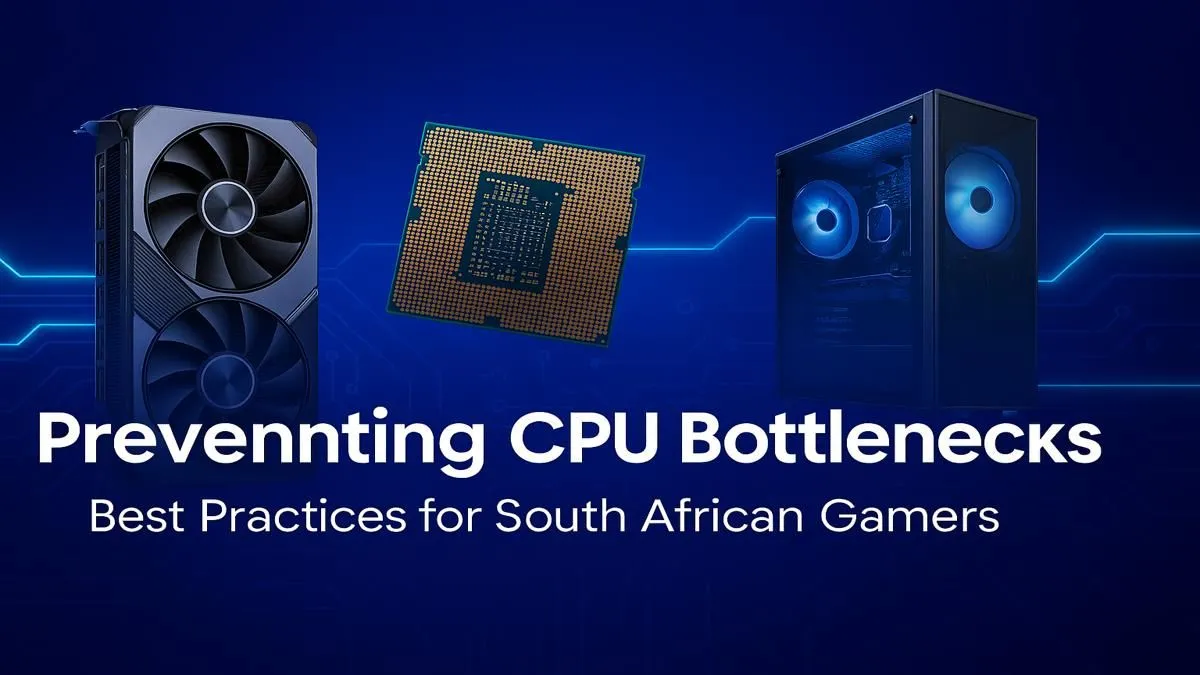
You've just dropped some serious ZAR on a beastly new graphics card, ready for silky-smooth frames in Helldivers 2. You fire it up... and it's a stuttering mess. What gives? Before you blame Eskom for your PC's woes, you might be facing a classic performance thief: a CPU bottleneck. This guide will help you spot it, fix it, and finally unlock the power you paid for right here in South Africa.
What Exactly is a CPU Bottleneck?
Think of your PC components as a team working on an assembly line. Your Graphics Card (GPU) is a lightning-fast worker that renders beautiful frames. Your Central Processing Unit (CPU) is the manager, preparing all the data—like game logic, physics, and AI—and telling the GPU what to draw.
A CPU bottleneck happens when your processor can't feed data to your powerful GPU fast enough. Your GPU ends up waiting around, twiddling its thumbs, and your frame rate suffers. It's like having a V8 engine in a car with bicycle wheels. You have all that potential power, but you can't put it down on the road. This is a common issue that can prevent you from getting the most out of your hardware.
How to Spot a CPU Bottleneck in Your Rig 🔧
Guessing isn't good enough. You need data to diagnose a potential CPU bottleneck. The easiest way is to use monitoring software like MSI Afterburner with the RivaTuner Statistics Server overlay while you're in a game.
Here’s what to look for:
- High CPU Usage: Your CPU is consistently running at 90-100% utilisation across its cores.
- Low GPU Usage: At the same time, your shiny new GPU is chilling, with usage well below 90%.
If you see this pattern, especially at lower resolutions like 1080p, you've almost certainly found your performance problem. You need to take steps to prevent this CPU bottleneck from ruining your gaming experience.
Key Steps to Prevent CPU Bottlenecking
Fixing or avoiding a CPU bottleneck involves creating a more balanced system. Sometimes it requires a simple settings tweak; other times, it means an upgrade is on the cards.
Aim for a Balanced Build
The most effective way to prevent a CPU bottleneck from the start is by pairing components wisely. A top-tier NVIDIA RTX 4090 paired with a 10-year-old Intel Core i5 is a recipe for disaster. When planning a new build or a major upgrade, ensuring your CPU and GPU are in a similar performance tier is crucial. Researching combinations and checking benchmarks before you buy is the first, best step. For a solid foundation, browsing the full spectrum of CPU processors online can give you a clear idea of the options available at different price points.
Adjust Your Game Settings & Resolution
Ironically, you can sometimes ease a CPU bottleneck by increasing your graphics settings.
- Crank up the Resolution: Playing at 1440p or 4K puts more stress on the GPU, allowing it to work harder and stretch its legs. This can balance the load and make the CPU bottleneck less noticeable.
- Tweak CPU-Heavy Settings: Some in-game options hit the CPU harder than the GPU. Look for settings like "object detail," "physics quality," or "population density" and try lowering them slightly.
Tame Your Background Tasks ⚡
Before you spend a cent, check what's running in the background. Close unnecessary apps like web browsers with dozens of tabs, Discord (if you're not using it for chat), and any other resource-hungry programs. In Windows, open Task Manager (Ctrl+Shift+Esc) and end tasks that are eating up your CPU cycles for no good reason. It’s a simple way to free up processing power for your game.
Upgrade Your Processor 🚀
If tweaking settings doesn't cut it, the most direct solution is a CPU upgrade. This is the heart of your machine, and a modern processor can make a night-and-day difference. For gamers who also stream or create content, the exceptional multi-core performance of a modern AMD CPU can handle both tasks without breaking a sweat. A new chip can completely resolve a severe CPU bottleneck.
Alternatively, for those chasing the absolute highest frame rates in competitive titles, the raw single-thread speed of the latest Intel CPU is often the top choice. Both brands offer fantastic options, so the best fit depends on your specific games, budget, and overall PC usage.
Is a Small Bottleneck Okay?
It's important to remember that a perfectly balanced system is almost impossible. There will almost always be a slight bottleneck somewhere. The goal isn't to eliminate it entirely but to minimise it so it doesn't impact your perceived performance. If your games are running smoothly and you're happy with your frame rate, don't stress too much. But if you feel you're not getting the performance you paid for, it's time to act.
Ready to Unleash Your GPU's Full Power?
A CPU bottleneck shouldn't hold your gaming rig hostage. Upgrading your processor is the surest way to get the performance you deserve. Explore our massive range of CPU specials and find the perfect heart for your PC today.