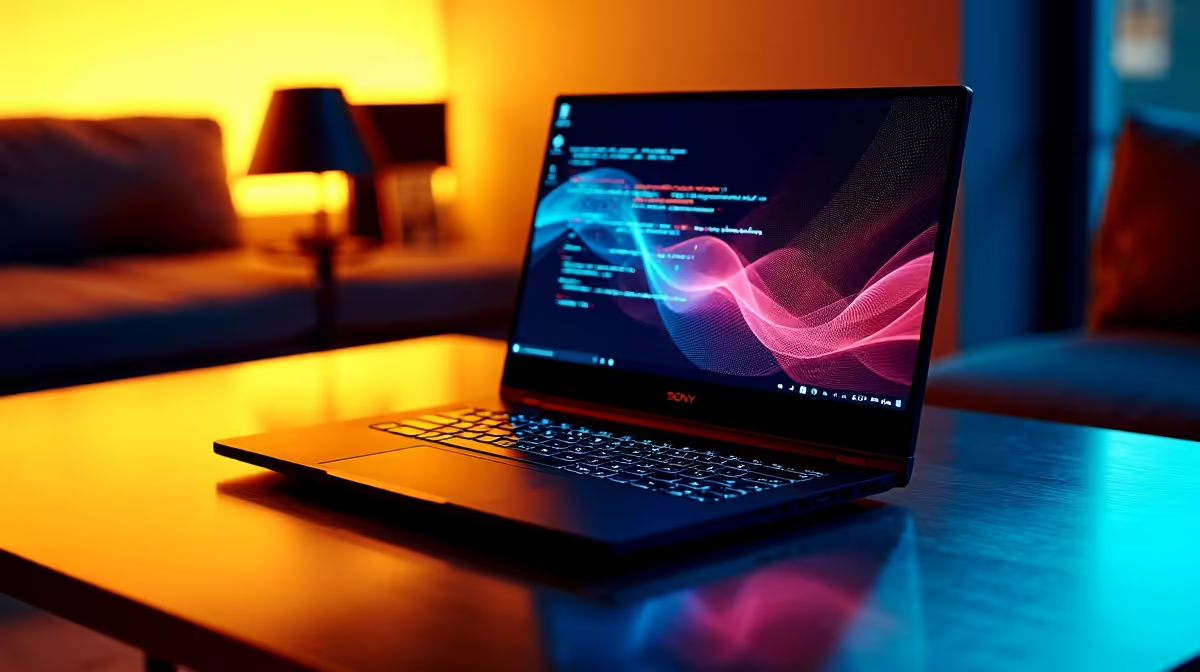
Remember when compiling code meant a mandatory coffee break? The evolution of programming laptops in South Africa has been nothing short of breathtaking. From clunky machines that struggled with basic IDEs to the sleek, multi-core beasts we have today, the journey is wild. If you're a developer, a student, or even a curious gamer, understanding this evolution helps you choose the right tool for the job… and avoid those frustratingly slow build times. 🔧
The Evolution of Programming Laptops: A Timeline
The journey from beige, bulky boxes to the powerful developer laptops we see in SA today is a story of incredible innovation. Each era introduced changes that fundamentally altered how we code, test, and deploy software.
The Early Days: The Beige Box Era
In the early 2000s, a "portable" programming laptop was often a compromise. We're talking heavy machines with low-resolution screens (think 1024x768), single-core processors, and sluggish mechanical hard drives. Compiling a large project could take ages, and running an IDE alongside a browser felt like a monumental task for the 512MB or 1GB of RAM. Battery life? You were lucky to get two hours unplugged.
The Mid-2000s: Dual-Core & Better Screens
The arrival of dual-core processors from Intel and AMD was a massive leap. Suddenly, multitasking became feasible. You could run your development environment and reference documentation without the entire system grinding to a halt. Screens started improving, offering more vertical space to see your code, and RAM slowly crept up to a more comfortable 2-4GB. These were solid workhorses, but still lacked the snappy responsiveness we now take for granted.
The 2010s: The SSD & Ultrabook Revolution 🚀
This was the decade everything changed. The single biggest upgrade was the Solid-State Drive (SSD). By replacing spinning platters with flash memory, boot times, app loading, and compile times were slashed dramatically. Laptops also became significantly thinner and lighter, making them truly portable. For developers in South Africa, this meant you could finally have a powerful, portable machine, and many of the modern laptop specials still follow this successful formula.
Today's Powerhouses: AI, Multi-Cores, and Beyond
Today's programming laptops are in a different league entirely. We now have CPUs with 8, 12, or even more cores, making tasks like running multiple virtual machines or compiling complex code faster than ever. 16GB of RAM is the new standard, and super-fast NVMe SSDs are common. This raw power is essential for modern development, especially in fields like AI, machine learning, and game development.
What Defines a Great Programming Laptop in SA Today?
Choosing the best of the many programming laptops SA has to offer comes down to a few key components. Your specific needs—be it web development, data science, or mobile apps—will determine the right balance.
- CPU (The Brain): A modern multi-core processor is non-negotiable. It dictates how quickly you can compile code and how smoothly you can run multiple applications. Both the latest powerful Intel laptops and the cutting-edge AMD laptops offer incredible performance for demanding development workflows.
- RAM (The Workspace): Modern IDEs, browsers with dozens of tabs, Docker containers, and local servers are all memory-hungry. 16GB is a great starting point, but 32GB is becoming the sweet spot for serious developers to ensure a lag-free experience.
- Storage (The Filing Cabinet): An NVMe SSD is a must. The speed difference it makes to your entire workflow, from booting up to loading large projects, is immense. Don't settle for anything less.
- Keyboard & Display: You'll be staring at it for hours, so a comfortable, backlit keyboard and a high-resolution screen are crucial for productivity and reducing eye strain. More pixels mean more code on the screen at once. ✨
Productivity Pro Tip ⚡
Windows Subsystem for Linux (WSL 2) to run a genuine Linux environment directly on Windows, without the overhead of a full virtual machine. It's perfect for web developers and anyone working with command-line tools, giving you the best of both worlds: a powerful Linux terminal and your favourite Windows apps.
The Coder's Secret Weapon: The Gaming Laptop
It might sound surprising, but one of the best choices for a programming laptop is often a gaming laptop. Why? They are built for performance, packing powerful CPUs, tons of RAM, and, most importantly, a dedicated GPU. While a GPU isn't essential for all coding, it's a necessity for machine learning, AI, data science, and, of course, game development. Plus, their advanced cooling systems ensure sustained performance during long compile times.
These machines offer the perfect blend of work and play, making them an excellent investment. The same hardware that delivers high frame rates in the latest titles can accelerate your data models or render complex graphics, making top-tier gaming laptops a smart, versatile choice for any tech-savvy professional in South Africa.
Ready to Compile at Lightspeed? The evolution of programming laptops shows that today's power is yesterday's dream. Don't let an old machine slow you down. Explore our massive range of laptop specials and find the perfect developer machine to build your next big thing.