The Path Tracing Revolution in South Africa
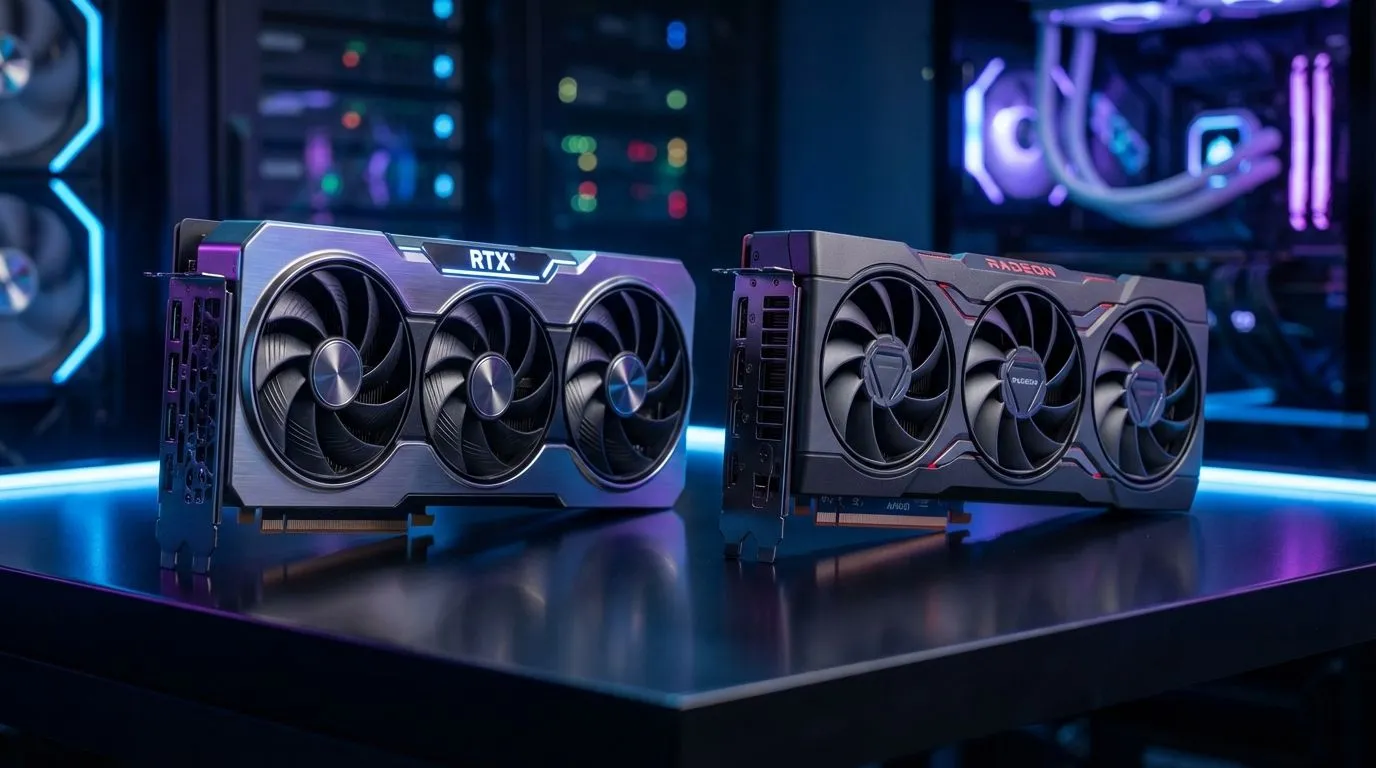
Choosing between high-end GPUs in South Africa often feels like a high-stakes raid. You want the best visuals for your ZAR, especially with path tracing becoming the new standard. The RTX 5070 Ti vs RX 9070 XT path tracing battle is the ultimate showdown for 1440p and 4K gamers. It is not just about raw frames anymore... it is about how light bounces off every surface in Night City. 🚀
When you browse the latest NVIDIA and ATI graphics cards, the choice usually boils down to feature sets versus pure value. Path tracing, or "full ray tracing," is incredibly demanding. It simulates light realistically across an entire scene. For local gamers wanting to future-proof their rigs, understanding how these two cards handle this workload is vital.
NVIDIA RTX 5070 Ti: The Ray Reconstruction King
NVIDIA has long held the crown for heavy lighting effects. The RTX 5070 Ti leverages the Blackwell architecture to dominate the RTX 5070 Ti vs RX 9070 XT path tracing comparison. Its dedicated RT cores are designed specifically for the complex calculations required for path-traced titles like Alan Wake 2.
If you prefer a specific aesthetic for your build, looking at MSI graphics cards often reveals superior cooling solutions that help maintain those high boost clocks during intense gaming sessions. NVIDIA’s DLSS 3.5 and Ray Reconstruction technology use AI to clean up the "noise" in path-traced images. This results in a cleaner, more stable picture than raw hardware could produce alone. ✨
Path Tracing Pro Tip ⚡
If you find your frame rates dipping too low in path-traced games, do not just lower the resolution. Try enabling "Ray Reconstruction" first. It improves visual quality and performance simultaneously by replacing multiple hand-tuned denoisers with a single AI network. This keeps the lighting sharp without killing your FPS.
AMD RX 9070 XT: Raw Power and Rasterization
AMD has made massive strides with their RDNA 4 architecture. While they have traditionally focused on traditional rasterization, the RX 9070 XT is a serious contender. When you buy AMD Radeon graphics cards, you are often getting more VRAM for your money, which is helpful for high-resolution textures.
In the RTX 5070 Ti vs RX 9070 XT path tracing battle, the AMD card relies on its improved FSR 4 upscaling. It might not always match the pixel-perfect precision of NVIDIA in heavy path tracing... but it offers a compelling alternative for those who want a versatile card for both gaming and creative workloads. If your needs lean more towards professional rendering or CAD, you might even consider specialised workstation graphics cards for better driver stability in those specific apps.
Which GPU Should You Buy?
The decision depends on your priorities. If you want the absolute pinnacle of lighting technology and AI-driven frames, the NVIDIA card is the winner. However, if you want a card that excels in traditional gaming and offers great value, AMD is hard to ignore. 🔧
For those on a tighter budget who still want to experience modern features, checking out Intel Arc graphics cards is a smart move for entry-level ray tracing. But for the "Performance Pulse" enthusiast, the RTX 5070 Ti vs RX 9070 XT path tracing debate is where the real excitement lies. Both cards represent a massive leap forward for South African gamers looking to escape into ultra-realistic worlds. ⚡
Ready to Upgrade Your Visual Experience? The battle between NVIDIA and AMD is closer than ever, and we have the stock to get you in the game. Whether you want the path tracing power of Blackwell or the value of RDNA 4, we have the best deals in SA. Explore our massive range of graphics cards and find the perfect GPU to power your next adventure.