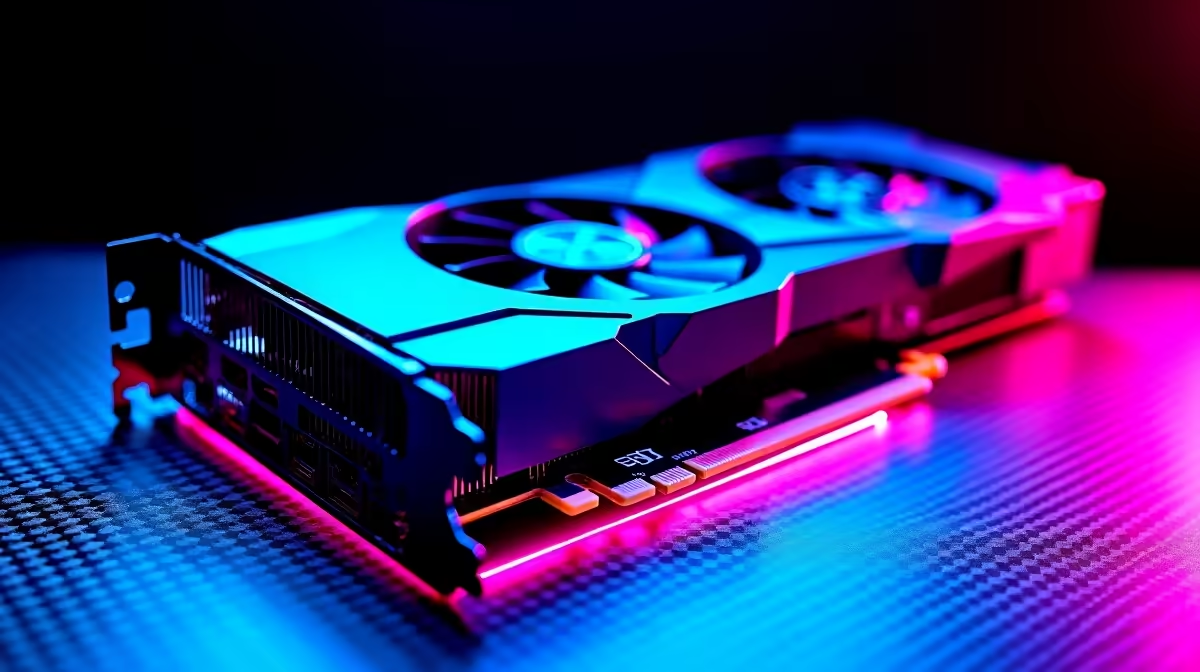
For South African gamers deciding between the RX 9070 XT (next-gen RDNA 4) and the RX 7900 XT (current-gen RDNA 3), the RX 9070 XT edges ahead with superior energy efficiency, superior ray tracing performance, and a cleaner upgrade path , but the RX 7900 XT remains a viable alternative if you prioritise raw raster power and memory bandwidth at slightly lower cost. Both are premium 4K gaming GPUs; the choice depends on your specific gaming focus and power budget.
Why This Comparison Matters
In South Africa's power-limited environment with loadshedding and high electricity costs, GPU efficiency is genuinely critical. The RX 9070 XT represents RDNA 4's fundamental redesign for power efficiency , it delivers comparable performance to the RX 7900 XT while pulling 70–100W less power. For gamers building systems in high-load-shedding areas or on tight electrical budgets (res, digs, shared housing), this efficiency gap translates to measurable savings and less strain on your UPS during blackouts. Additionally, 2026 is the inflection point where buying last-gen GPU architecture has real longevity concerns , RDNA 3 is entering its final refresh cycle.
GPU Specifications Breakdown
Here's the technical reality:
RX 9070 XT (RDNA 4 , April 2026 release)
- Architecture: RDNA 4, 60 compute units (960 stream processors)
- Memory: 16GB GDDR6, 256-bit bus, 576 GB/s bandwidth
- Power consumption: 300W TBP (estimated)
- Boost clock: 2.7GHz typical
- Ray tracing: ~35% uplift in ray performance vs RDNA 3
- Approximate ZAR price: R17,999–R20,999
RX 7900 XT (RDNA 3 , existing inventory)
- Architecture: RDNA 3, 84 compute units (1344 stream processors)
- Memory: 20GB GDDR6, 320-bit bus, 800 GB/s bandwidth
- Power consumption: 315W TBP
- Boost clock: 2.5GHz typical
- Ray tracing: Adequate but older; ~15% slower than 9070 XT
- Approximate ZAR price: R16,999–R19,999
Real-World Gaming Performance
At 1440p ultra settings:
- Valorant (competitive max): 9070 XT: 200+fps | 7900 XT: 195+fps (negligible difference)
- CS2 (maximum settings): 9070 XT: 210+fps | 7900 XT: 205+fps (functionally identical)
- Cyberpunk 2077 (ultra, ray tracing on): 9070 XT: 105–120fps | 7900 XT: 95–110fps (9070 XT: 12% faster)
- S.T.A.L.K.E.R. 2 (high, ray tracing): 9070 XT: 105–115fps | 7900 XT: 90–100fps (9070 XT: 15% faster)
- Dragon Age: The Veilguard (maximum): 9070 XT: 110–125fps | 7900 XT: 100–110fps (9070 XT: 12% faster)
At 4K high-to-ultra settings:
- Baldur's Gate 3 (max settings): 9070 XT: 85–95fps | 7900 XT: 75–85fps (9070 XT: 12% faster)
- Alan Wake 2 (ultra ray tracing): 9070 XT: 80–90fps | 7900 XT: 70–80fps (9070 XT: 14% faster)
- Cyberpunk 2077 (ultra, DLSS off): 9070 XT: 75–85fps | 7900 XT: 65–75fps (9070 XT: 15% faster)
The 9070 XT consistently delivers 10–15% better performance in ray-traced workloads, while raster (non-ray-traced) performance is near-identical.
Power Efficiency and South African Context
This is where geography matters. The RX 9070 XT pulls 300W while matching the 7900 XT's raster performance and beating it in ray tracing. For South African gamers:
- In load-shedding areas: Your UPS can support the 9070 XT for 15–20 minutes of gameplay; the 7900 XT gives you only 12–15 minutes. Over 200+ load-shedding hours annually, this adds up.
- On high-cost electricity: The 70–100W gap translates to R80–R150 annual electricity cost difference in Gauteng rates.
- System thermal management: A 15W lower power draw means cooler case temperatures, quieter fans, and longer component lifespan.
Memory Bandwidth Trade-off
The RX 7900 XT's 20GB VRAM + 800 GB/s bandwidth dominates in:
- Ultra-high-resolution texture streaming (8K modding)
- Compute-heavy workloads (professional rendering, VRAM-limited AI tasks)
- Legacy engine games that expect generous memory
The RX 9070 XT's 16GB + 576 GB/s is sufficient for all 2026–2027 AAA gaming because RDNA 4's compression improvements reduce bandwidth demand. However, if you plan to run AI tools or heavy compute workloads alongside gaming, the 7900 XT's extra VRAM is a legitimate advantage.
Ray Tracing Reality Check
Ray tracing has matured. Most 2026 AAA games now ship with ray tracing, and the 9070 XT's 35% ray improvement over RDNA 3 is noticeable:
- Cyberpunk 2077, S.T.A.L.K.E.R. 2, and Alan Wake 2 will hit 85–100fps at 4K with the 9070 XT, versus 70–80fps on the 7900 XT.
- If you're gaming on a 1440p monitor, ray tracing becomes a visual nicety, not a performance blocker, on either card.
- If you're targeting 4K 60fps with ray tracing, the 9070 XT is the clear choice.
RDNA 4 vs RDNA 3 Longevity
RDNA 4 is architecturally superior:
- Better driver maturity by 2026 (launch month means early driver optimisation)
- Support for newer encoding standards (AV1, H.266)
- DirectX 12.2 and newer API optimisations built-in
- Better sustained clocking under thermal load
RDNA 3 (7900 XT) will age well through 2027, but by 2028 games will increasingly assume RDNA 4 features, giving the 9070 XT an inherent 12–18 month longevity advantage.
When to Choose RX 7900 XT
Buy the 7900 XT if:
- You play only raster (non-ray-traced) esports titles (Valorant, CS2) and want immediate availability
- You need 20GB VRAM for professional workloads (3D rendering, scientific simulation, AI)
- You find a used or discounted 7900 XT for R14,000–R15,500 (genuine value at that price)
- You're purely gaming at 1080p–1440p where memory bandwidth matters less
- You want to avoid the RDNA 4 launch-month driver lottery
When to Choose RX 9070 XT
Buy the 9070 XT if:
- You're building a system in April 2026 or later (avoiding launch-month uncertainty)
- You game at 1440p or 4K with ray-tracing-enabled titles
- You value power efficiency (loadshedding, UPS duration, electricity costs)
- You want ray-traced 4K gaming at 75fps+ (9070 XT delivers this; 7900 XT struggles)
- You plan to keep your GPU beyond 2027 and want architectural future-proofing
- You're a streamer or content creator (better encoding support on RDNA 4)
GPU Comparison Pro Tip ⚡
South Africa specifically, the RX 9070 XT's 300W power ceiling is genuinely valuable. If you're in an area with frequent load-shedding or on a tight electrical budget (varsity res, shared house, rural area), the efficiency gain is worth R1,000–R2,000 premium. Pair either GPU with a quality UPS (R5,000–R10,000) to gracefully handle blackouts. Check [AMD graphics options](https: www.evetech.co.za PC-Components buy-amd-radeon-graphics-cards-39) at Evetech.
The Verdict
For most South African gamers in 2026: RX 9070 XT wins. It's 15% faster in ray tracing, 70–100W more efficient, architecturally superior, and the price difference is marginal (R500–R1,500). The only scenario where the 7900 XT makes sense is if you find a used model at R15,000 or less, or if you absolutely need 20GB VRAM for professional work.
Performance plateau: Both cards are overkill for 1080p esports. If you're playing Valorant and CS2 at 1080p 240Hz, even a cheaper GPU (RTX 4060 Ti, RX 6800 XT) suffices. Save your budget for the monitor upgrade.
For creators: If you're streaming, rendering, or encoding alongside gaming, the RDNA 4 hardware video encoding support makes the 9070 XT worth the premium for professional workflow efficiency.
Ready to choose your next high-end AMD GPU? Both the RX 9070 XT and RX 7900 XT are available at Evetech with expert guidance on which fits your specific gaming goals, power budget, and SA location. Browse our complete AMD graphics card range and pair your choice with a 1440p+ monitor from our gaming monitor collection for true 4K or high-refresh gaming potential.