Buying second-hand PC parts in South Africa can save significant money, but it carries risks that new-part purchases simply don’t. Whether you’re building a budget gaming rig or upgrading a specific component, understanding exactly where the risk lies - and how to mitigate it - is the difference between a great deal and an expensive mistake.
Quick Answer
Is it worth buying second-hand PC parts in SA? For certain components like cases, coolers, and RAM, the risk is low and the savings are real. For GPUs and PSUs, the risk is meaningfully higher and deserves careful evaluation. CPUs and motherboards sit somewhere in between.
🔧 Component-by-Component Risk Breakdown
Not all parts carry equal risk when bought used. Here’s an honest assessment:
Low Risk (generally safe to buy used):
- Cases: No moving parts, no electrical wear. Minor cosmetic damage is common but functional damage is rare.
- CPU Coolers: Air coolers have long lifespans. Check fan bearings are smooth and that the heatsink base is clean. Avoid used AIOs with unknown hours.
- RAM: DDR4 and DDR5 modules are either working or completely dead. A short benchmark run in MemTest86 will confirm functionality.
- Monitors: Safe if you can test for dead pixels, backlight bleed, and panel burn-in before purchase.
Medium Risk (proceed with caution):
- CPUs: Desktop CPUs rarely fail under normal use. Risks include bent pins (AM4/LGA platforms), overclocking abuse, or thermal damage. Inspect physically and test in a known-working board.
- Motherboards: VRM damage from sustained overclocking and dead M.2 slots are common failure modes. Test all ports, slots, and USB headers before committing.
- Storage (HDDs/SSDs): Run CrystalDiskInfo on SSDs and HDDs to check health status and total bytes written. Drives approaching or exceeding rated TBW should be treated as suspect.
Higher Risk (buyer beware):
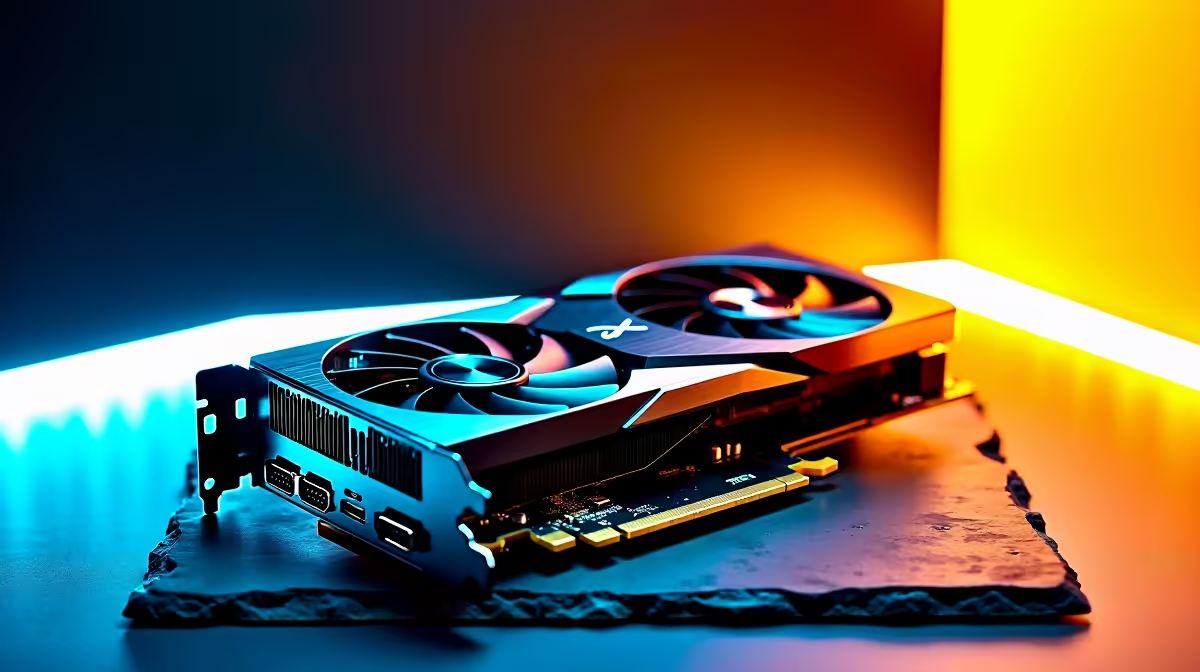
- GPUs: Mining-abused cards are the biggest concern in the SA used market. Heavy mining runs GPUs at 100% load continuously for months or years, degrading thermal pads, VRAM, and capacitors. Symptoms may not appear immediately. Always stress-test with Furmark or 3DMark before accepting.
- PSUs: A failing power supply can destroy your entire build. Unknown PSU history, capacitor aging, and fan bearing wear are invisible until failure. Second-hand PSUs are rarely worth the risk unless the price is exceptionally compelling and the unit is from a reputable brand with verifiable low use.
📊 The SA Second-Hand Market Reality
South African marketplaces carry both genuinely good deals from system builders upgrading and bad actors selling failed or abused hardware. A few practical realities:
- Warranties disappear: New parts from a reputable SA retailer come with manufacturer warranty. Used parts give you zero recourse if something fails a week later.
- Return shipping is your problem: If a seller is in Johannesburg and you’re in Cape Town, a faulty part becomes a logistics headache.
- Pricing context matters: Check current retail prices before assuming a used price is a deal. Older GPU generations are sometimes listed at near-new prices by uninformed sellers.
- Grey imports: Some used parts in SA were originally grey market imports with no local warranty even when new. This compounds the risk.
💡 How to Buy Smart If You Go the Used Route
Always test before you pay. Insist on seeing the part working in a system, or at minimum agree to a return window if you’re buying remotely.
Run diagnostics immediately on arrival. MemTest86 for RAM, CrystalDiskInfo for storage, Furmark and GPU-Z for graphics cards, and Prime95 or OCCT for CPUs.
Know the age of the hardware. A two-year-old GPU with low use is very different from a four-year-old GPU with unknown history.
Price the risk premium correctly. If a new GPU costs R8,000 and a used one is R6,500, the R1,500 saving may not justify the risk of no warranty and potential early failure. If the used price is R4,500, the calculus changes.
Stick to reputable community sources. Established SA tech communities with reputation systems give you more accountability than anonymous listings.
❓ Frequently Asked Questions
Are second-hand GPUs in SA usually ex-mining cards? Not always, but it’s a real concern. The mining booms of 2020–2022 pushed many abused cards into the used market. Ask sellers directly about the card’s use case and history.
What’s the safest used part to buy in SA? Cases and air CPU coolers carry the lowest failure risk. RAM from a reputable brand that passes MemTest86 is also generally safe.
Is a used PSU ever worth buying? Only if it’s from a known-good brand like Seasonic, Corsair, or Be Quiet, is less than three years old, has verifiable low usage, and is priced significantly below retail. Even then, new mid-tier PSUs are often available at prices that make the risk not worth taking.
Do second-hand CPUs fail often? Desktop CPUs are generally robust. The main risks are physical damage to pins or IHS, and hidden damage from extreme overclocking abuse. Inspect carefully and test under load.
Is warranty worth paying extra for? For high-value parts like GPUs and PSUs, yes. A retail GPU from a reputable SA seller includes a manufacturer warranty that protects against early failure - that peace of mind has real monetary value.
Compare Graphics Card Deals and Evetech Best Sellers at Evetech for the latest specs and SA deals.
Ready to Find Your Perfect Match? Shop at Evetech