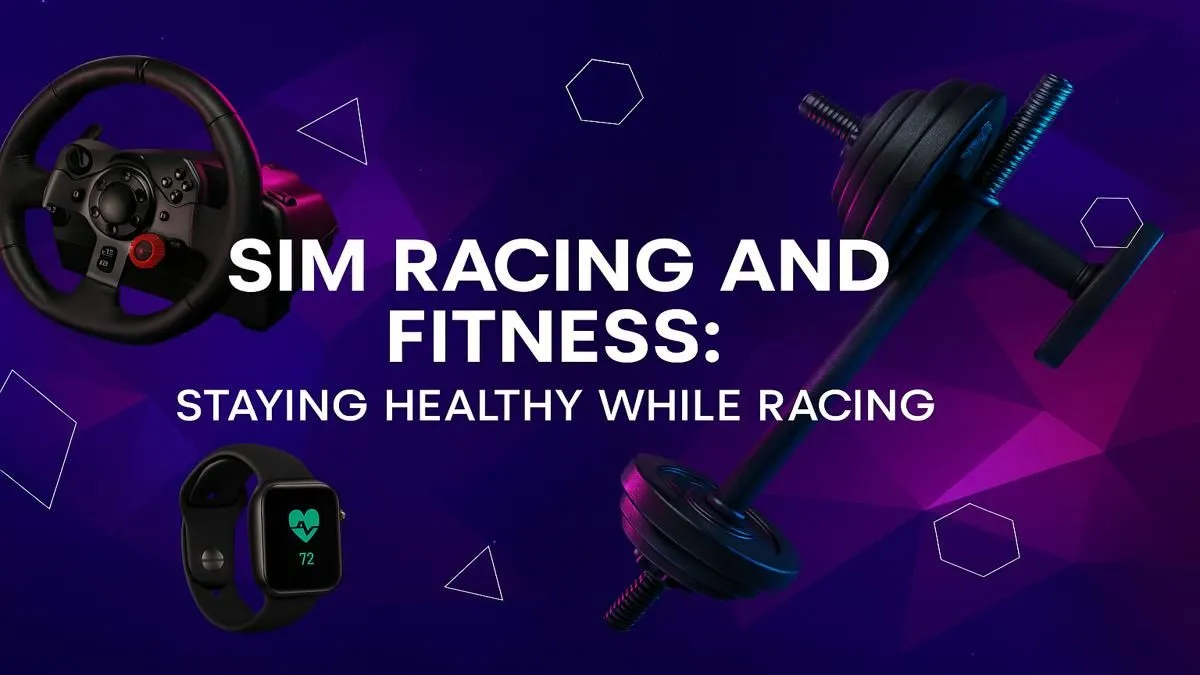
Think sim racing is just a game you play sitting down? Think again. After a gruelling 60-minute race at Kyalami, with sweat beading on your brow and your arms aching from fighting the wheel, you know the truth. The physical demand is real. Improving your sim racing fitness isn't just about health; it's about finding that extra tenth of a second per lap. This guide will help you stay healthy and get faster on the virtual track. 🏎️
Why Sim Racing Fitness is Your Secret Weapon
The link between physical condition and lap times is undeniable. While you don't need to be a professional athlete, focusing on your sim racing fitness provides a clear competitive edge. The best drivers are consistent, and consistency comes from staving off mental and physical fatigue.
Endurance races, in particular, are a battle of attrition. Your ability to maintain precise control over braking, steering, and throttle inputs diminishes as your body tires. A strong core helps you apply consistent, heavy brake pressure without shifting in your seat, while well-conditioned arms and shoulders fight the force feedback without losing precision. Investing in your physical well-being is as crucial as upgrading to a complete sim racing setup.
Building a Simple Fitness Routine for Sim Racers
You don't need a fancy gym membership to improve your health for sim racing. A few targeted exercises at home can make a massive difference.
Core and Leg Strength
Your core is the anchor. It stabilises you during intense moments, and your legs do the heavy lifting on the pedals.
- Planks: Hold for 30-60 seconds. This builds incredible core stability.
- Squats: Bodyweight squats strengthen your glutes and quads, giving you the power to modulate stiff brake pedals accurately.
Upper Body and Grip Endurance 💪
Fighting a direct drive wheel for hours is a serious workout. Force feedback can be brutal, but building endurance helps you stay smooth and precise.
- Push-ups: A classic for a reason. They build chest, shoulder, and tricep strength.
- Wrist Curls: Use a light dumbbell or even a can of beans to strengthen your forearms, reducing fatigue from gripping the wheel. This becomes essential when you're wrestling with feedback from a powerful wheel like a Thrustmaster direct drive.
Ergonomics: The Foundation of Sim Racing Health
Poor posture is the fastest way to develop back pain and repetitive strain injuries. Your setup ergonomics are a cornerstone of sim racing fitness, preventing long-term issues and allowing you to race comfortably for longer.
Your goal is to create a natural and supportive driving position. Your back should be flush against the seat, your arms should have a slight bend when holding the wheel, and your knees shouldn't be locked out when pressing the pedals. Getting this right is far easier with a dedicated racing seat from a brand like Playseat, which is designed for optimal racing posture.
Ergonomic Pro Tip ✨
Aim for the '90-degree' rule as a starting point. Your knees should be at roughly a 90-degree angle when resting, and your elbows should have a similar bend when holding the wheel. Adjust your seat, wheel, and pedals to achieve this. This simple check reduces strain on your joints and improves your control over the car.
Ultimately, the best approach to sim racing fitness is a holistic one. Combine simple, regular exercise with a properly configured rig. You'll not only protect your body from the strains of the hobby but also unlock a new level of consistency and speed on the track. Stay hydrated, remember to take breaks, and watch your performance soar.
Ready to Optimise Your Rig and Your Body?
A proper setup is the first step towards better performance and long-term racing health. From seats to wheels, having the right equipment makes all the difference. Explore our full range of sim racing gear today and build the cockpit of your dreams.