Staring at a loading screen while your squad is already dropping into the action? We’ve all been there. That frustrating delay, the texture pop-in that makes the world look like a half-finished painting... it’s enough to make any gamer rage. For years, the debate of SSD vs HDD for gaming has been raging, but today, the answer is clearer than ever. One of these drives is the key to a faster, smoother, and more responsive gaming experience.
The Core Showdown: How SSDs and HDDs Actually Work
Before we dive into which drive eliminates lag, let's quickly break down the tech. Think of it as a race between a bicycle and a rocket ship. 🚀
A traditional Hard Disk Drive (HDD) is mechanical. It uses a spinning platter and a moving read/write arm to find your data, much like a tiny record player. While fantastic for storing massive amounts of data cheaply, that physical movement creates a bottleneck. It’s reliable, but it’s slow.
On the other hand, a Solid-State Drive (SSD) has no moving parts. It uses flash memory chips to store data electronically. This means access is nearly instantaneous. It’s the difference between finding a book in a library by searching every shelf versus just thinking of the book and having it appear in your hands.
SSD vs HDD for Gaming: Where You'll Feel the Speed Boost
So, how does this speed difference translate to your actual gaming sessions? The impact is massive, and you'll notice it in several key areas.
Blazing-Fast Loading Times
This is the most significant benefit. Games installed on an SSD load dramatically faster. We're talking about cutting loading screens in titles like Starfield or Cyberpunk 2077 from over a minute on an HDD down to just 10-15 seconds on an SSD. You'll spend less time waiting and more time playing.
Smoother In-Game Experience
Ever run through a massive open world and see textures or objects pop into existence right in front of you? That’s often your HDD struggling to stream game assets fast enough. An SSD's rapid data access feeds your graphics card the information it needs instantly, resulting in a smoother, more immersive world without distracting pop-in or stuttering.
The Hybrid Approach 🔧
For the best of both worlds without breaking the bank, use a smaller, faster SSD for your operating system and your most-played games. Then, use a larger, more affordable HDD for mass storage like documents, movies, and your back-catalogue of older games. It’s a cost-effective way to get game-changing speed where it counts.
Not All SSDs Are Created Equal: NVMe vs. SATA
Once you’ve decided on an SSD, you’ll encounter two main types. The choice in this SSD vs HDD for gaming comparison gets even more interesting.
- SATA SSDs: These typically come in a 2.5-inch rectangular case and connect via a SATA cable, just like a traditional HDD. Versatile 2.5-inch SATA SSDs are a phenomenal upgrade over any hard drive, offering speeds up to 10 times faster. They are the perfect entry point into the world of solid-state performance.
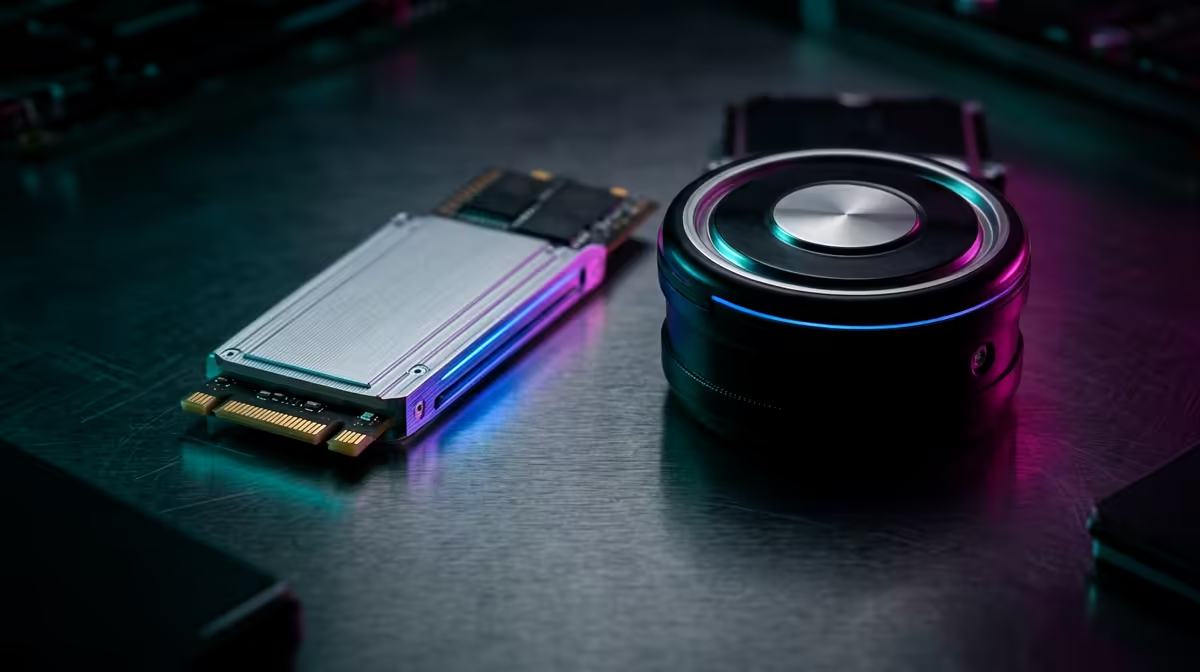
- NVMe M.2 SSDs: These are the new champions of speed. ✨ They look like a small stick of RAM and plug directly into a special M.2 slot on your motherboard. By bypassing the SATA connection, blazing-fast NVMe SSDs can reach speeds that are another 5-7 times faster than their SATA counterparts. For pure, unadulterated performance, NVMe is the way to go.
Making the Choice: Which Drive Eliminates Lag for Your Budget?
Ultimately, the right drive for you depends on your needs and your budget.
For gamers in South Africa, the question of SSD vs HDD for gaming comes down to value. While an HDD still offers the most gigabytes per Rand for mass storage, an SSD is no longer a luxury—it’s an essential component for any modern gaming rig. Even a small 500GB SSD for your OS and favourite game will fundamentally change your PC experience.
If you're ready to make the single most impactful upgrade to your gaming PC, you can find some of the best SSD deals in South Africa right now. The performance jump is something you have to feel to believe.
Ready to Obliterate Loading Screens?
The SSD vs HDD debate is clear: for pure gaming speed, an SSD is the undisputed champion. It's the most noticeable upgrade you can make to your PC. Explore our massive range of PC components and find the perfect drive to conquer lag for good.