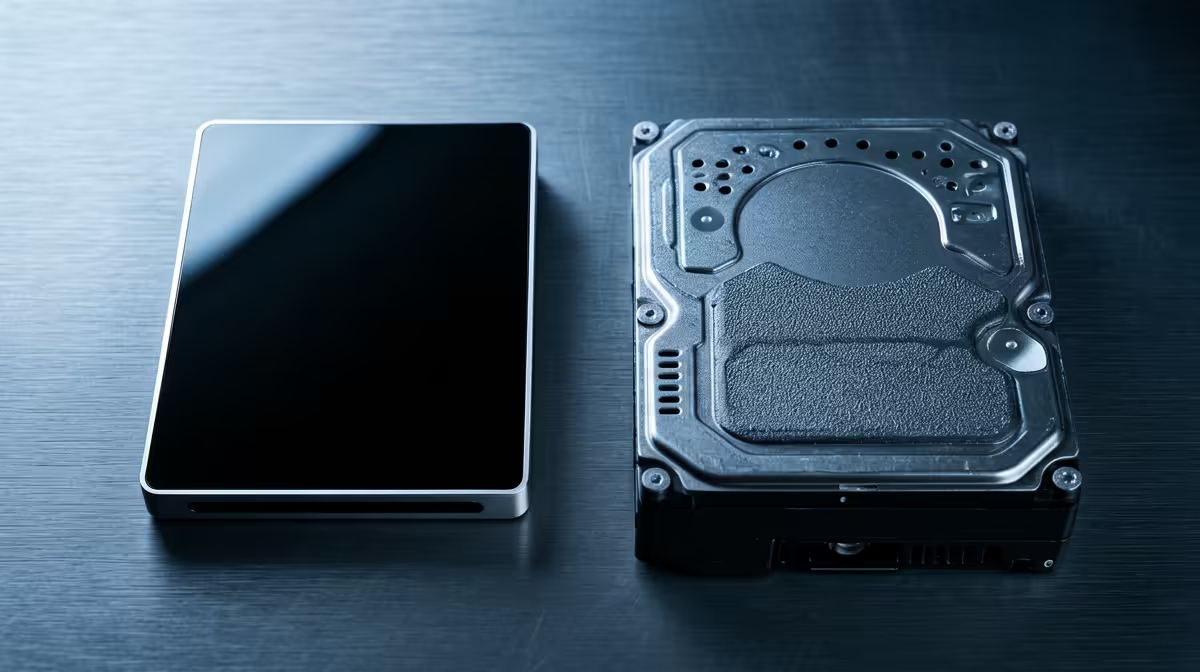
Staring at another loading screen while your mates are already in the chopper? We've all been there. In the fast-paced world of gaming, every second counts, and your storage drive is often the biggest bottleneck. The great SSD vs HDD for gaming debate isn't just about specs on a page; it's about getting you into the action faster. So, which drive truly wins the South African load time showdown? Let's dive in.
The Core Difference: Mechanical vs Flash
Before we talk about gaming, let's quickly break down the tech. Think of a traditional Hard Disk Drive (HDD) as a tiny, high-speed record player. It uses a mechanical arm to read data from spinning platters. It works, but it's old-school tech. They are fantastic for storing massive amounts of data cheaply, making them a solid choice for your media library or game backups. You can check out a wide variety of reliable hard drives for exactly this purpose.
An SSD (Solid-State Drive), on the other hand, has no moving parts. It uses flash memory—like a massive, lightning-fast USB stick. This fundamental difference is what gives it a colossal speed advantage.
The Real-World Gaming Showdown 🚀
So, how does the SSD vs HDD battle play out in your favourite games? The difference is night and day.
- Vanishing Load Times: An SSD can slash game load times by 50-80%. That means less time staring at a progress bar in Starfield and more time exploring planets.
- Smoother Gameplay: Ever run through a massive open world and seen textures pop in a second too late? An SSD helps stream those assets to your graphics card almost instantly, leading to a much more immersive experience.
- Snappier System: Your entire PC feels more alive. Windows boots in seconds, applications launch instantly, and even installing games is significantly faster. For any serious gamer, a solid collection of SSDs is no longer a luxury… it's a necessity.
Choosing Your SSD: NVMe vs SATA
Okay, you're sold on an SSD. But which one? The two main players for gamers are NVMe and SATA.
NVMe M.2 SSDs: The Speed Demons ⚡
These are the Formula 1 cars of storage. NVMe (Non-Volatile Memory Express) drives are small sticks that plug directly into your motherboard, bypassing older data cables for mind-blowing speeds. For your operating system and your most-played competitive titles like Valorant or Apex Legends, nothing beats the responsiveness of blazing-fast NVMe SSDs.
SATA 2.5" SSDs: The All-Round Champions
These look more like traditional laptop hard drives and use a SATA cable to connect. While not as fast as NVMe drives, they are still lightyears ahead of any HDD. They offer the perfect balance of price and performance, making them an excellent choice for storing the rest of your Steam library. You can easily expand your storage with these affordable 2.5-inch SSDs.
The Hybrid Strategy 🔧
For the ultimate setup without breaking the bank, use a hybrid approach. Install a smaller, super-fast NVMe SSD (250GB - 500GB) for your Windows OS and favourite games. Then, use a larger 1TB or 2TB SATA SSD for the rest of your game library. This gives you instant boot times and snappy performance where it counts most, with plenty of fast storage for everything else.
The Verdict: Is an HDD Obsolete for Gaming?
Not entirely. While you absolutely should not be running your main operating system or modern AAA games from an HDD, it still has a place. For pure cost-per-gigabyte, nothing beats it. It’s the perfect digital warehouse for your movie collection, photos, or a massive backlog of older games you rarely touch.
The final word in the SSD vs HDD for gaming argument is clear: an SSD is the single most impactful upgrade you can make to your gaming PC. The performance jump is something you feel every single time you turn it on. If you're clever, you can often find some incredible value by keeping an eye on the latest SSD deals in South Africa.
Ready to End the Wait? The SSD vs HDD for gaming debate is over. For pure performance, an SSD is the undisputed champion. Ditching those load times is the single biggest upgrade you can make for your rig. Explore our massive range of SSD deals and find the perfect drive to unleash your PC's true potential.