Staring at a loading screen while your mates are already dropping into the action… we’ve all been there. That agonizing wait is often the first sign that your storage is bottlenecking your rig. The SSD vs HDD gaming debate isn't just about specs; it's about reclaiming your time and getting a smoother, more responsive experience. Ready to ditch the lag and jump straight into the game? Let’s dive in. 🚀
SSD vs HDD Gaming: The Fundamental Speed Divide
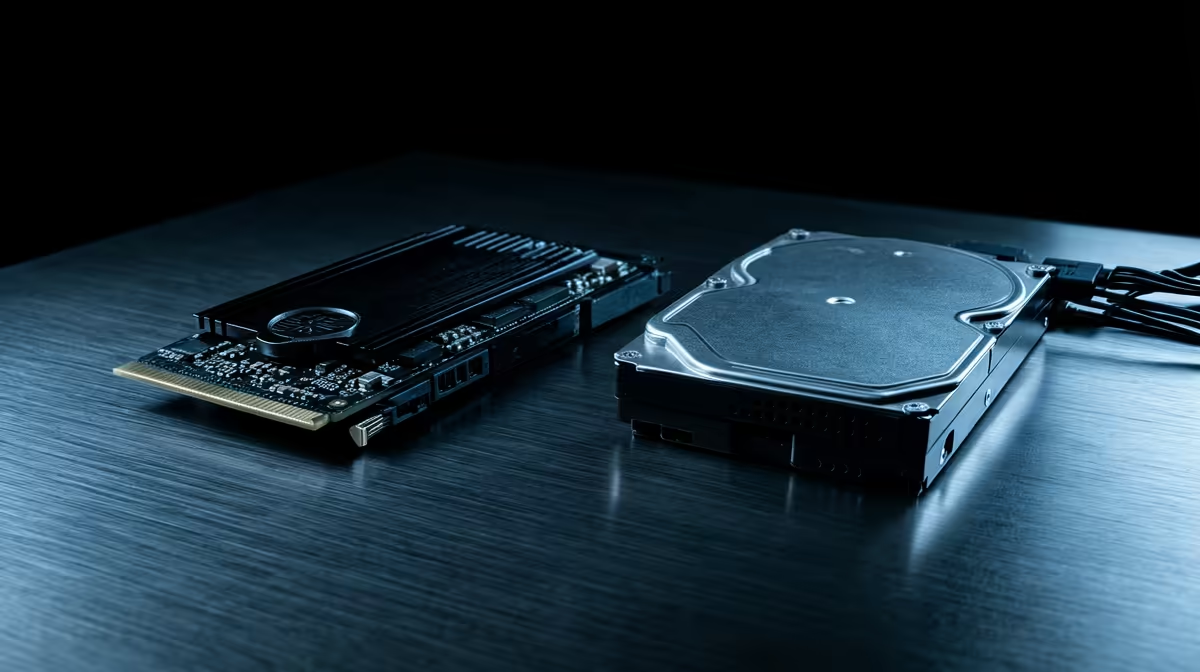
At its core, the difference between a Hard Disk Drive (HDD) and a Solid-State Drive (SSD) comes down to moving parts. Think of an HDD as a tiny record player, with a spinning platter and a mechanical arm that reads data. It's reliable technology that offers huge amounts of storage for a great price, making traditional hard drives a solid choice for archiving games you don't play often.
An SSD, however, has no moving parts. It uses flash memory, like a massive, high-speed USB drive. This means data access is nearly instantaneous, which is where the magic happens for gaming performance.
Unlocking Faster Load Times with an SSD
The most noticeable benefit of an SSD is the dramatic reduction in load times. Games with massive open worlds like Cyberpunk 2077 or Starfield are constantly pulling assets from your drive. An SSD feeds this data to your system at lightning speed, meaning:
- Faster Game Launches: Get from your desktop to the main menu in seconds.
- Shorter Level Loading: Spend less time watching progress bars and more time playing.
- Reduced Texture Pop-In: Environments and characters look crisp and detailed the moment they appear on screen.
This is why most modern gaming PCs are built around Solid-State Drives (SSDs) as the primary drive for the operating system and key games. The difference in overall system snappiness is something you have to feel to believe. ⚡
Pro Tip: The Hybrid Approach 🔧
You don't have to choose just one! A popular and budget-friendly setup is to use a smaller, faster SSD (250GB-1TB) for your operating system and favourite games, and a large HDD (2TB+) for mass storage like movies, photos, and your back catalogue of games.
Is an SSD Better for More Than Just Gaming?
Absolutely. The performance boost from an SSD extends to your entire PC experience. Your system will boot up faster, applications will launch instantly, and even browsing files feels more fluid. When it comes to the SSD vs HDD for gaming conversation, it’s also worth knowing about the different types of SSDs.
The Different Flavours of Flash
Modern PCs have two main SSD connections:
- SATA SSDs: These use the same cable as a traditional hard drive and come in a 2.5-inch form factor. They are a massive upgrade over any HDD and offer fantastic value. You’ll find plenty of reliable and versatile 2.5-inch SATA SSDs that provide a perfect entry point into solid-state speed.
- NVMe SSDs: These look more like a stick of RAM and plug directly into your motherboard's M.2 slot. By bypassing the old SATA connection, these blazing-fast NVMe SSDs deliver the absolute best speeds possible today, making them the top choice for enthusiasts who demand zero compromises.
The Final Verdict in the SSD vs HDD Gaming Showdown
So, who wins the fight? For gamers in 2023 and beyond, an SSD isn't a luxury... it's essential. While a high-capacity HDD still has its place for bulk storage, your primary drive for your OS and most-played titles should absolutely be an SSD. It’s the single most impactful upgrade you can make for unlocking faster load times and improving your overall gaming performance.
The question is no longer if you should get an SSD, but which one is right for your rig and budget.
Ready to Banish Loading Screens?
An SSD is the key to a faster, smoother, and more enjoyable gaming experience. Check out our massive range and explore our latest SSD deals for performance that leaves lag in the dust.