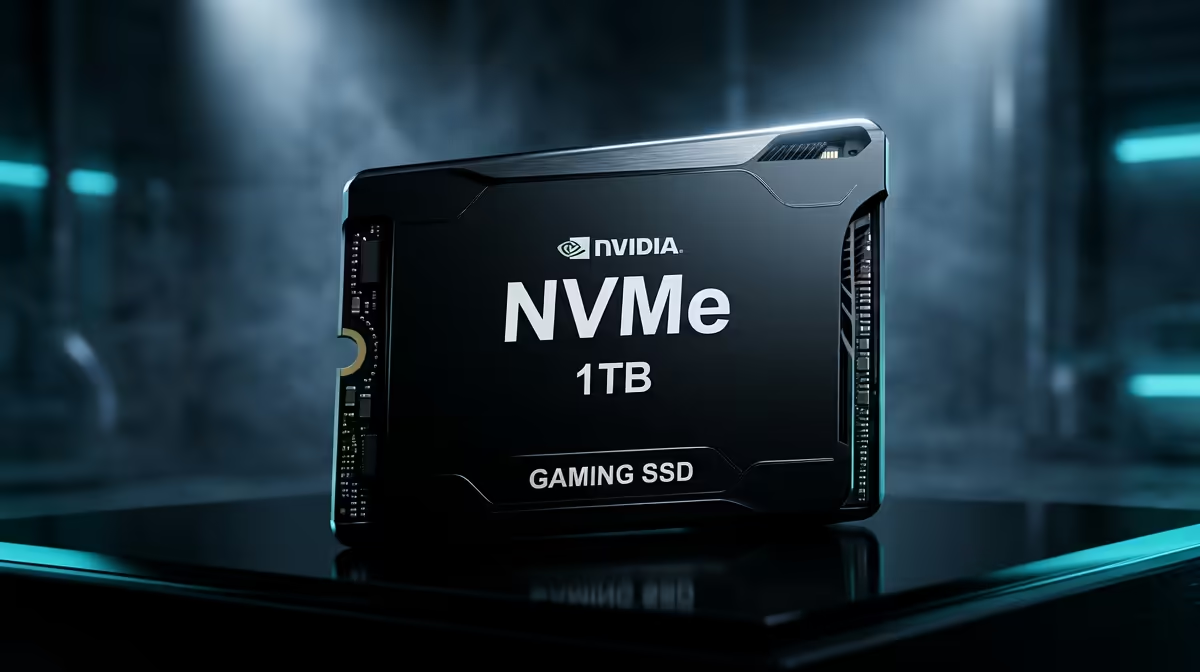
Staring at a loading screen while your mates are already dropping into the action? We’ve all been there. In the fast-paced world of South African gaming, every second counts. The great SSD vs HDD gaming debate isn't just about specs; it's about reclaiming your time and enjoying smoother gameplay. Forget the technical jargon. We're breaking down the hard stats to show you exactly which drive will give you the competitive edge you need. Let's dive in.
The Core Difference: How They Work
At the heart of the SSD vs HDD gaming choice is how they store your data. Think of traditional Hard Disk Drives (HDDs) as tiny record players, with a mechanical arm reading data from a spinning platter. They're reliable and offer massive storage for a great price. On the other hand, Solid-State Drives (SSDs) use flash memory, like a massive USB stick. With no moving parts, they access data almost instantly. ⚡
SSD vs HDD Gaming: The Stats Breakdown 📊
This is where the real battle in the storage world is won. Numbers don't lie, and for gaming, the performance gap is huge.
Boot-Up Speed
A PC with an HDD might take 30-60 seconds to boot into Windows. An SSD slashes that to just 10-15 seconds. You're in the game before your HDD-using friend has even seen their desktop.
Game Loading Times
This is the big one. Loading a massive open world like in Starfield or Baldur's Gate 3 can take over a minute on an HDD. With one of the latest blazing-fast NVMe SSDs, you're looking at 15-25 seconds. That’s less time waiting, more time playing.
In-Game Experience
It's not just about loading. SSDs prevent that annoying texture pop-in and stuttering when you're speeding through an open world. The game feels smoother and more responsive because assets are loaded instantly.
What About Price and Capacity?
Okay, so SSDs are faster. But what about the cost? This is where HDDs still have a strong argument. When you look at the price in ZAR per gigabyte, HDDs offer incredible value for money, making them perfect for storing your massive library of games, movies, and files.
But you don't have to choose just one. The smartest move for most gamers is a hybrid setup.
The Best of Both Worlds 🔧
For the ultimate setup without breaking the bank, use a smaller, faster SSD (500GB - 1TB) for your operating system and your most-played games. Then, add a large HDD (2TB+) for mass storage. This gives you lightning-fast boot and load times where it counts, plus plenty of space for everything else. It's a cost-effective strategy many South African PC builders swear by.
Even an affordable upgrade to one of the many SATA-based 2.5-inch SSDs as your boot drive will make an old PC feel brand new.
The Verdict: Which Drive is Right for Your Rig?
So, when it comes to the SSD vs HDD gaming showdown in 2024, the verdict is clear. If you are serious about your gaming experience and want to eliminate frustrating wait times, an SSD is no longer a luxury—it's an essential component. The speed and responsiveness it brings to your entire system are transformative. ✨
While HDDs remain the king of cheap, bulk storage, the primary drive in any modern gaming PC should be an SSD. The performance boost is simply too significant to ignore. If you're ready to make the jump, it's always a good idea to check out the latest SSD deals to get the best possible value for your money.
Ready to Banish Loading Screens? The SSD vs HDD debate has a clear winner for gamers. Upgrading your storage is the single most impactful performance boost you can give your PC. Explore our massive range of PC components and find the perfect drive to conquer your load times.