Staring at a loading screen while your mates are already dropping into the action is a special kind of pain. We've all been there. In the quest for instant gaming, the storage debate rages on: is a standard SATA SSD good enough, or do you need a super-fast NVMe drive? This storage benchmark for gaming breaks down the real-world difference in SSD vs NVMe load times, helping you make the smartest choice for your rig and your wallet right here in South Africa.
Understanding the Basics: SATA SSD vs. NVMe SSD
Before we dive into the benchmarks, let's quickly clear up the tech. Think of it like two different types of race cars.
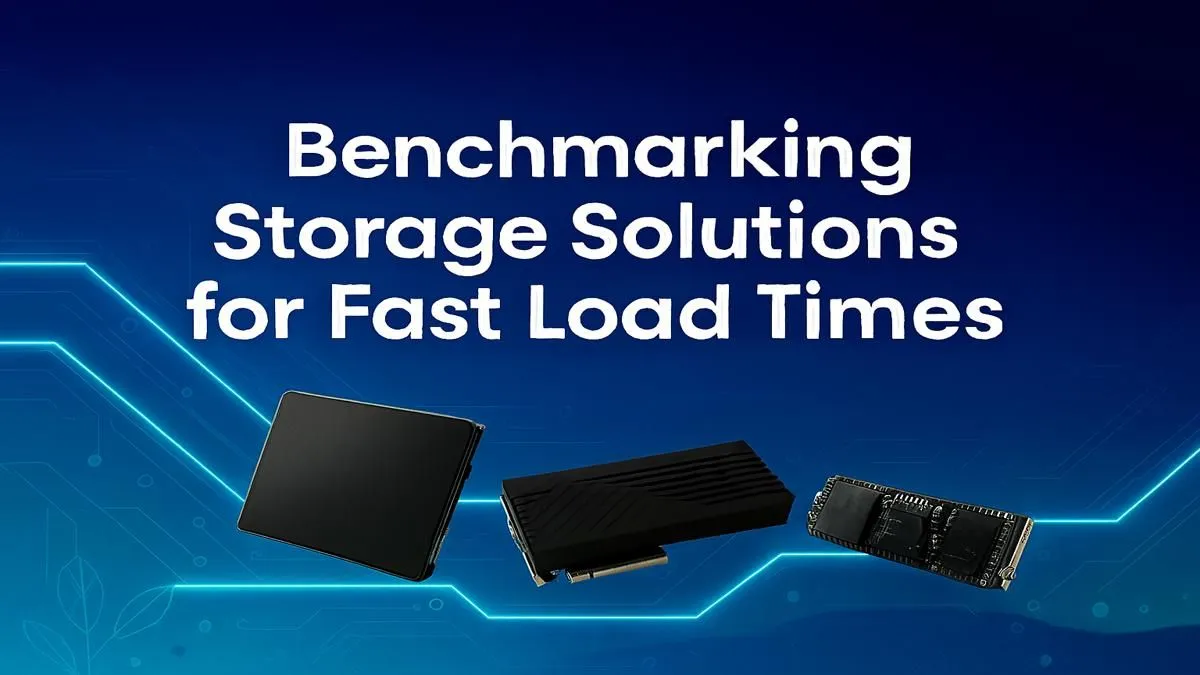
A SATA SSD is the trusty, reliable sedan. It's typically a 2.5-inch drive that connects to your motherboard via a SATA cable. It's a massive leap from an old mechanical hard drive (HDD), with speeds topping out around 550MB/s. For years, this was the gold standard for fast boot times and snappy game loads.
An NVMe (Non-Volatile Memory Express) SSD, on the other hand, is the Formula 1 car. 🏎️ It's a small stick (usually in the M.2 form factor) that plugs directly into a special slot on your motherboard, using the high-speed PCIe bus. This direct connection bypasses the SATA bottleneck, allowing for blistering speeds from 3,000MB/s to over 7,000MB/s for the latest Gen4 drives.
The on-paper difference is huge, but how does it translate to actual gaming?
The Real-World Gaming Benchmark: Does NVMe Crush SSD Load Times?
Here's the part that surprises many gamers: while an NVMe drive is 5-10 times faster in synthetic benchmarks, the difference in game load times is often much smaller. Why? Because loading a game isn't just about raw read speed. Your CPU also has to decompress all those game assets, which can become the new bottleneck.
However, the seconds you do save can be crucial.
In massive, open-world titles, an NVMe drive often pulls ahead. Loading your last save in the sprawling world of Cyberpunk 2077 or booting up a session in Los Santos on a PC built for GTA V might be a few seconds faster. This advantage is even more apparent in games that constantly stream assets from the drive, like the breathtakingly detailed world in a Microsoft Flight Simulator gaming PC.
For competitive players, those few seconds can mean getting a head start. In a fast-paced shooter running on an Overwatch 2 gaming PC, loading into the map before everyone else gives you a moment to get your bearings. The same applies when dropping into Al Mazrah on a rig optimised for Call of Duty: Warzone 2.0, where every millisecond counts. A solid NVMe vs SSD gaming comparison shows that while it's not a 10x improvement, the small edge is undeniable.
Beyond Load Times: Other Benefits of NVMe for Gamers
The conversation about gaming load times is only part of the story. An NVMe drive makes your entire system feel significantly faster and more responsive. ✨
Your Windows boot time will be nearly instant. Games will install and patch much quicker. Even alt-tabbing out of a game to check a guide feels smoother. This overall system snappiness is where the NVMe truly shines. Getting into a quick match on a Counter-Strike 2 gaming PC or landing first on the island with a Fortnite gaming PC just feels better when the whole experience is seamless.
Even games you wouldn't expect, like a heavily modded version of Minecraft, benefit from the faster read speeds when loading tons of custom assets. And in battle royales like PUBG, being the first to load in and grab a weapon can literally be a matter of virtual life or death.
Check Your Motherboard! 🔧
Before you buy a super-fast NVMe M.2 drive, check your motherboard's specifications. Make sure you have a free M.2 slot and confirm which PCIe generation it supports (e.g., PCIe 3.0 or 4.0). Putting a Gen4 drive in a Gen3 slot will work, but it will run at the slower Gen3 speeds. Maximise your performance by matching the drive to your board's capability!
The Verdict: Is the NVMe Upgrade Worth It for You?
So, what's the final call in the SSD vs NVMe load times showdown?
- For a new build: Absolutely go for an NVMe SSD. The price difference between a good SATA SSD and an entry-level NVMe has become so small in South Africa that it's the obvious choice for any new gaming PC. The overall system responsiveness is worth it alone.
- Upgrading from an HDD: The jump to any SSD will be monumental. If you're on a tight budget, a 1TB SATA SSD is still a fantastic upgrade that will transform your gaming experience.
- Upgrading from a SATA SSD: If you already have a SATA SSD and are looking for more speed, an NVMe is a logical next step. While it won't slash your load times in half, it will provide a noticeable boost in general use and prepare your system for future gaming technologies like Microsoft's DirectStorage API. 🚀
Ultimately, while the in-game load time difference might be measured in single-digit seconds, the complete performance package makes an NVMe drive the clear winner for modern gaming rigs.
Ready to Obliterate Loading Screens? Whether you're making the jump from a slow hard drive or upgrading to the latest PCIe 4.0 speeds, the right SSD is key. Explore our massive range of high-speed SSDs and find the perfect drive to get you in the game faster.