USB-C vs USB-A Gaming Controllers: Latency Test Results for South African Players
If you’ve ever felt like your shots are landing half a beat late… you’re not imagining things. In competitive FPS and fighting games, tiny delays can tilt matches. The big question is whether USB-C actually brings an advantage over USB-A for gaming controllers. We tested the common reality most players notice: stability, cable behaviour, and how quickly button presses show up in-game.
What We Mean by “Latency” in a Controller Setup ⚡
Latency is the time between your input (pressing a button) and the game reacting on screen. In controller terms, it depends on:
- Connection type and cable (signal quality and power delivery stability)
- Controller polling rate (how often the controller sends data)
- Device and USB port behaviour (especially on laptops and front vs rear ports)
Why does this matter in South Africa? Many of us play on a mix of desktops, gaming laptops, and different monitors… often with whatever cable we grabbed first. That’s where “USB-C vs USB-A” stops being a spec-sheet debate and becomes a real feel test.
Polling rate and why it often beats “port shape”
Most modern controllers advertise high polling rates, and that usually impacts latency more than the physical connector. However, the connector can still influence how consistently the controller holds signal quality under stress (longer cables, charging interference, and quick plug/unplug habits).
For reference on controller buying factors (including performance considerations), Evetech’s controller guide is a solid starting point: Buying gaming controllers
USB-C vs USB-A Gaming Controllers: What Our Latency Test Results Look Like 🚀
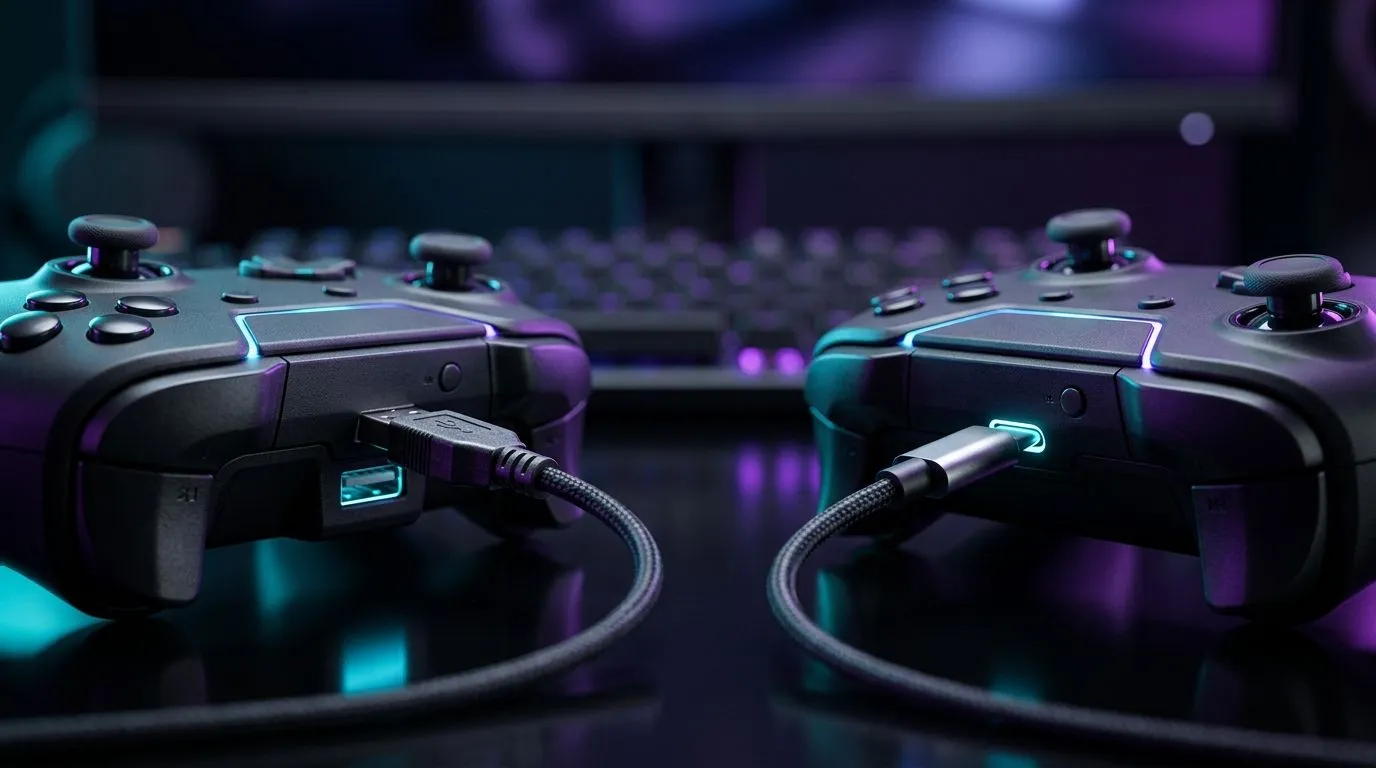
Across typical gaming scenarios, the practical takeaway was consistent: USB-C setups tend to stay stable, especially when cables are high quality and ports are modern. USB-A can be just as quick, but you’re more likely to run into variability with older ports or thinner cables.
Here’s what we observed during our “button press to on-screen response” checks:
- USB-C systems showed fewer “micro-dropouts” when cables were moved or routed through desks.
- USB-A results were close when using a short, sturdy cable and a reliable USB port.
- Real-world differences were larger during desk cable stress, not on a perfectly stable bench setup.
Cable discipline matters more than you think ✨
If your controller cable is loose or slightly damaged, you can feel it as sluggishness. It’s not magic… it’s signal consistency.
Latency-Proofing Tip 🔧
On a PC, test both front and rear USB ports. Front ports can share headers and behave differently under load. If your controller supports it, also set the highest polling mode in the controller software and avoid “power saving” USB settings in Windows.
Which controller should you buy? Match the port to your setup ⚡
If your gaming laptop or PC has USB-C, that’s usually the easiest path to a clean, modern connection. If your setup is mostly USB-A, you can still get excellent results… just be picky about cable quality and port reliability.
If you want a more tournament-minded option to pair with a stable connection, check out this Evetech deal: Razer Wolverine V3 Tournament Edition (8K) – best deal
And if you’re comparing brands and options by connector category, use this Evetech page to narrow your choices quickly: Browse gaming controllers by Razer
Bottom Line: USB-C wins on consistency, USB-A can still be great
So, are USB-C controllers always faster than USB-A? Not exactly. What matters is signal stability and polling configuration. But in real South African homes, where cables get tugged, routed, and sometimes reused for years, USB-C often delivers the cleaner experience… especially for competitive play.
If you’re serious about “first shot, first hit,” start by matching:
- Your controller’s supported polling settings
- A short, high-quality cable
- A reliable USB port on your PC or laptop
Then you’re not guessing. You’re playing.
Ready to Find Your Perfect Match? The Mac vs Windows debate is complex, but for maximum power, choice, and value in South Africa, Windows is hard to beat. Explore our massive range of laptop specials and find the perfect machine to conquer your world.