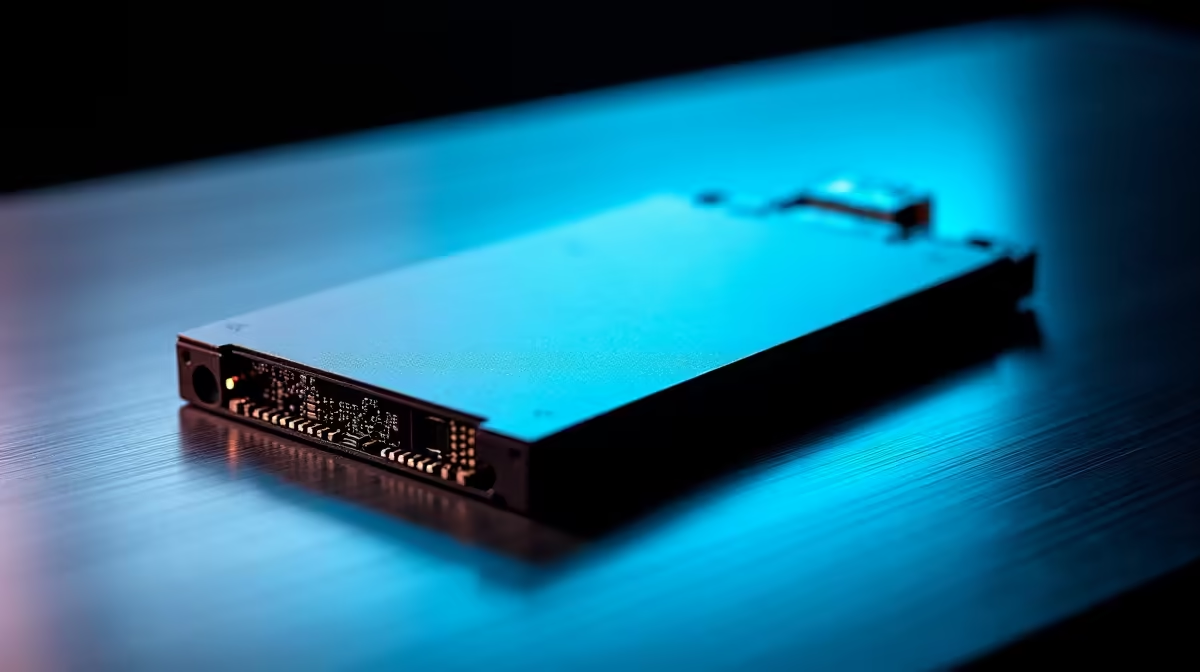
Thinking about grabbing a second-hand SSD from a local marketplace? We get it. Saving a few hundred Rand seems like a smart move, especially with prices on everything going up. But when it comes to the heart of your PC's speed, is that bargain really a bargain? This isn't just about used vs new SSDs; for gamers in South Africa, this decision can mean the difference between lightning-fast load times and frustrating, unexpected system failures. Let's dive in. 🚀
Used vs New SSD: The Real Cost in South Africa
At first glance, the choice seems simple. A used SSD costs less than a new one. But the true cost isn't just the price tag you see online. An SSD's lifespan is finite, measured in Terabytes Written (TBW). Think of it like a car's mileage... every file you save, every game you install, and every update you run adds "kilos" to the drive. Buying a used SSD means you're buying a component that has already lived part of its life, and you rarely know how hard that life was.
A brand-new drive gives you a fresh start, a full health bar, and most importantly, a manufacturer's warranty. This peace of mind is crucial, especially when it's storing your operating system and precious game saves. A fast SSD is a key part of a responsive system, working alongside your CPU to make everything feel snappy.
The Hidden Dangers of a Second-Hand Drive
When considering a used vs new SSD in South Africa, the risks often outweigh the savings. Let's break down why that cheap drive might cost you more in the long run.
The TBW Trap
Most sellers of used drives won't (or can't) tell you the exact TBW count. A drive used heavily for video editing or constant large file transfers could be nearing the end of its reliable life, even if it's only a year or two old. When an SSD fails, it often does so without warning, potentially taking all your data with it. A stable system depends on every part working together, from your graphics card to your storage.
Performance Degradation and Zero Warranty
Older SSDs, particularly early-generation SATA models, can be significantly slower than modern NVMe drives. As they fill up, their performance can also drop noticeably. A new drive guarantees you the advertised speeds right out of the box. More importantly, if a new drive fails within its warranty period, you're covered. With a second-hand drive... you're on your own. Ensuring your rig has a reliable power supply is another critical step to protect all your components from unexpected failure.
Check Before You Buy (Or After) 🔧
Curious about your current drive's health? Download a free tool like CrystalDiskInfo. It reads the S.M.A.R.T. data from your drive and gives you a "Health Status" percentage, along with the total data written (TBW). It’s a fantastic way to monitor the lifespan of your storage and decide when it's time for an upgrade!
The Ultimate Speed Test: A Clear Winner Emerges
Imagine this: you've just built a new rig. You've got plenty of gaming RAM, a powerful CPU cooler keeping things frosty, and everything is plugged into a compatible motherboard. Now, the storage.
- Scenario A (Used SATA SSD): Windows boots in 25 seconds. Loading into your favourite map in Warzone takes over a minute. Transferring a 20GB game file from another drive takes several minutes.
- Scenario B (New NVMe SSD): Windows boots in under 10 seconds. You're the first of your friends to load into the Warzone pre-game lobby. That 20GB file transfer? Done in under 30 seconds. ✨
The performance difference is night and day. Modern games are massive, and their performance is directly tied to storage speed. A new NVMe SSD, which is becoming the standard, offers a massive leap in performance that a used SATA drive simply can't match. If you're upgrading your whole system, consider one of our upgrade bundles that pair a new CPU and motherboard, creating the perfect foundation for a super-fast SSD.
The Verdict: Is a Used SSD Ever a Good Idea?
So, should you ever buy a used SSD? Maybe... but only in very specific situations. If you need a cheap, small-capacity drive for a secondary PC, a retro-build project inside a cool new PC case, or as a simple non-critical storage drive, and you get it for an absolute steal (and you're willing to accept the risk), it could be an option. Remember that good system maintenance, like applying fresh thermal paste, is key to longevity for all components, new or old.
However, for your main operating system, your primary game library, or any important data, the answer is a resounding "no". The small saving is not worth the risk of data loss, slower performance, and the headache of a dead drive. The used vs new SSD South Africa debate ends with a clear winner: new is always the smarter, safer, and faster choice for any serious PC user.
Ready for a Real Speed Boost? Don't gamble with your gaming performance or your data. The peace of mind and blistering speed of a new drive is an investment that pays off every single day. Explore our massive range of brand-new Solid State Drives and find the perfect upgrade for your rig.