Howzit, fellow gamers! Remember the buzz when AMD’s first X3D chip dropped? It felt like black magic for our frame rates. Now, with Zen 4’s 3D V-Cache CPUs dominating the charts, our eyes are glued to the horizon. The big question on everyone’s mind: could we see a monster Zen 6 X3D cache of 96MB or even more by 2026? Let’s dive into the silicon and see what the future holds. 🚀
Why X3D Cache is a Gaming Powerhouse
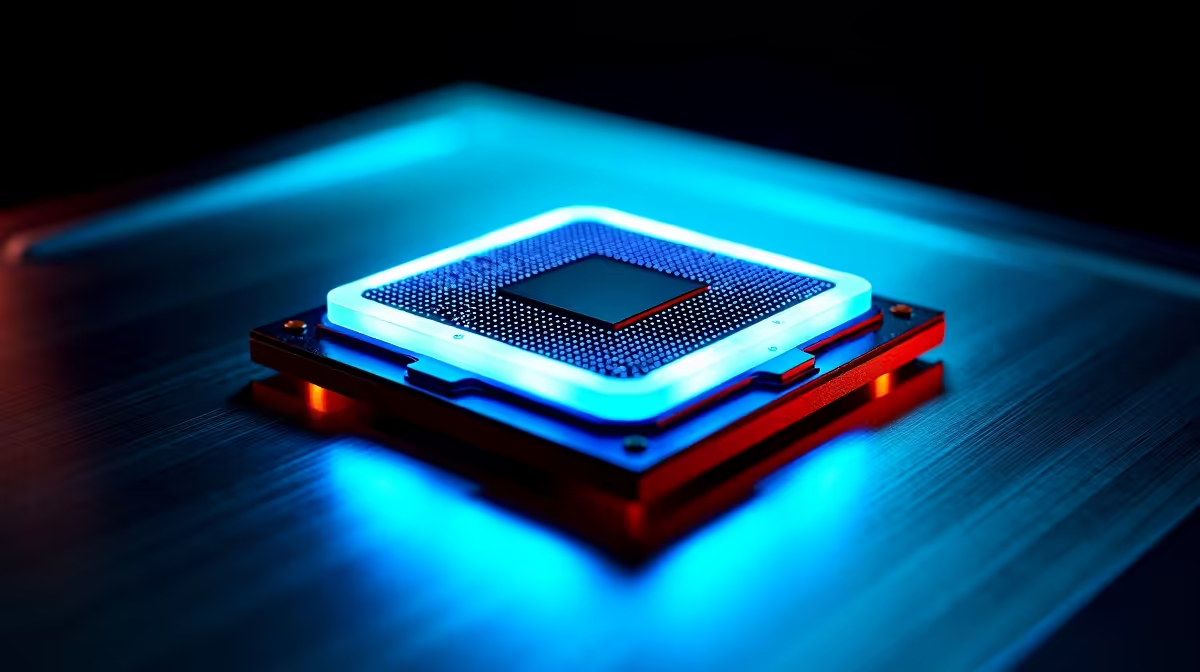
Before we look forward, let's quickly recap why this tech is so special. Think of L3 cache as a CPU's ultra-fast short-term memory. The bigger and faster it is, the less time the processor wastes fetching data from your much slower RAM. AMD's genius 3D V-Cache technology involves literally stacking an extra layer of this cache on top of the processor die.
This vertical approach drastically increases the available L3 cache, slashing latency and feeding the CPU cores with the data they need, exactly when they need it. For gaming, this means higher average frame rates and, crucially, much smoother minimums (1% lows). It’s the secret sauce behind the incredible performance of current AMD CPUs.
The Path to a Massive Zen 6 X3D Cache
So, is a 96MB L3 cache (or more) a realistic target for Zen 6? In short, yes... and we're kind of already there. The Ryzen 7 7800X3D, a modern legend, already boasts 96MB of L3 cache. The real question is how much further AMD can push this. Could we see future X3D chips hitting 128MB or even 192MB? It's highly plausible.
Here’s how it could happen:
- Process Node Shrinks: As AMD moves to more advanced manufacturing processes (like 3nm and beyond), they can pack more transistors into the same space. This could allow for a larger base L3 cache or a denser, more efficient V-Cache die on top.
- Second-Gen Stacking: The first generation of 3D V-Cache was a proof of concept. Future iterations will surely be optimised for better thermal performance and higher density, potentially allowing for even more cache to be stacked.
This cache-centric strategy is AMD's answer to competitors who focus on raw core counts. While a powerful 14-core Intel CPU is a beast at productivity, for pure gaming, a massive cache often delivers more tangible results.
Cache vs. Clockspeed ⚡
When choosing a gaming CPU, don't just look at the GHz. A chip with a massive cache (like an X3D model) running at a slightly lower clock speed will often outperform a CPU with a lower cache but higher clocks in many modern games. Always check real-world gaming benchmarks for the titles you actually play!
What a Future X3D CPU Means for Your Rig
Imagine firing up your favourite battle royale or a complex simulation game and experiencing buttery-smooth performance, even in the most chaotic moments. That's the promise of a future Zen 6 X3D cache. We’re talking about pushing high-refresh-rate monitors to their absolute limit and eliminating those frustrating micro-stutters for good.
The performance of chips from the legendary AMD Ryzen 7 series today gives us a tantalising glimpse of this future. As game worlds become more complex and AI more sophisticated, the advantage of having a massive on-chip data reservoir will only grow. ✨
The Verdict: Get Ready for the Next Leap
While we don't have a crystal ball, all signs point to AMD doubling down on its 3D V-Cache technology. A future with mainstream gaming CPUs featuring well over 100MB of L3 cache isn't just a dream; it's the logical next step. The journey towards an even more powerful Zen 6 X3D cache looks incredibly bright.
For now, the battle for the top spot remains fierce, with Intel's top contenders offering incredible value and performance in their own right. The best part? All this competition means more power and better prices for us gamers in South Africa.
Ready for a Performance Upgrade? The future of gaming CPUs is exciting, but you don't have to wait to experience incredible performance. Whether you're Team Red or Team Blue, the perfect processor for your rig is waiting. Explore our massive range of CPUs and find the power you need today.