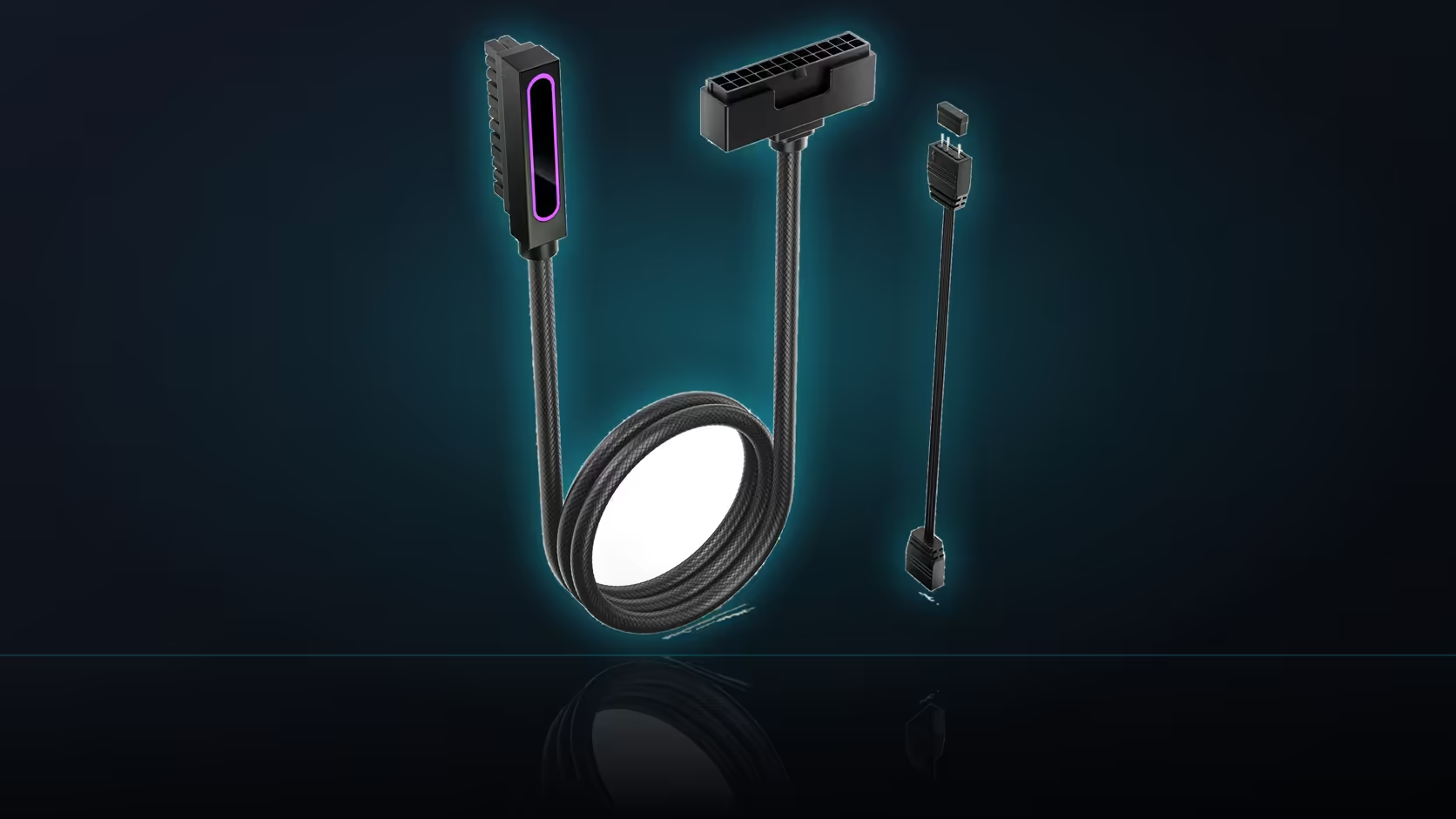
Getting an ATX side-exit head to physically seat into its socket is only the first hurdle - it says nothing about whether the space that connector now occupies belongs to something else nearby that will eventually need reaching too.
Quick Answer
A sideways head occupies space that may belong to a neighbouring latch. That matters when the connector beside it later needs releasing. Fit is only half the question, and reaching past the head is the part worth testing.
🔌 What commonly sits close enough to be affected
Drive connectors, front-panel header pins, and fan headers are the components most likely to sit near enough to a side-exit head to be affected, depending entirely on how a given board's designers chose to arrange the area immediately beside the 24-pin socket - some boards leave generous space there, others pack it tightly with exactly these kinds of neighbouring connections.
✅ Why seating alone is not a sufficient test
A side-exit head can seat perfectly into its socket, sitting flush and secure with no apparent problem, and still leave a neighbouring latch completely impossible to press or release afterward - this is a failure mode that genuinely only reveals itself when you actually attempt to reach and operate that nearby latch, not something visible from simply confirming the connector itself has gone in correctly.
⏰ When to actually run this test
Test this before the side panel goes back on for good, while there is still genuine room to reconsider the routing or even swap to the other exit direction entirely - discovering a blocked latch after the build is fully closed up and finished means undoing completed work to fix a problem that a few extra minutes of testing earlier would have caught.
🔧 What to do if a latch genuinely is blocked
Two alternatives exist if testing reveals a problem: choosing the opposite exit direction, or falling back to the straight-down version entirely, both of which physically move the head's body out of the specific space a blocked latch needs. This particular concern applies far less to the straight-down version in the first place, since its head drops toward the tray rather than cutting sideways across the board, competing for space below the socket rather than directly alongside it where neighbouring latches tend to live. Comfortable clearance here means enough room to get a fingertip or a small tool onto the latch without needing to move the cable out of the way first - a meaningfully higher bar than simply confirming the connector fits in its socket at all. AsiaHorse's own listings do flag this general concern, noting that board compatibility is limited on the side-exit versions and directly asking buyers to check clearance around the socket before committing to a purchase - this latch-access issue is effectively part of that same broader compatibility warning, not a separate concern invented independently of it. cable solutions rounds out the category this connector belongs to, and other accents worth testing the same careful way before finishing a build sit at NZXT case lighting.
Frequently Asked Questions
Which latches are usually nearby?
Drive connectors, front-panel headers and fan headers, depending on how the board arranges the area beside the 24-pin socket.
Is seating the head enough of a test?
No. A head can seat perfectly and still leave a neighbouring latch impossible to press, which only shows when you try.
When should the test happen?
Before the side panel goes back on, while there is still room to change the routing or reconsider the exit direction.
What if a latch is blocked?
The other exit direction or the straight-down version both move the head out of that space, so there are two alternatives.
Does this apply to the straight version?
Far less, since it turns away from the board and competes for space below the socket rather than alongside it.
How much clearance is comfortable?
Enough to get a fingertip or a small tool onto the latch without moving the cable, which is more than simply fitting allows.
Does AsiaHorse mention this?
The listings note that board compatibility is limited on the side-exit versions and ask you to check clearance around the socket.
Checking whether a side-exit head blocks a nearby latch?
Have a look at Evetech's power supply range and test latch access before the side panel goes back on.