Quick Answer
How to Choose the Right 144Hz monitor for 3D rendering needs a practical answer: identify the current limitation, check panel type, resolution, refresh rate, and choose the route that delivers clearer motion, more usable workspace, and less eye strain. If How to Choose the Right 144Hz monitor for 3D rendering does not change daily use, it is not worth overpaying for.
What How to Choose the Right 144Hz monitor for 3D rendering Means in Practice
How to Choose the Right 144Hz monitor for 3D rendering is useful when it turns Choose the Right 144Hz monitor for 3D rendering into a decision the reader can act on. For SA tech users looking for practical guidance, How to Choose the Right 144Hz monitor for 3D rendering means checking panel type, resolution, and refresh rate before chasing a headline feature.
The practical test is whether How to Choose the Right 144Hz monitor for 3D rendering improves clearer motion, more usable workspace, and less eye strain. If the answer to How to Choose the Right 144Hz monitor for 3D rendering is not visible in resolution match or refresh target, the topic is probably a lower priority than fixing the current bottleneck.
Checks Before Acting on How to Choose the Right 144Hz monitor for 3D rendering
The support check for How to Choose the Right 144Hz monitor for 3D rendering is simple: current South African availability, clear warranty handling, and a path that still makes sense if the first-choice item sells out. For How to Choose the Right 144Hz monitor for 3D rendering, use MSI Monitors as the category anchor, then compare substitutes by the same requirement.
Compatibility matters because How to Choose the Right 144Hz monitor for 3D rendering can fail in small details: GPU mismatch, weak stand ergonomics, or wrong cable. Before buying for How to Choose the Right 144Hz monitor for 3D rendering, confirm adaptive sync and desk space so the article leads to a usable setup, not a return.
Frequently Asked Questions
What matters most for How to Choose the Right 144Hz monitor for 3D rendering?
For How to Choose the Right 144Hz monitor for 3D rendering, the most important factor is whether the choice improves clearer motion, more usable workspace, and less eye strain. Start How to Choose the Right 144Hz monitor for 3D rendering with panel type, resolution, and refresh rate, then compare live availability and support before deciding.
How do I avoid the wrong buy for How to Choose the Right 144Hz monitor for 3D rendering?
To avoid the wrong buy for How to Choose the Right 144Hz monitor for 3D rendering, define the workload first and reject options that create GPU mismatch, weak stand ergonomics, or unnecessary extra purchases. For How to Choose the Right 144Hz monitor for 3D rendering, value means the whole setup works better, not just that the sticker price is lower.
Where should I compare live options for How to Choose the Right 144Hz monitor for 3D rendering?
For How to Choose the Right 144Hz monitor for 3D rendering, compare the closest matching Evetech category and then verify the exact model, substitute options, warranty cover, and delivery timing. Live stock and specials for How to Choose the Right 144Hz monitor for 3D rendering can change, so the final check should happen before checkout.
Final Take
How to Choose the Right 144Hz monitor for 3D rendering is ready to publish only when it helps the reader make a decision they can act on. Use How to Choose the Right 144Hz monitor for 3D rendering as the filter: choose the option that improves clearer motion, more usable workspace, and less eye strain, verify the live Evetech category that matches the need, and avoid any recommendation that depends on unverified stock, private data, or unsupported benchmark claims.
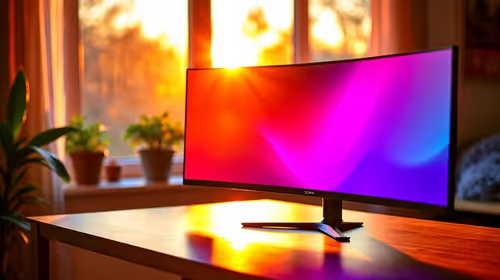
Compare Current Monitor Options Start with Curved Monitors, then check MSI Monitors, ViewSonic Monitors. For How to Choose the Right 144Hz monitor for 3D rendering, confirm live South African stock, warranty cover, and the full setup cost before you decide.