


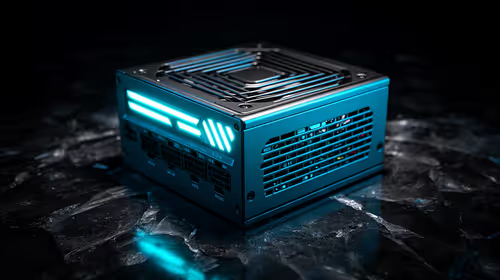
850W PSU Planning for RTX 5080 Super Builds in SA
850W for RTX 5080 Super needs a full-build check, not a simple yes. Review GPU guidance, CPU draw, transient load, connectors, PSU quality, and upgrade plans before deciding.
Read moreShould I spend more on the GPU or the CPU should be shortlisted around the job it must do. South African buyers should compare GPU tier, VRAM, cooling, and PSU headroom, warranty path, and upgrade room before treating any pick as best.
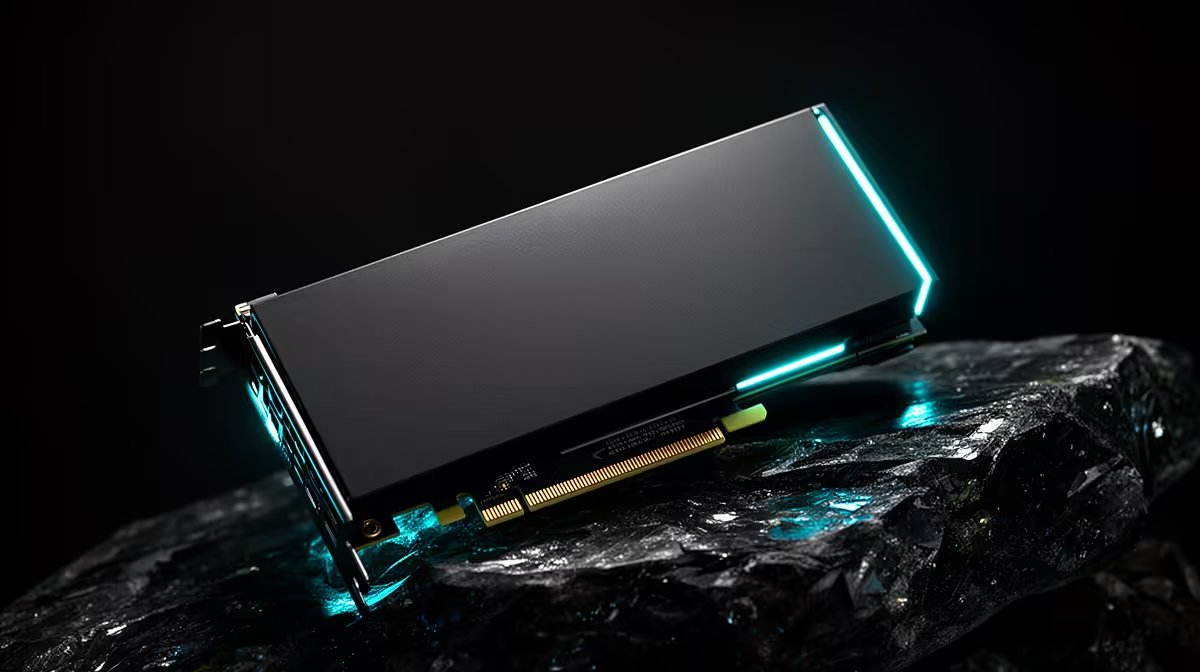
On a R20,000 esports build, weight the budget toward the CPU. CS2 and Valorant are CPU-bound at 240-plus fps, so a Ryzen 7 7800X3D or 9800X3D paired with an RTX 5060 Ti delivers more competitive frames than a cheap CPU with a bigger GPU. Put roughly R6,000-R8,000 into the CPU and the rest into a 1440p-capable card.
Esports engines run light on the GPU but lean hard on single-thread CPU performance and cache. At the 240-360 fps competitive players target in CS2 and Valorant, the CPU is the limiter, not the graphics card. A Ryzen 7 9800X3D with its large 3D V-Cache pushes well past 400 fps in CS2, where a budget CPU stalls at 200-250 fps regardless of the GPU fitted.
The smart split pairs a strong CPU with a mid-range GPU. A Ryzen 7 7800X3D or 9800X3D (roughly R6,000-R10,000) plus an RTX 5060 Ti or 5070 comfortably feeds a 240-360Hz 1080p or 1440p panel. Spend up on the GPU only if you also play graphically heavy single-player titles; for pure esports the CPU is where extra rand buys extra frames.
Spend more on the CPU. Competitive titles are CPU-bound at the high frame rates esports demands, so a Ryzen 7 9800X3D feeding a mid-range RTX 5060 Ti beats a weak CPU with a pricier GPU.
A Ryzen 7 7800X3D or 9800X3D. Their large 3D V-Cache pushes CS2 past 400 fps, where a budget CPU stalls at 200-250 fps no matter how strong the GPU is.
An RTX 5060 Ti or 5070 comfortably feeds a 240-360Hz 1080p or 1440p panel for competitive play. You only need a bigger GPU if you also run heavy single-player titles.
Weight the budget toward the CPU for esports frames Pair a Ryzen 7 7800X3D or 9800X3D from Evetech with a mid-range RTX 5060 Ti or 5070, then a high-refresh panel, so the chip never caps your competitive frame rate.
850W for RTX 5080 Super needs a full-build check, not a simple yes. Review GPU guidance, CPU draw, transient load, connectors, PSU quality, and upgrade plans before deciding.
Read more
FPS drops blamed on a wireless gaming headset often point to input, driver, USB, network, or system-load checks. Use a quick SA-friendly troubleshooting flow to isolate software, firmware, thermals, storage, and game settings before replacing
Read more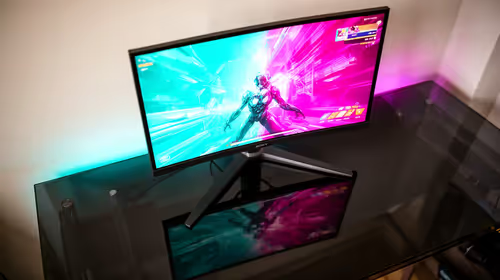
1440p is the sweet spot for Polokwane gamers because it balances sharper visuals with manageable GPU demand. Compare refresh rate, graphics card tier, monitor size, and game settings before choosing a display.
Read more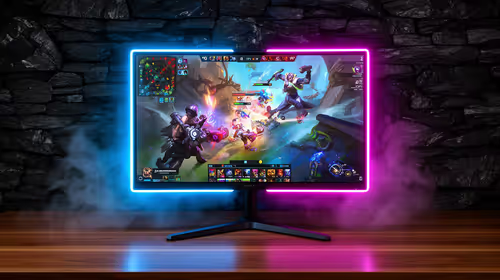
240Hz monitors are mainstream in SA esports because smoother motion and lower input feel matter in Sandton matches. See how GPU frame rates, panel choice, desk setup, and local budget decide whether 240Hz is a smart upgrade from 144Hz.
Read more
4K monitors still cost more for gamers because resolution, refresh rate, panel quality, and GPU demands raise the bar. Polokwane buyers should compare screen size, ports, adaptive sync, and whether 1440p is a better fit.
Read more
Edenvale gpu price pressure questions need cautious SA context because pricing can move with availability, exchange rates, specs, and warranty support. Treat the trend as a planning signal, not a fixed price promise.
Read more
Cyber Monday gaming chair is a cautious guide for seasonal tech deal planning. Compare spec priorities, timing, warranty support, and realistic SA price checks for SA buyers without assuming live prices, availability, or exact benchmark results.
Pre-Black Friday wired gaming mouse buying planning should focus on shape, specs, warranty, and usual price bands. Use this SA guide to shortlist sensible options before deal periods without assuming live discounts.
ATX 3.1 vs ATX 3.0 for Competitive Esports comes down to GPU power connectors, PSU quality, cable routing, headroom, and upgrade plans. SA buyers should match the choice to their setup instead of assuming one option always wins.
Wi-Fi 6E vs Wi-Fi 6 depends on Couch co-op gaming needs, platform limits, and budget fit. Compare compatibility, latency, upgrade path, and real setup constraints before choosing for an SA build.
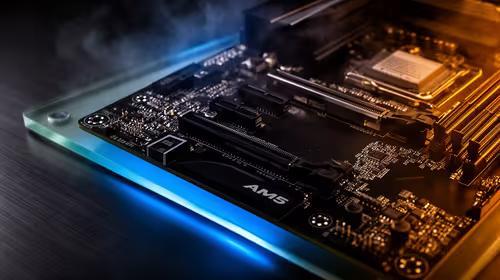
How to fix FPS drops on AM5 motherboard starts with BIOS, chipset drivers, cooling, and memory stability. South African gamers can work through power, EXPO, refresh-rate, overlay, and game-setting checks before spending on new hardware.
RX 9070 XT build frame pacing issues needs a step-by-step check before replacing parts. Review drivers, settings, thermals, power, background apps, display limits, cables, and game options before changing hardware.
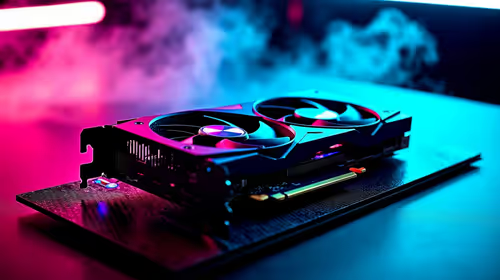
Low fps on rtx 5080 build in south africa usually needs a settings, driver, thermal, or power check first. Work through safe SA troubleshooting steps before replacing parts or assuming a full upgrade.
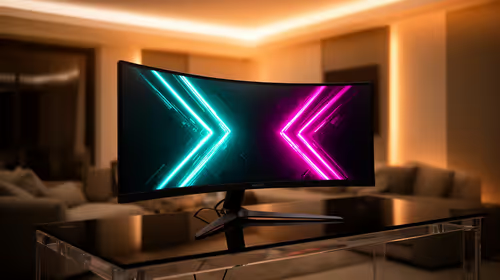
1440p is the sweet spot for Mbombela gamers because it sharpens detail without demanding 4K-level GPU power. SA buyers should weigh monitor refresh rate, graphics card tier, desk size, and game mix before moving up from 1080p.
850W for RTX 5080 Super needs a full-build check, not a simple yes. Review GPU guidance, CPU draw, transient load, connectors, PSU quality, and upgrade plans before deciding.
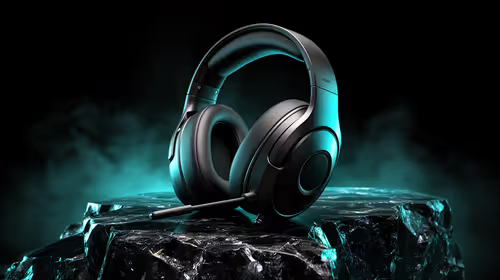
Bluetooth headset or 2.4GHz wireless headset decisions in SA hinge on latency, device support, battery, and dongle access. Gamers should match the headset to competitive play, couch use, calls, and platform ports.
FPS drops blamed on a wireless gaming headset often point to input, driver, USB, network, or system-load checks. Use a quick SA-friendly troubleshooting flow to isolate software, firmware, thermals, storage, and game settings before replacing
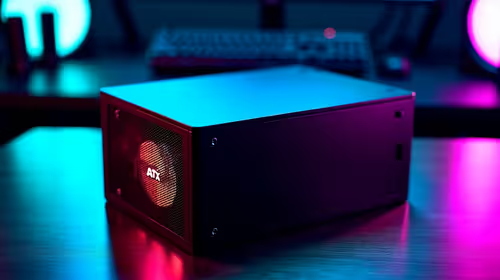
ATX 3.1 vs ATX 3.0 for streaming on Twitch and YouTube Difference explained is mostly about compatibility, budget, upgrade path, and setup fit. SA buyers should check device support and real needs before expecting a clear win from either option.