Quick Answer
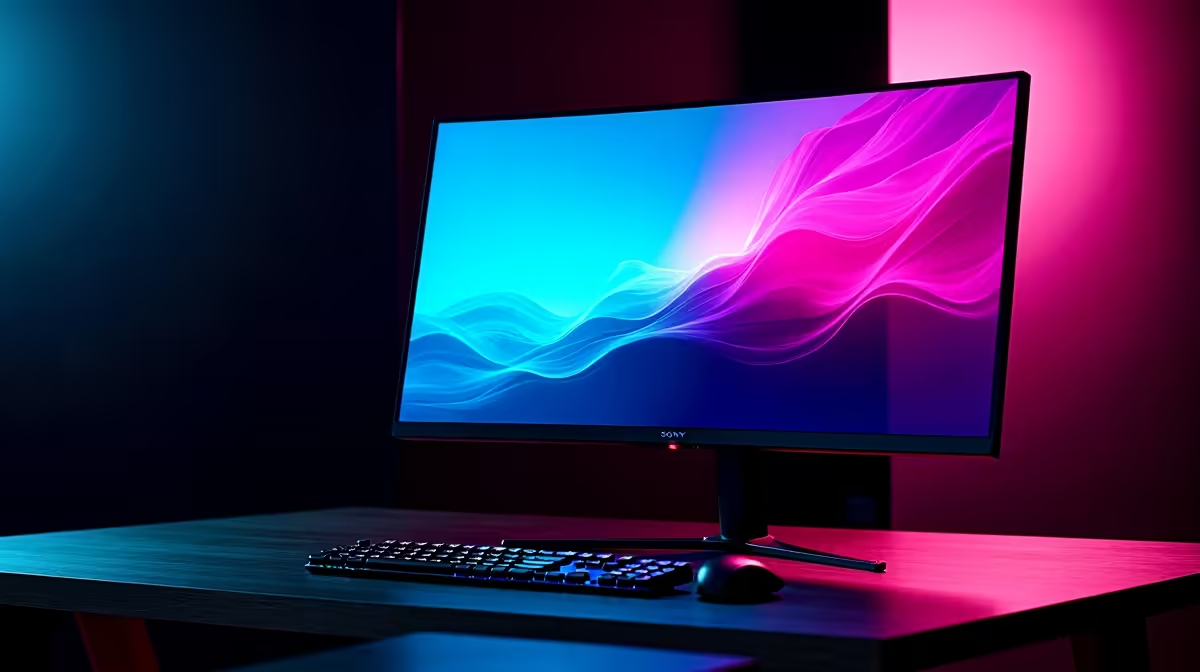
An IPS monitor crashing or going black during games is usually caused by driver instability, loose or faulty cables, overclocking issues, or power-related problems. In South Africa, loadshedding voltage fluctuations add an extra layer of risk. Systematically checking each cause resolves most cases.
A monitor that crashes or goes black mid-game is one of the most frustrating PC problems to diagnose - it can look identical whether the cause is a cable, a driver, the GPU, or mains power. For South African gamers dealing with erratic power infrastructure on top of standard hardware troubleshooting, here is a step-by-step fix guide.
Check Cables and Physical Connections First
Before touching any software, inspect your display cable. DisplayPort and HDMI cables can cause black screen crashes when they are faulty, loose, or not rated for the bandwidth your monitor requires. A 1440p 144 Hz signal over a low-quality or damaged cable will often crash rather than degrade gracefully. Swap to a known-good cable - ideally a certified DisplayPort 1.4 or HDMI 2.1 cable for high-resolution high-refresh setups. Try a different port on your GPU. If you are using an adapter, remove it and connect directly. These simple steps resolve a large proportion of monitor crash cases.
Update or Roll Back GPU Drivers
Driver issues are the second most common cause of display crashes during gaming. If crashes started after a driver update, roll back to the previous version using Display Driver Uninstaller (DDU) in safe mode to perform a clean removal, then install the prior stable release. If you have been running older drivers and crashes are new, update to the latest stable release - sometimes the fix is the opposite direction. After any driver change, test for at least a full gaming session before concluding the problem is resolved.
Loadshedding and Power Quality Factors
In South Africa, mains power quality is a real factor in hardware stability. Voltage fluctuations during loadshedding transitions, particularly as power returns, can stress PSUs and monitors. If crashes correlate with power events - or if your area has poor power quality generally - a quality surge protector or UPS is worth the investment. Some IPS monitors are also sensitive to input voltage quality; running on a UPS''s regulated output rather than raw mains can eliminate power-related display crashes entirely.
Frequently Asked Questions
Q: Why does my monitor go black for a few seconds during games and then recover? A: Brief black screens that recover usually indicate a driver timeout or signal handshake issue rather than a hardware failure. Update your GPU drivers and check your display cable first.
Q: Can an overclocked monitor refresh rate cause crashes? A: Yes. If you have overclocked your monitor''s refresh rate in the GPU control panel, this can cause instability. Reset to the monitor''s factory maximum refresh rate and test whether crashes stop.
Q: Could loadshedding damage my monitor? A: Voltage spikes when power returns after loadshedding can damage monitors and other hardware over time. A surge protector rated for lightning and power spikes offers meaningful protection at relatively low cost.
Ready to Find Your Perfect Match? Shop at Evetech.