You spend hours dialling in 144Hz for buttery-smooth gaming frags, but what about the eight hours you spend battling spreadsheets and emails? We often overlook our monitor's refresh rate for work, assuming it doesn't matter. But is 60Hz enough for office work, or is it a bottleneck on your productivity you haven't noticed yet? The answer might surprise you and change how you see your daily grind. Let's dive in.
So, What is Refresh Rate (Hz) Anyway?
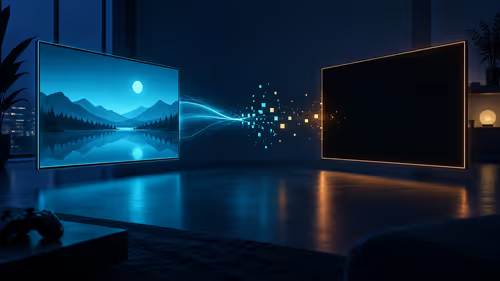
Before we decide if 60Hz is good enough for your office tasks, let's quickly break down what "Hz" (Hertz) means. In simple terms, it's how many times your monitor updates the image on the screen every second. A 60Hz monitor refreshes the picture 60 times per second. A 120Hz monitor does it 120 times.
While many of all our gaming monitors boast 144Hz or more for a competitive edge, the standard for most office displays has long been 60Hz. But is standard still optimal?
The Case for 60Hz: Is It Still Good Enough?
For many people, the answer is a straightforward yes. If your daily work consists mainly of static tasks like writing documents, reading emails, or entering data into a spreadsheet, a 60Hz monitor is perfectly capable. It gets the job done without any fuss.
The biggest advantage? Price. 60Hz panels are incredibly affordable, meaning you can often get a larger screen or higher resolution for your budget. For a basic, no-frills setup, 60Hz is a reliable workhorse, and you can find incredible value in our best PC monitor deals. But "good enough" isn't the same as "great"...
Where a Higher Refresh Rate Makes a Difference 📈
The moment you start interacting with your screen, the limitations of 60Hz can appear. Is 60Hz enough for office work that involves a lot of movement? Maybe not. Here’s where you’ll feel the upgrade:
- Smoother Scrolling: Scrolling through long web pages, documents, or code is significantly smoother and less jarring on a 75Hz, 120Hz, or 144Hz monitor.
- Fluid Mouse Movement: Your mouse cursor will glide across the screen instead of stuttering. It’s a small change that makes your entire PC feel more responsive.
- Window Dragging: Moving and resizing windows feels snappy and instant, without the "ghosting" or trailing effect you might see on a 60Hz screen. This is especially noticeable on large or curved monitors.
- Reduced Eye Strain: For some users, the smoother motion of a higher refresh rate display can lead to less eye fatigue after a long day. It's a more natural and comfortable viewing experience.
Productivity Pro Tip ⚡
On Windows, use Microsoft's PowerToys and the FancyZones utility to create custom snap layouts. It's a lifesaver for managing multiple apps on a big screen, letting you perfectly organise your browser, email, and Teams windows for maximum efficiency.
The Sweet Spot: Finding Your Perfect Office Monitor
So, is 60Hz enough for office work? It's adequate, but upgrading offers a tangible quality-of-life improvement that makes your daily computer use more pleasant and feel more premium. You don’t need a 240Hz esports panel, but stepping up to 75Hz or 120Hz provides a noticeable boost.
When choosing, consider other factors too. The incredible detail from crystal-clear 4K and 5K monitors can make text sharper and reduce strain, while innovative portable monitors can create a dual-screen setup anywhere.
Ultimately, the best monitor is one that fits your workflow and budget. Once you've picked your panel, getting your setup ergonomically perfect with the right monitor accessories like a quality monitor arm can make all the difference. ✨
Ready to Upgrade Your Workspace?
A smoother, clearer monitor is a productivity upgrade you'll feel every single day. From crisp text to fluid scrolling, the right screen makes work less of a chore. Explore our massive range of PC monitors and find the perfect display to conquer your workday.