Quick Answer
South African shoppers should check switch type (tactile, clicky, or linear), key layout compatibility with South African standards, build quality, wireless or wired preference, and rand-for-rand value before purchasing a mechanical keyboard.
Switch Types: The Core Decision for SA Buyers
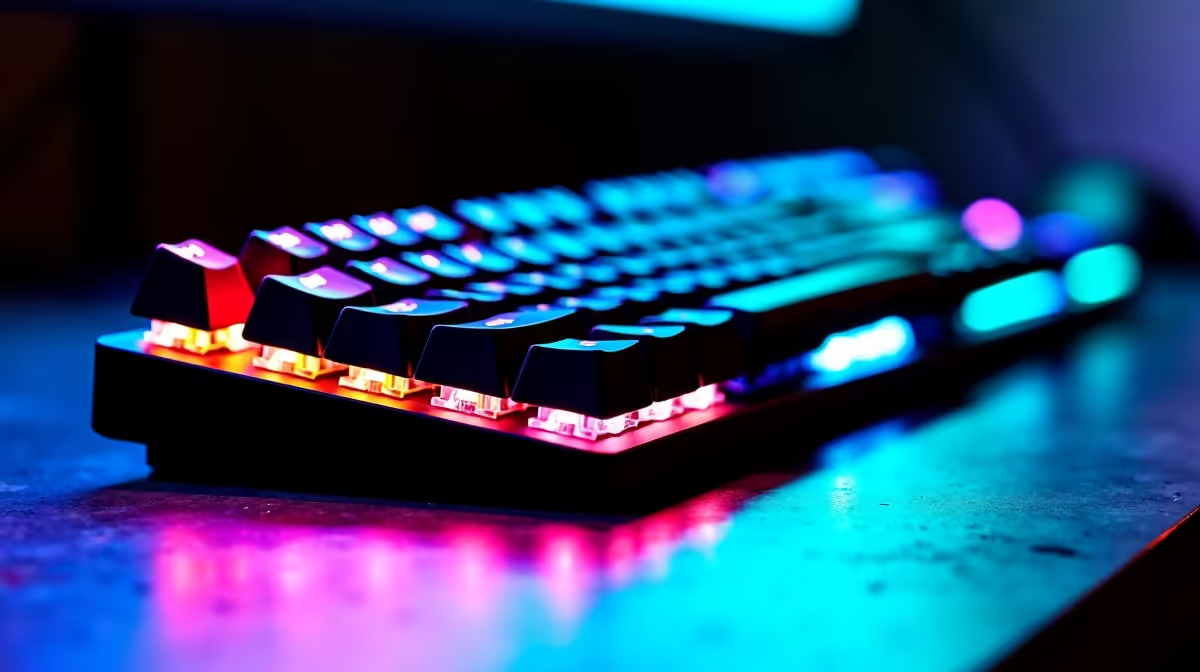
The mechanical switch is what defines the feel and sound of the keyboard, and it is the most important choice you will make. Switches fall into three broad categories. Linear switches (like Cherry MX Red or similar variants) have a smooth keystroke with no tactile bump or audible click, making them popular with gamers who prefer fast, quiet keystrokes. Tactile switches (like Cherry MX Brown or equivalents) offer a noticeable bump at the actuation point without a loud click, which makes them versatile for both typing and gaming. Clicky switches (like Cherry MX Blue or similar) provide both a tactile bump and an audible click, beloved by typists but potentially disruptive in shared living spaces like student res.
For South African buyers, the availability of aftermarket switches and switch replacement parts is worth considering. Well-known switch brands are more widely stocked locally and easier to source if you want to do a switch swap down the line. If you plan to use the keyboard in a shared environment - digs, koshuis, or an open-plan office - a linear or tactile switch is generally more neighbour-friendly than a loud clicky option.
Layout, Keycap Compatibility, and South African Considerations
Keyboard layout is a practical concern that South African buyers sometimes overlook. Most mechanical keyboards sold locally use the US ANSI layout or the UK ISO layout. The UK ISO layout includes a larger Enter key and an additional key between the left Shift and Z, which some SA typists prefer. ANSI is more widely available in gaming-oriented mechanical keyboards and typically offers a broader selection of aftermarket keycap sets.
If you type in Afrikaans and regularly need accented characters, check that your intended software input method works correctly with the keyboard's layout. Hardware differences do not prevent you from typing in Afrikaans, but the key positions for symbols and special characters will differ between ANSI and ISO layouts, and between TKL (Tenkeyless) and full-size designs. Most mechanical keyboards in the gaming segment are available in 60%, TKL, or full-size form factors - choosing based on your desk space and whether you use the numpad regularly.
Wired vs Wireless and Build Quality Checks
Wireless mechanical keyboards have matured significantly and the latency gap versus wired options has effectively closed for most use cases including gaming. A wireless mechanical keyboard reduces desk cable clutter and allows flexible positioning, which matters for ergonomic setups. Battery life on quality wireless mechanical keyboards typically ranges from a few weeks to several months depending on whether RGB lighting is enabled - RGB lighting draws substantial power and significantly reduces wireless battery life.
When evaluating build quality, the weight and chassis material tell you a lot. Keyboards with aluminium top plates and aluminium or steel switch plates feel noticeably more solid than those with fully plastic construction. The mounting system (how the switch plate attaches to the case) affects typing feel - gasket-mounted and top-mounted keyboards have distinctly different acoustics and flex. For a South African buyer buying online without the ability to test in person, looking for video sound and feel tests of the specific model before purchasing helps set expectations accurately. A heavier keyboard is generally a sign of better build quality, all else being equal.
Frequently Asked Questions
Q: What is a good budget for a quality mechanical keyboard in South Africa?
A: Entry-level mechanical keyboards from reputable brands start from around R600 to R1,000 and offer genuine mechanical switches with decent build quality. Mid-range keyboards with better build materials, RGB, and wireless connectivity typically run R1,200 to R2,500. Premium and enthusiast models can exceed R3,000.
Q: Are hot-swappable keyboards worth it for South African buyers?
A: Yes, particularly if you are unsure which switch type you prefer. Hot-swappable keyboards allow you to change switches without soldering, making it easy to experiment with different switch feels. This is a useful feature for buyers who cannot test keyboards in a physical store before buying.
Q: Does a mechanical keyboard make a difference for gaming?
A: For most gamers, a mechanical keyboard improves the tactile feedback and consistency of keystrokes compared to a membrane keyboard. Linear switches with low actuation force are particularly popular for gaming because they allow fast repeated inputs. However, a skilled player with a good membrane keyboard will outperform a poor player on a top-tier mechanical board - technique matters more than hardware at most skill levels.
Also at Evetech: All Gaming Keyboards | Graphics Card Deals
Ready to Find Your Perfect Match? Shop at Evetech