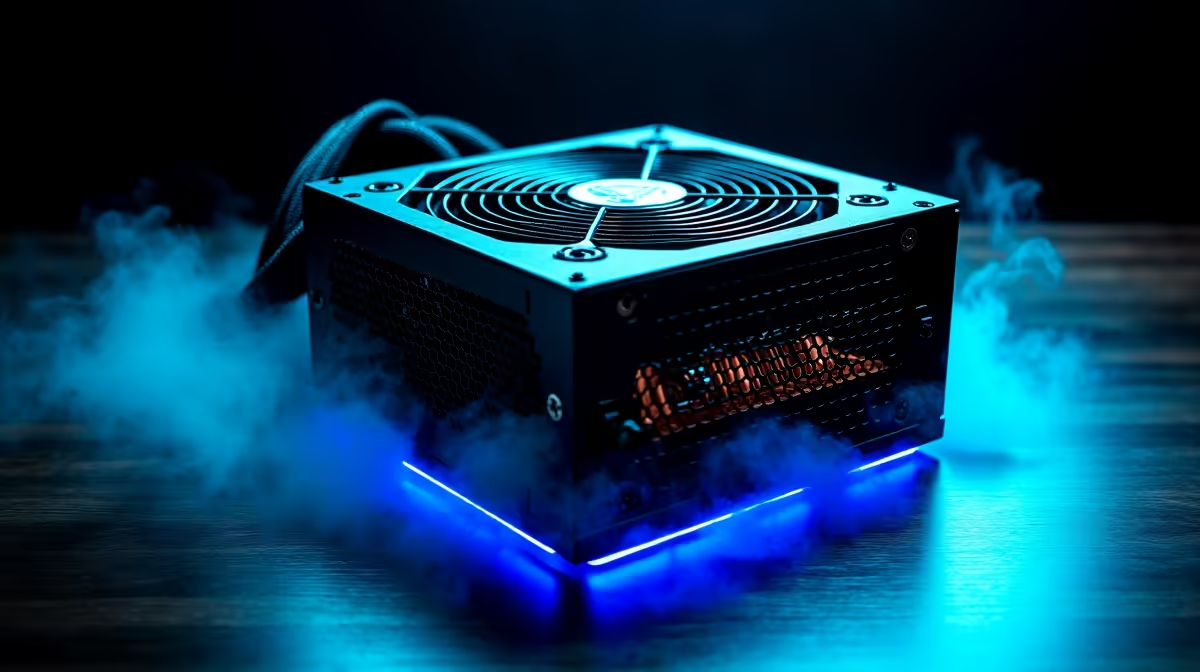
A PSU delivering low power output - lower than its rated wattage - causes system instability, random shutdowns, and failure to boot under load. This guide covers the most common causes of PSU underperformance and how to diagnose and fix them systematically.
Quick Answer
Why is my PSU delivering low power? The most common causes are a failing PSU, an overloaded rail, poor cable connections, high ambient temperatures reducing the unit’s efficiency, or a PSU that’s simply undersized for your build. Testing with a multimeter or PSU tester is the fastest way to confirm whether the unit itself is at fault.
🔧 Symptoms of a Low-Power PSU
Before troubleshooting, confirm the symptoms match a power delivery problem:
- PC shuts down unexpectedly under gaming or GPU load
- System fails to POST with a new high-power component installed
- CPU or GPU clock speeds throttle even with cooling headroom available
- Random reboots without BSOD (suggests hardware power issue, not software)
- PC boots fine but crashes when running benchmarks or intensive applications
- USB devices drop out intermittently (indicating 5V rail instability)
📊 Common Causes and Fixes
1. Insufficient Wattage for the Build
The most common cause: the PSU is simply underpowered for the components installed. A 550W PSU powering an RTX 5080 and a Core Ultra 9 285K will struggle under full load, even if it worked fine before an upgrade.
To calculate required wattage: add up the TDP of your CPU and GPU, add approximately 100W for other components (RAM, SSDs, fans), then add 20% headroom. For example, a 250W GPU + 150W CPU = 400W + 100W miscellaneous + 20% = approximately 600W minimum PSU.
Fix: Upgrade to an appropriately rated PSU.
2. Aging PSU Losing Capacitor Capacity
PSU electrolytic capacitors degrade over time. A 650W PSU that’s five years old may only reliably deliver 550–580W under optimal conditions and less under heat stress. Symptoms appear gradually: stable under light loads, crashing under sustained heavy loads.
Fix: If your PSU is 5+ years old and showing instability, replacement is the correct answer. PSU degradation is not repairable at home.
3. Poor Cable Connections
Loose or partially seated PCIe power connectors cause intermittent power delivery issues. The GPU’s 8-pin or 12-pin power connectors must click fully into place. Modular PSU cables are particularly prone to partial seating if not pushed firmly.
Fix: Unplug and firmly reseat all power connectors, especially GPU power cables and the 24-pin motherboard connector.
4. High Ambient Temperature
PSUs are rated at specific ambient temperatures (typically 25°C for 80+ Gold). In a poorly ventilated case or a warm room, efficiency drops and the unit’s thermal protection may reduce output. A PSU fan that’s running loudly or a hot exhaust from the PSU indicates thermal stress.
Fix: Ensure case airflow is adequate. Clean dust filters. Ensure the PSU intake fan has clear airspace below the unit. If the case has a PSU shroud, verify it isn’t blocking airflow entirely.
5. Shared or Overloaded 12V Rail (Multi-Rail PSUs)
Older multi-rail PSUs split the 12V supply across multiple rails with individual current limits. A single rail may hit its limit even if total wattage isn’t exceeded - common when multiple high-power components share one rail.
Fix: Modern single-rail PSUs (most 80+ Gold and Platinum units from reputable manufacturers) avoid this issue. If using an older multi-rail unit, try redistributing cables across different rail connectors.
💡 How to Test Your PSU
Paper Clip Test (basic): With the PC unplugged, connect a paper clip between the green wire (PS_ON) and any black wire (Ground) on the 24-pin connector. Plug in the PSU and switch it on. If the PSU fan spins, the unit is receiving power and the 12V standby circuit is functional. This test does NOT confirm the unit delivers rated wattage under load.
PSU Tester: An inexpensive PSU tester (available at most electronics retailers) gives voltage readings on each rail. The 12V rail should read between 11.4V and 12.6V. The 5V rail should read 4.75V–5.25V. Readings outside these ranges under load indicate a failing unit.
Multimeter (accurate): Use a multimeter on the DC voltage setting, probe the 12V and 5V rails on the motherboard’s 24-pin connector while the system is under load. This is the most accurate home test method.
Swap Test: If you have access to a known-good PSU of sufficient wattage, swapping it into the system is the most reliable diagnostic - if the system stabilises, the original PSU is at fault.
❓ Frequently Asked Questions
Can a low-quality PSU damage other components? Yes. A failing or low-quality PSU with poor voltage regulation can deliver spikes or sags that damage CPUs, motherboards, and SSDs. If you suspect PSU failure, stop using the system and replace the unit before further damage occurs.
How long should a quality PSU last? A reputable 80+ Gold or Platinum PSU from a major manufacturer (Corsair, Seasonic, EVGA, be quiet!) should last 8–10 years under normal use. Lower-tier budget units can fail in 3–5 years. Most PSUs come with 5–10 year warranties - check yours before paying for repairs.
My PSU is 80+ Rated. Does that mean it won’t fail? 80+ ratings indicate efficiency (how much wall power is converted to usable DC), not reliability or power delivery accuracy. An 80+ Bronze unit from an unknown brand is far less reliable than a premium 80+ Gold unit from an established manufacturer. Brand and build quality matter as much as the efficiency rating.
Evetech stocks All Power Supplies and Graphics Card Deals — shop online with fast delivery across South Africa.
Ready to Find Your Perfect Match? Shop at Evetech