Quick Answer
The RTX 5060 Ti runs at moderate noise levels under gaming load, with fan speeds typically reaching 1500 to 2000 RPM at peak, producing around 35 to 42 dB(A) depending on the AIB partner cooler. Temperatures under sustained load stabilise between 70 and 80 degrees Celsius on most triple-fan designs, with dual-fan variants running 5 to 8 degrees hotter.
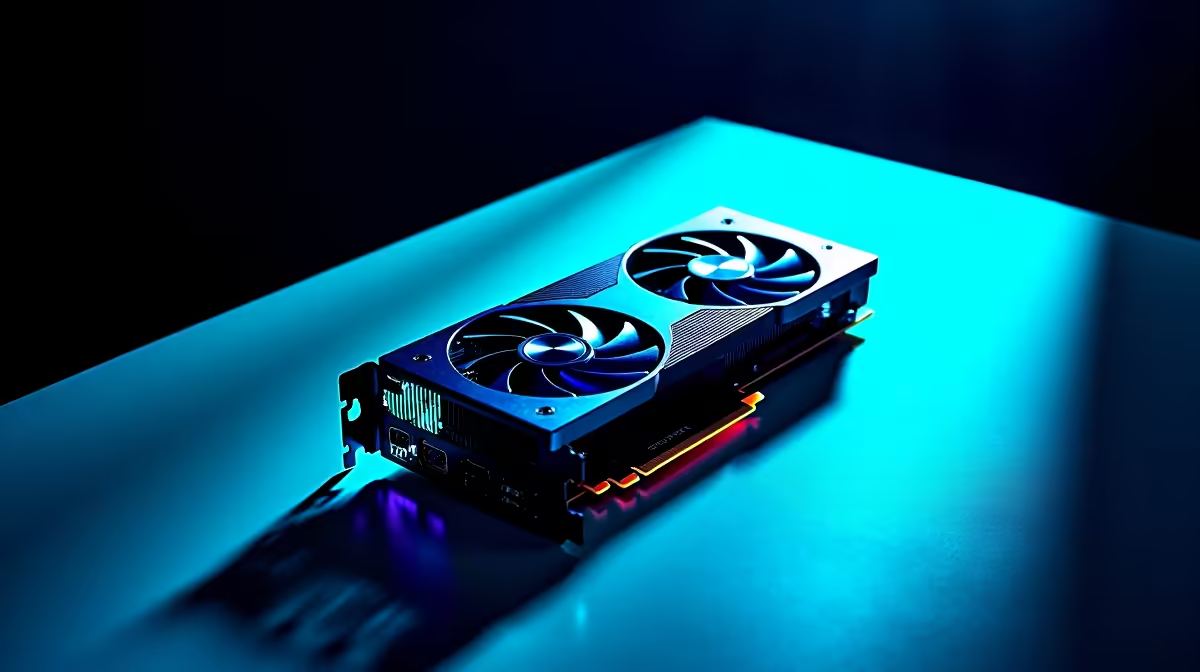
The RTX 5060 Ti occupies the mid-range gaming GPU segment in 2026, built on NVIDIA's Blackwell architecture with a TDP around 165W to 180W depending on AIB partner. It is quieter and cooler to run than the RTX 5070 Ti and 5080 above it, which makes thermal and noise behaviour a realistic positive for South African builders running systems in shared living spaces, student res rooms, or home offices where noise sensitivity matters.
Noise Levels on the RTX 5060 Ti
At idle and light desktop loads, most RTX 5060 Ti AIB cards enter semi-passive mode, meaning fans stop entirely until a temperature threshold (typically 50 to 60 degrees) is crossed. This makes the card effectively silent during web browsing, video streaming, and light productivity work. Under gaming load, fan behaviour depends on the AIB cooler and the default fan curve. Triple-fan flagship designs like the ASUS TUF Gaming RTX 5060 Ti and MSI Gaming X Trio keep noise at or below 38 dB(A) at sustained gaming loads, which is quiet enough to be largely masked by in-game audio at moderate speaker or headphone volume. Dual-fan designs in the same power bracket run fans harder to move equivalent airflow, pushing noise up to 40 to 45 dB(A) - still not loud, but more audible in quiet environments.
Temperature Under Load
The RTX 5060 Ti's lower TDP compared to the 5070 and above means it is easier to cool effectively. At 1080p and 1440p gaming loads - the resolutions this card targets - GPU temperatures on triple-fan designs typically stabilise between 68 and 76 degrees Celsius in a case with adequate airflow. Dual-fan designs in well-ventilated cases sit at 72 to 82 degrees. In constrained airflow environments (small form factor cases, front-panel-obstructed mid towers), temperatures can push toward the low 80s, which is within operating limits but closer to where boost clock stability becomes a factor. South African summers push ambient temperatures in gaming rooms up significantly, which can add 3 to 5 degrees to GPU load temperatures compared to cooler months.
Improving Thermal Performance
For SA gamers running the RTX 5060 Ti in warmer ambient conditions, a custom fan curve via MSI Afterburner helps - setting fans to ramp more aggressively from 60 degrees upward keeps temperatures in the comfortable zone with a minor increase in noise. Ensuring the PC case has balanced intake and exhaust airflow is equally important; a GPU exhausting hot air into a case without intake airflow effectively heats its own intake. Two intake fans at the front and one exhaust at the rear is a practical minimum for a mid-tower RTX 5060 Ti build.
Frequently Asked Questions
Q: Is the RTX 5060 Ti quiet enough for a bedroom gaming setup? A: Yes - particularly with a triple-fan AIB variant. Semi-passive mode at idle means zero fan noise during non-gaming use, and gaming noise at around 35 to 40 dB(A) is easily masked by headphones or speakers.
Q: Does the RTX 5060 Ti thermal throttle at stock settings? A: In well-ventilated cases with a quality AIB cooler, no. The 5060 Ti's TDP is manageable enough that sustained gaming rarely pushes temperatures to the 83-degree throttle point on reputable triple-fan designs.
Q: How does SA summer heat affect RTX 5060 Ti temperatures? A: Ambient room temperatures of 28 to 35 degrees Celsius typical in SA summer can push GPU load temps 4 to 7 degrees higher than winter benchmarks. A custom fan curve and good case airflow compensates effectively.
Ready to Find Your Perfect Match? Build your gaming PC with the best component deals at Evetech