Quick Answer
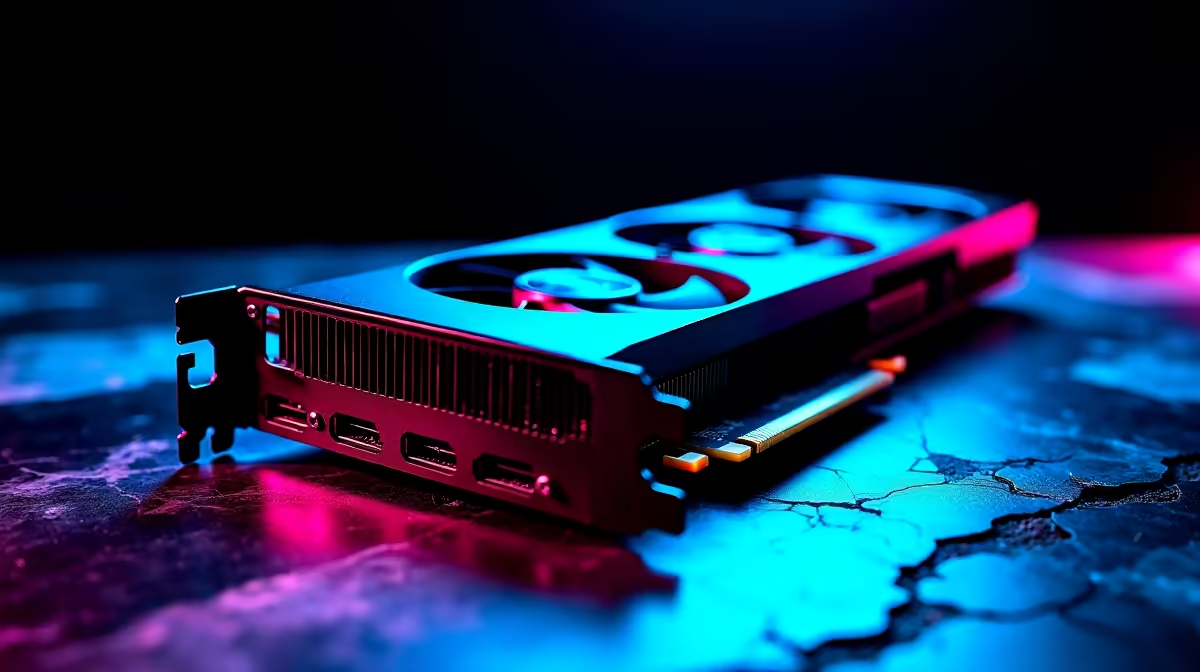
The RX 7600 is a solid mid-range GPU built on RDNA 3 architecture, capable of delivering strong 1080p performance and respectable 1440p framerates. For South African gamers spending around R4,500 to R5,500 on a graphics card, it should comfortably handle modern titles at high settings for at least three to four years before feeling dated.
What the RX 7600 Delivers Right Now
The RX 7600 uses AMD's RDNA 3 architecture with 8GB of GDDR6 memory on a 128-bit bus. At 1080p, it handles demanding titles like Cyberpunk 2077, Call of Duty, and Forza Horizon 5 at high to ultra settings with smooth framerates. At 1440p it still performs well in many titles, though you may need to dial back a few settings in the most demanding games. For the majority of SA gamers running 1080p monitors at 144Hz or 165Hz, the RX 7600 hits a sweet spot that makes it genuinely enjoyable today. AMD FSR 3 support is a key future-proofing tool here. FSR 3 with frame generation can effectively double framerates in supported titles, which means the RX 7600 can punch above its hardware weight as more games adopt AMD's upscaling technology. This extends its practical lifespan considerably compared to a GPU that relies purely on raw rasterization performance. ## How Long Will It Realistically Last? At the current pace of game development, the RX 7600 should remain a capable 1080p card through 2027 and into 2028. Most AAA titles released over the next two to three years will still be playable at high settings, though you may gradually shift from ultra to high presets in the most demanding titles. For competitive games like Valorant, CS2, and Apex Legends, the RX 7600 will remain more than adequate for years beyond that because these titles prioritize framerate over visual fidelity. One consideration specific to SA gaming is loadshedding. Many South African gamers keep their rigs powered down during outages and game in shorter sessions, which puts less cumulative stress on hardware. The RX 7600 also draws relatively modest power at around 165W TDP, making it friendly for gaming on UPS backup power during Stage 2 or Stage 4 loadshedding. ## When Should You Consider Upgrading? The honest answer is when your target resolution changes or when a specific game you care about runs unacceptably on high settings. If you move from 1080p to 1440p or decide you want to game at 4K, the RX 7600 will show its limits sooner. Similarly, if ray tracing becomes a priority rather than a nice-to-have, AMD's rasterization-focused RDNA 3 design means you will feel the gap versus higher-end alternatives. For the SA market where budgets are real constraints and the rand makes GPU upgrades significant financial decisions, the RX 7600 represents a pragmatic choice. Buying it today and getting three to four good years from it is a smarter move than stretching for a more expensive card on credit. ## Frequently Asked Questions
Is 8GB VRAM enough for future games? At 1080p, 8GB remains adequate for current and near-future titles. Some of the most demanding 2025 and 2026 releases have pushed closer to that ceiling at 4K or ultra textures, but at 1080p with standard settings the RX 7600 is not VRAM-constrained in any meaningful way. Does the RX 7600 support ray tracing? Yes, the RX 7600 has hardware ray tracing support, but its performance with ray tracing enabled drops significantly compared to rasterization. For pure ray tracing workloads it is not a strong performer, though FSR 3 can help recover some of those lost frames. How does loadshedding affect GPU longevity? Power surges when loadshedding ends are a real concern for South African PC components. A quality surge-protected UPS protects your GPU from voltage spikes, which can otherwise cause premature component failure. This matters for all graphics cards, not just the RX 7600.
Ready to Find Your Perfect Match? Browse AMD RX 7600 graphics cards at Evetech and find the right GPU for your build and budget.