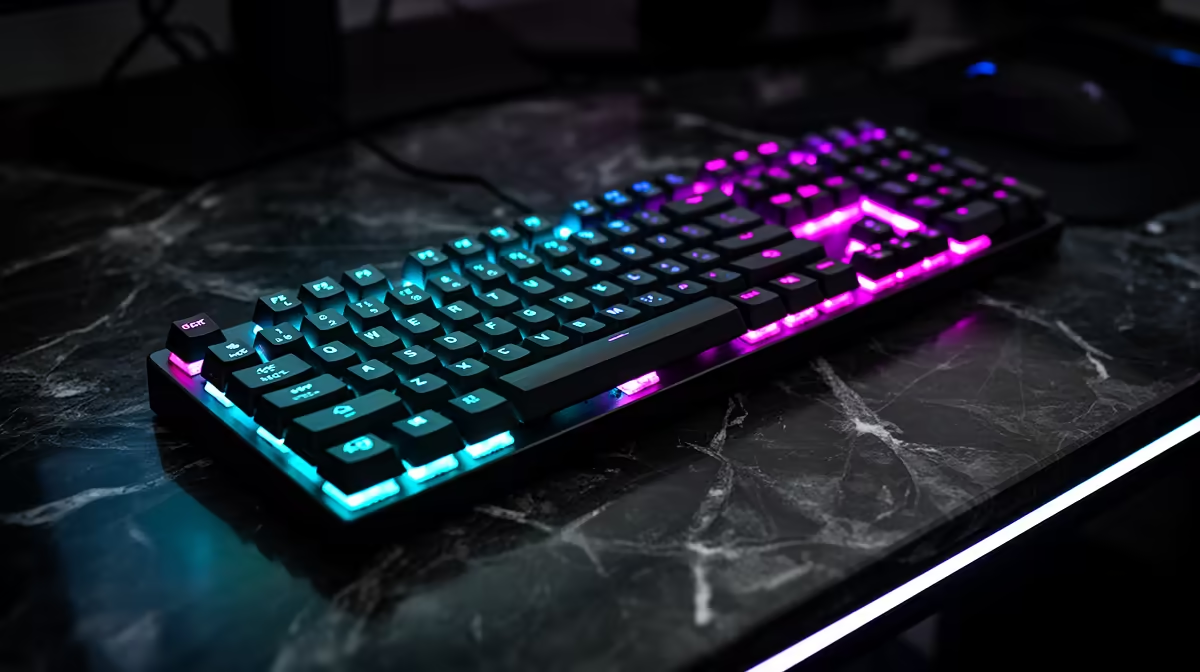
A gaming keyboard for data science is judged by feel, connection latency and build, not RGB. Switch type and connection method shape your daily experience far more than the lighting modes printed on the box.
Quick Answer
For data science, a wired or 2.4GHz mechanical keyboard with hot-swappable switches, priced around R900 to R2,500, gives the best balance of feel and longevity. Choose your switch type and connection latency deliberately; hot-swap sockets let you change the feel later without buying a new board.
Switches Decide The Daily Feel
Linear switches like reds suit fast gaming with smooth keypresses; tactile browns give a typing bump useful for data science; clicky blues are loud and best avoided in shared rooms. Hot-swap boards let you pull and replace switches without soldering, so you can tune the feel for a few rand instead of replacing the whole keyboard.
Connection And Latency for data science
Wired USB and modern 2.4GHz wireless both deliver 1ms-class response that competitive players can rely on; Bluetooth adds noticeable lag and suits only casual or travel use. For data science, pick wired or a 2.4GHz dongle and treat Bluetooth as a secondary mode, not the main one.
Build, Layout And What To Skip
A solid case, PBT keycaps and stabilised larger keys resist wear and wobble over years. Decide on full-size, tenkeyless or 75% based on desk space and whether you need a numpad. Skip paying purely for elaborate lighting; per-key RGB looks nice but adds nothing to performance or durability.
FAQ
Which switch type should I pick?
Reds for smooth fast gaming, browns for a typing bump that still games well, blues only where loudness is acceptable. A hot-swap board lets you change your mind later without buying a new keyboard.
Does wireless latency matter for gaming?
On a 2.4GHz dongle, no; it matches wired at around 1ms. Bluetooth does add lag, so use the dongle for play and save Bluetooth for typing or travel.
Is hot swap worth paying extra for?
If you are unsure of your switch preference or like to tinker, yes. It lets you swap feel cheaply over time. If you already know what you like, a fixed board can save you a little money.
switch type and connection method first. A hot-swap mechanical board future-proofs the feel, letting you change switches later for the price of a switch set, not a new keyboard.