Quick Answer
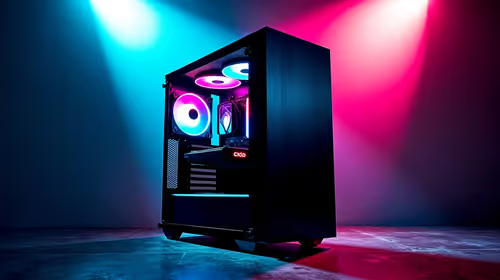
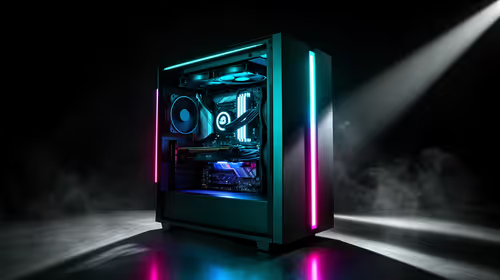
A R8,000 gaming PC in 2026 can run most popular titles at 1080p medium to high settings with frame rates above 60fps. It handles everyday productivity, streaming, and study tasks comfortably alongside gaming. It is not a 4K powerhouse but it is a capable, real-world gaming machine for South African gamers on a practical budget.
What You Are Actually Getting for R8,000
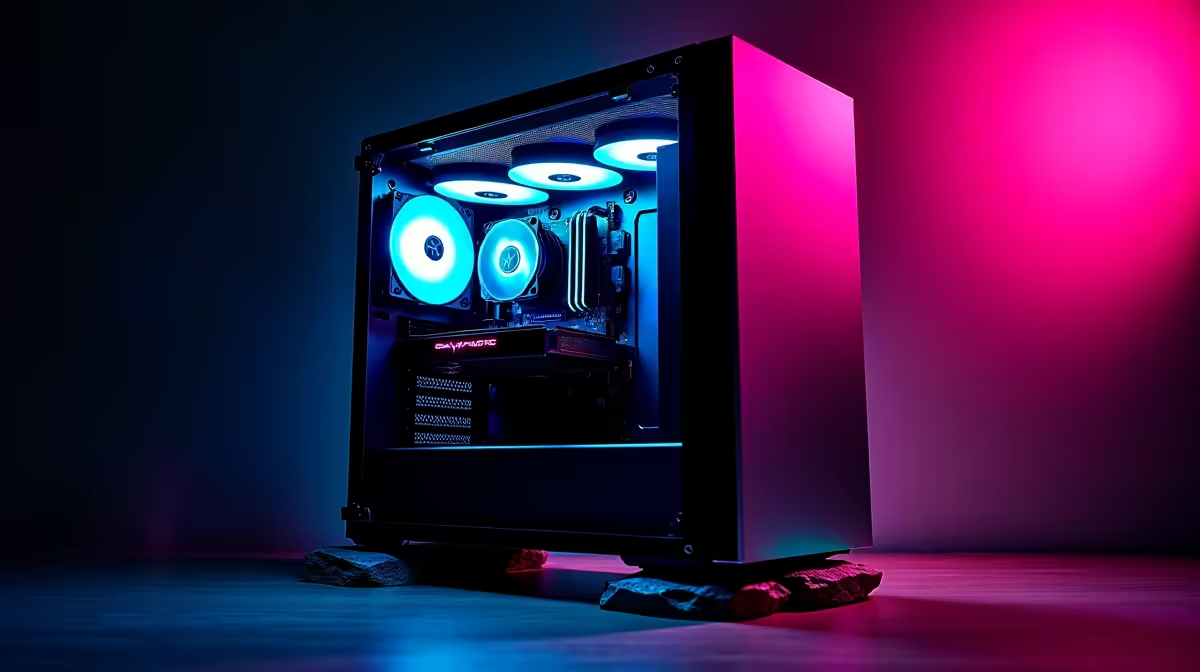
R8,000 is a real gaming PC budget in South Africa, not a compromise. At this price point you can expect a system built around a mid-range GPU, a capable processor, 16GB of DDR4 or DDR5 RAM, and an NVMe SSD for fast load times. This is a machine that boots in seconds, handles Chrome with 30 tabs, and loads game worlds without the stuttering associated with older HDD setups.
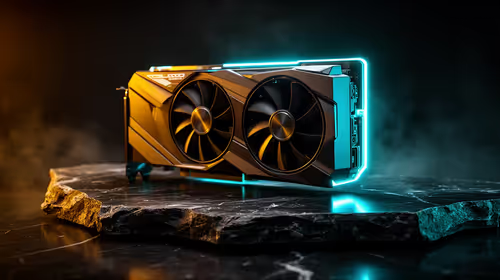
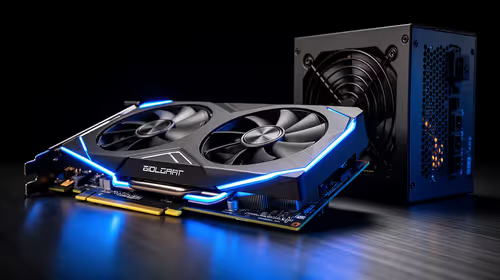
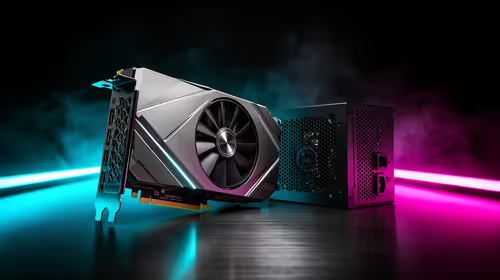
The GPU is the most important component in a gaming PC and also where R8,000 builds show their limits. A mid-range graphics card at this budget delivers solid 1080p gaming performance. In titles like Fortnite, Valorant, CS2, FIFA, and most indie games, expect frame rates comfortably above 60fps on high or ultra settings. In more demanding titles like Cyberpunk 2077 or Alan Wake 2, you will be playing at medium settings to maintain smooth frame rates.
Games That Run Brilliantly at R8,000
The games most South African gamers actually play day-to-day run exceptionally well at this budget. CS2 and Valorant are lightweight titles that a R8,000 rig will push to 144fps and above at 1080p - well above what a 60Hz monitor can display. FIFA and EA Sports FC run smoothly. Most battle royale titles, MOBAs, and online shooters are designed to run on a wide range of hardware and a R8,000 PC handles them without issue.
Single-player titles with high production values - open-world RPGs, AAA action games, racing sims - run on medium settings with occasional high settings depending on the specific game engine. The experience is good, not maxed. For most players, medium settings at 60fps is entirely enjoyable.
What a R8,000 PC Cannot Do
Being honest: 4K gaming is not realistic at this budget. Neither is ray tracing at high quality settings. The GPU tier in this price range is not built for those workloads. If 4K or ray tracing are important to you, the budget needs to stretch to R12,000 and above.
Future-proofing is also limited. A R8,000 build is likely to need a GPU upgrade in two to three years as game requirements increase. Planning for that upgrade path - choosing a motherboard with PCIe 4.0 or 5.0 support and a PSU with enough headroom - is smart when configuring the initial build.
Loadshedding and a R8,000 Build
For South African gamers, loadshedding is a real budget consideration. A desktop gaming PC at this price point typically draws 200W to 350W under gaming load. A 600VA to 1000VA UPS gives you 15 to 25 minutes of runtime during a cut - enough to save your progress and shut down cleanly. Factor a UPS into your budget if you are not already running one, since repeated abrupt power cuts can damage storage drives and PSU components over time.
Frequently Asked Questions
Can a R8,000 gaming PC run the latest games?
Yes, at medium to high settings and 1080p resolution. Most current-generation games are playable at this budget. Cutting-edge graphical settings require higher budgets, but the gaming experience at R8,000 is genuinely enjoyable.
Is R8,000 enough for both gaming and studying?
Absolutely. A gaming PC at this budget handles Microsoft Office, web browsing, video calls, and academic software comfortably alongside gaming. It is a versatile machine, not just a single-purpose gaming box.
Should I buy a prebuilt or build my own at R8,000?
Both options exist at R8,000. Prebuilt systems save time and include warranty coverage on the complete system. Self-builds can squeeze more performance from the same budget if you know what you are doing. For most buyers, a prebuilt from a reputable South African retailer is the lower-risk option.
Ready to Find Your Perfect Match?
Browse gaming PC deals built for South African budgets and performance expectations. Shop Gaming PC Deals