Quick Answer
Path tracing simulates light by following every ray from camera to source through unlimited bounces, while ray tracing typically renders only a few specific effects like reflections or shadows. Path tracing is the more accurate, more demanding evolution of ray tracing.
What Ray Tracing Actually Does
Traditional ray tracing in games like Cyberpunk 2077 or Control fires rays selectively. Reflections get traced, shadows get traced, sometimes global illumination, but the rest of the lighting is still calculated using older rasterised techniques. It's a hybrid approach that delivers some of the visual benefits of physically accurate lighting without melting the GPU. The result looks great on water, glass and metal surfaces but the underlying lighting model still has tells, like flat-looking ambient zones or shadow seams where techniques meet.
How Path Tracing Goes Further
Path tracing throws out the hybrid model and traces light fully, end to end. Rays bounce multiple times off every surface, picking up colour and energy from each interaction. The result is true global illumination, accurate caustics, soft area-light shadows and colour bleeding between surfaces, all calculated naturally rather than faked. Cyberpunk 2077's Overdrive mode and Alan Wake 2's full path tracing demos are the showcase examples. The look is unmistakeably more cinematic, with lighting that actually behaves like the real world.
What Path Tracing Demands From Your GPU
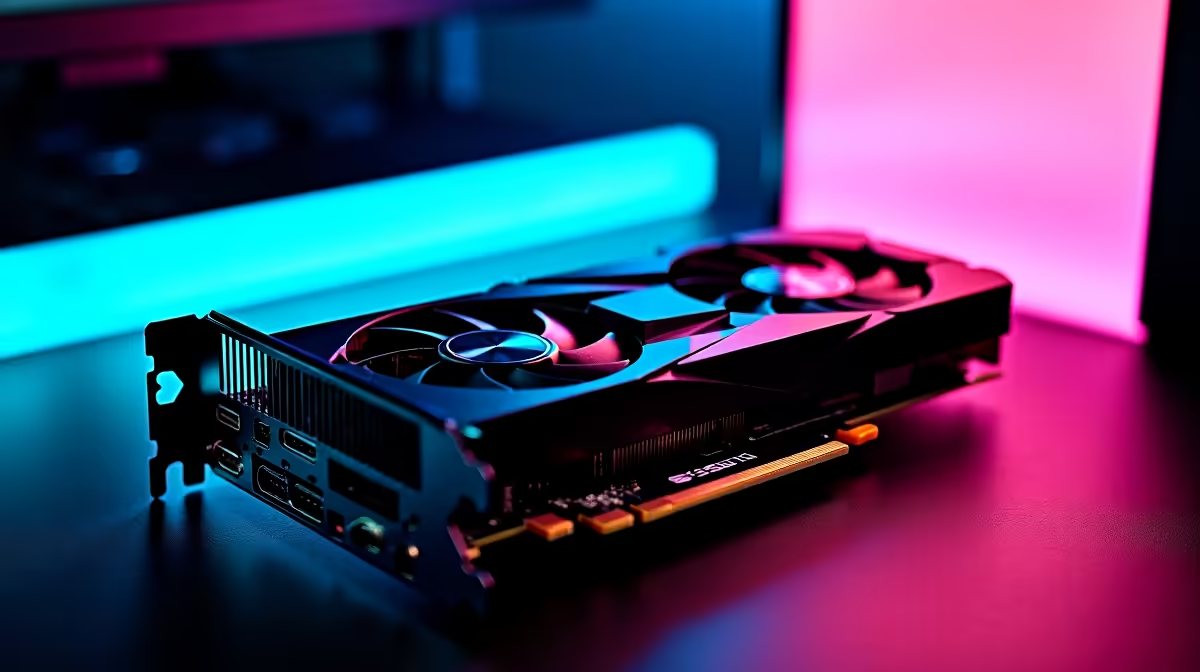
The performance hit is steep. Path tracing typically halves frame rates compared to standard ray tracing, and on lower-tier cards it grinds to single digits. RTX 5070 and above with DLSS 4 plus Frame Generation are the practical entry point. AMD's RX 9070 XT handles it with FSR 4 enabled. SA pricing on capable cards starts around R12,000 for a 5070 and climbs from there. Pair with a 750W Gold PSU minimum and a chassis with strong airflow, these cards work hard.
Frequently Asked Questions
Is path tracing worth the FPS cost?
In supported games, yes. The lighting upgrade is the biggest visual leap since the move to HD. With DLSS Quality and Frame Gen, modern flagship cards keep frames high enough to feel smooth.
Which games actually support full path tracing?
Cyberpunk 2077 (Overdrive), Alan Wake 2, Portal RTX, Quake II RTX and Star Wars Outlaws are the standouts. The list grows quietly with each major engine update.
Do AMD GPUs handle path tracing?
The RX 9000 series handles it, though Nvidia still leads in raw ray tracing throughput. FSR 4 closes much of the gap by making the upscaling cost-effective.
Ready to Find Your Perfect Match? Build a rig that lights up every ray. Shop gaming PC deals at Evetech