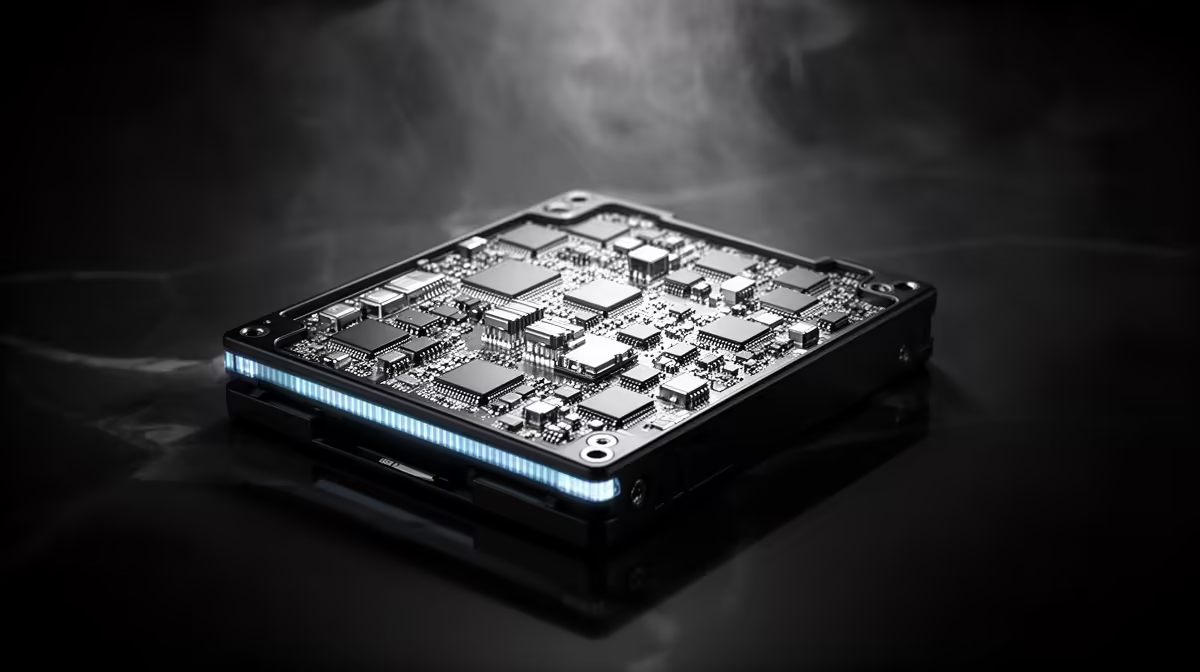
Adding a pair of SSDs to a NAS sounds like a guaranteed speed boost, but the truth is more selective. An SSD cache sits in front of your spinning hard drives and holds the data you access most often, so repeated reads come off fast flash instead of slow platters. It is a brilliant fix for one kind of workload and almost useless for another, and knowing which is which saves you buying SSDs your NAS will barely touch.
Quick Answer
An SSD cache speeds up repeated random reads and small-file writes, things like databases, virtual machine storage, photo-library thumbnails and frequent backups. It does little for large sequential transfers such as streaming a 4K movie, because those already saturate a gigabit network connection and gain nothing from caching. If your NAS workload is mostly streaming big files once each, skip the cache.
How an SSD cache actually works
The cache layer learns which blocks you read repeatedly and keeps copies on the SSDs. The first time you open a file it still comes from the hard drives, but every subsequent access can be served from flash, which is dramatically faster for the small, scattered reads that platters handle poorly. Random access is exactly where spinning drives are weakest, so that is where the cache earns its place.
There are two modes. A read-only cache copies frequently read data onto a single SSD and accelerates reads with no risk to your data if the SSD fails. A read-write cache also buffers incoming writes, which speeds up workloads with lots of small write operations, but it should use a mirrored pair of SSDs so a single drive failure cannot lose data that has not yet been flushed to the hard drives.
When it genuinely helps
The cache shines on access patterns that repeat and stay small. Running virtual machines or containers off the NAS, hosting a database, indexing a large photo library, or running frequent incremental backups all hammer the array with small random operations, and those see a real, noticeable lift once the cache warms up. A busy multi-user NAS where lots of people open the same working files benefits too, because the hot data sits in flash where everyone's repeated reads land fast.
If your storage is built around this kind of work, it is worth choosing a NAS body with the drive bays to spare. The diskless NAS enclosures at Evetech include models with dedicated cache slots so you can add SSDs without giving up bays you need for capacity.
When it does little or nothing
Caching does nothing useful for large, one-time sequential transfers. Streaming a 4K film, copying a single huge video file, or archiving a folder you will not touch again are all bottlenecked by your network, not your drives. A gigabit connection tops out around 110 to 125MB per second, and a couple of hard drives in a RAID array already hit that ceiling on sequential reads, so a cache has nothing left to give. Data you read once and never again never becomes "hot", so it never benefits from a layer designed to serve repeated reads.
An all-flash NAS gains nothing from an SSD cache either, since the main storage is already flash. And a small cache against a very large dataset can thrash, constantly evicting data before it pays off, which is why right-sizing the cache to your active working set matters more than buying the biggest SSDs you can.
Sizing it sensibly
A practical rule is to size the cache to your active working set, the data you actually touch regularly, not your total capacity. For most home and small-office NAS units, a modest pair of reliable SSDs is plenty for a read-write cache, and you do not need enormous drives. Endurance matters more than size for a write cache, so look for SSDs rated for sustained writes rather than the cheapest available. The most popular SSDs at Evetech are a sound starting point for cache-duty drives.
Frequently Asked Questions
Will an SSD cache speed up my media streaming NAS?
Usually not. Streaming is large sequential reads that already max out a gigabit network, so the bottleneck is the network, not the drives. A cache helps random, repeated access, not one-time big transfers.
Read-only or read-write cache, which should I use?
Use read-only if your workload is read-heavy and you want zero data risk from a single SSD. Use read-write, on a mirrored SSD pair, only if you have many small write operations like databases or frequent backups.
How much SSD do I need for a cache?
Size it to your active working set rather than total capacity. For most home and small-office NAS units a modest pair of SSDs is enough; throwing huge drives at a small working set wastes money.
Can an SSD cache lose my data?
A read-only cache cannot, since it only holds copies. A read-write cache can lose recently written data if a single SSD fails before flushing, which is exactly why a write cache should use a mirrored pair.
Does an all-flash NAS benefit from an SSD cache?
No. The main storage is already flash and fast, so adding a flash cache in front of flash gives you nothing.
Building storage that matches your workload? Browse the Evetech NAS enclosures and pick a unit with the bays and cache slots your access patterns actually call for.