Quick Answer
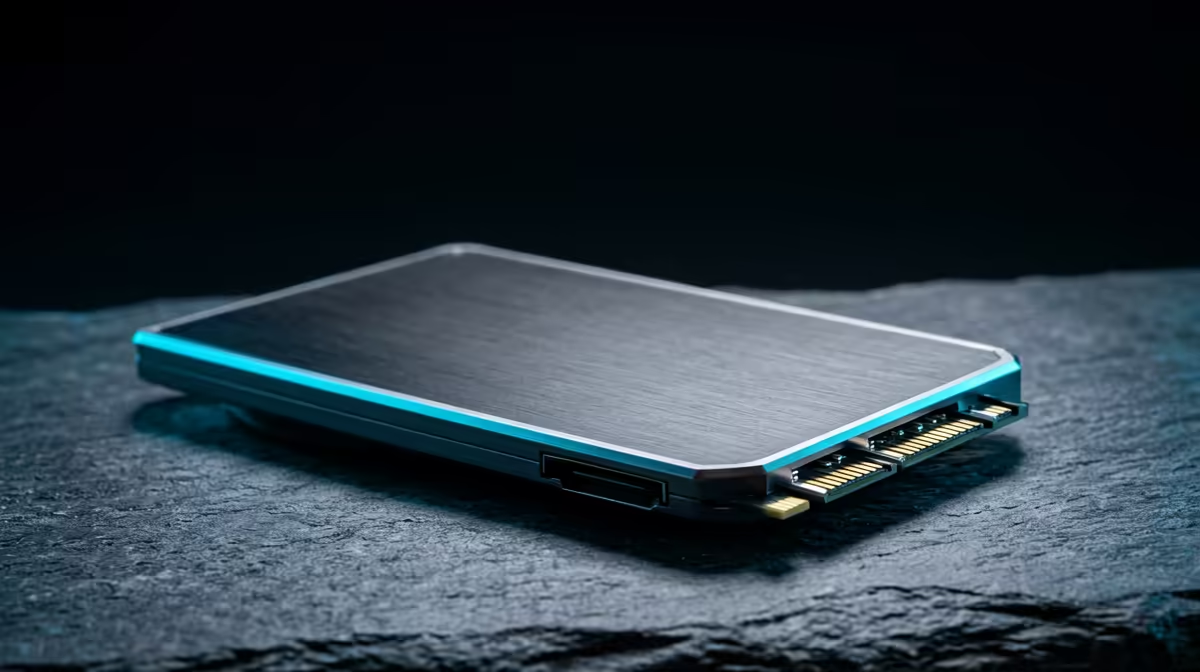
SSD prices dropping matters because 1 TB NVMe storage is now the practical floor and 2 TB is becoming realistic for many SA gaming builds. Broad local bands can put 1 TB NVMe drives around R900-R1,600 and 2 TB drives around R1,800-R3,200 depending on model and stock. That makes it easier to stop deleting 100 GB games every week.
Why The Drop Helps Gamers
Modern games are large, and Windows plus launchers can eat space quickly. A 500 GB drive fills too fast once titles like Call of Duty, Forza, or large RPGs are installed. Moving to 1 TB or 2 TB improves daily convenience more than chasing the highest benchmark number.
SKUs And Speeds To Compare
Samsung 990 EVO, WD Black SN770, Crucial P3 Plus, Kingston NV2, and similar NVMe models show the range from value to faster PCIe 4.0 options. For gaming, 3,500-7,000 MB/s class drives are already plenty. A DRAM-less value drive is fine for a secondary game library, while a stronger TLC drive is better for the main Windows disk.
SA Buying Context
For SA buyers, the practical check is local stock, courier cost, warranty route, and whether the part still makes sense after VAT and delivery are included. If the price gap between 1 TB and 2 TB is manageable, choose 2 TB for the main gaming drive. It delays the next upgrade and makes the PC easier to live with.
FAQ
Is a 1 TB SSD enough for gaming?
It is enough as a starting point, but 2 TB is more comfortable. Large games and updates can make 1 TB feel tight sooner than expected.
Does a faster SSD increase fps?
No, not in normal gameplay. It improves loading, installation, copying, and sometimes asset streaming, but GPU and CPU decide fps.
Should I buy PCIe 4.0 or PCIe 5.0?
PCIe 4.0 is the value choice for most gaming PCs. PCIe 5.0 is still a premium option for workstation-style file loads and benchmark-focused builds.