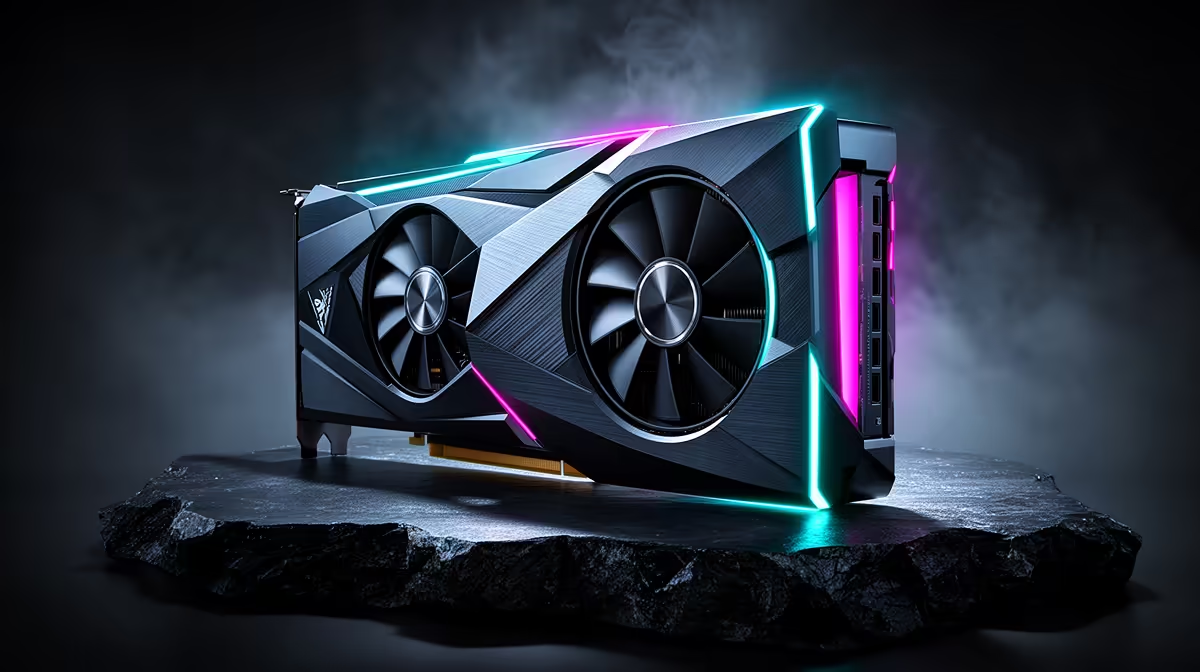
Speculation around AMD RDNA 5 is already running hot, and the short version is that the jump looks set to be a meaningful one rather than a minor refresh. Also referred to as UDNA, the architecture is reportedly built on TSMC's N3P process and aimed at the second half of 2027, arriving after Nvidia's RTX 60 series. A node shrink from N4 to N3P plus a unified design that merges gaming and compute points to a generational leap, not a side-step.
Quick Answer
RDNA 5, also called UDNA, is expected to be a big jump over the current RX 9000 series. It moves to TSMC's N3P node from N4, unifies AMD's gaming and compute architectures, and is targeted for the second half of 2027. The combination suggests a clear generational uplift in both raw performance and efficiency.
Why the Node Change Matters
The shift from N4 to N3P is the most concrete reason to expect a real leap. A denser, more efficient process lets AMD pack more transistors into the same area and run them at lower power. That typically translates into higher clocks, more compute units, or both, without a runaway increase in heat and power draw.
Current RX 9000 cards on N4 are already efficient, so giving the next architecture a full node improvement is the kind of foundation that drives generational gains rather than incremental ones. Node jumps of this size have historically delivered some of the larger performance steps in recent GPU history.
The Unified Architecture Angle
RDNA 5's reported UDNA branding signals a strategic change. AMD has run separate architectures for gaming graphics and for data-centre compute. Merging them into one unified design means gaming cards can inherit advances developed for high-end AI and compute work, and software support can consolidate across both worlds.
For gamers, the practical hope is stronger ray tracing and machine-learning features, areas where AMD has trailed. A unified platform should make AMD's upscaling and ray tracing more competitive, because the compute muscle behind those features gets first-class treatment rather than being bolted on. You can see where the current generation sits in the graphics card range as a baseline to measure the next step against.
Should You Wait or Buy Now?
With RDNA 5 targeted for late 2027 and launching after Nvidia's RTX 60 series, that is a long wait. If your current card is struggling today, holding out well over a year for an unconfirmed architecture is hard to justify. The present RX 9000 series and the wider best-selling GPU lineup offer strong value right now and will remain perfectly capable for years.
If you only recently upgraded and are simply curious, then sitting tight makes sense, since the next generation looks worth the wait on paper. But treat the timing and specifications as informed expectation, not confirmed fact, until AMD makes an official announcement.
FAQ
When is AMD RDNA 5 expected to launch?
Current reporting points to the second half of 2027, arriving after Nvidia's RTX 60 series. Treat this as a target rather than a confirmed date until AMD announces officially.
Is RDNA 5 the same as UDNA?
Yes, UDNA is the name tied to RDNA 5's unified architecture, which merges AMD's separate gaming and compute designs into a single platform. The goal is to share advances across both worlds.
Will RDNA 5 be much faster than the RX 9000 series?
The move to TSMC's N3P node and a unified architecture both point to a sizeable generational jump rather than a small refresh. Exact figures are unconfirmed, but the foundations suggest a real leap.
Should I wait for RDNA 5 instead of buying now?
Only if your current card still meets your needs and you can wait well into 2027. If you need more performance today, the current Radeon lineup offers strong value and will stay capable for years.
There is no need to sit on slow frame rates waiting on 2027. Explore current Radeon and GeForce options at https://www.evetech.co.za/components/nvidia-ati-graphics-cards-21 and find a card that lifts your performance now.