Is your blazing-fast fibre connection feeling... well, a bit slow inside your own home? You're not alone. As we hurtle towards 2026, with massive game downloads and 8K streaming becoming the norm, the humble gigabit network is starting to creak. This is where 10GbE home networking steps in, promising speeds that feel like magic. But is it a sensible upgrade for your South African home, or just expensive overkill? Let's find out. 🤔
What is 10GbE Networking, Anyway?
In simple terms, 10GbE (10 Gigabit Ethernet) is a network standard that's ten times faster than the standard 1GbE (1 Gigabit Ethernet) connection found in most modern PCs and routers.
Imagine your network is a highway.
- 1GbE: A busy, two-lane road. It works fine for most traffic, but gets congested when everyone tries to use it at once.
- 10GbE: A massive ten-lane super-highway. 🚀
This means you can transfer files, download games, and stream media at blistering speeds... provided the rest of your hardware can keep up. It represents a significant leap for wired networking, moving from a bottleneck to a massive enabler for high-speed local traffic.
Who Actually Needs a 10GbE Home Network in SA?
While a tenfold speed boost sounds amazing, the reality is that for many South Africans, it's not a necessary expense... yet. Your internet speed is still the main bottleneck for downloads. However, for a specific group of power users, a 10GbE home network is becoming a seriously compelling upgrade.
The Content Creator & Video Editor
vvvvvvvvvvvvvvvvvvvvvvvvvvvvvvvvvvvvvvv
If you're shooting and editing 4K or 8K video, you know the pain of moving massive files. Transferring a 100GB project file from your PC to a Network Attached Storage (NAS) device takes over 13 minutes on a 1GbE network. With 10GbE, that same transfer takes less than 90 seconds. This is a massive time-saver that directly impacts your workflow.
The Data Hoarder & Home Lab Enthusiast
Running a home server or a beefy NAS for backups, Plex streaming, and virtual machines? A 10GbE connection ensures you can access your data instantly from any machine on the network without lag. It makes your NAS feel like a local drive. When building a home server, ensuring it has a stable power source is critical; a reliable Corsair power supply is a smart investment for protecting your valuable data.
The Multi-Gamer Household
While 10GbE won't lower your online gaming ping (that's up to your fibre provider), it's fantastic for households with multiple gamers. Someone can be downloading a 150GB game from a local Steam cache on a NAS while others are streaming in 4K, with zero impact on local network performance.
Check Your Cables First! 🔧
Before you spend a cent on new gear, check your existing Ethernet cables. Look at the text printed on the cable jacket. For a stable 10GbE connection, you'll need Cat6a, Cat7, or newer cables. While Cat6 can sometimes work over very short distances, it's not guaranteed. Upgrading your cables is the cheapest first step!
The Real Cost of Upgrading to 10GbE in 2026
So, you've decided the speed is worth it. What hardware do you actually need to buy? Brace yourself... it's more than just a new router.
The Core: A 10GbE Switch or Router
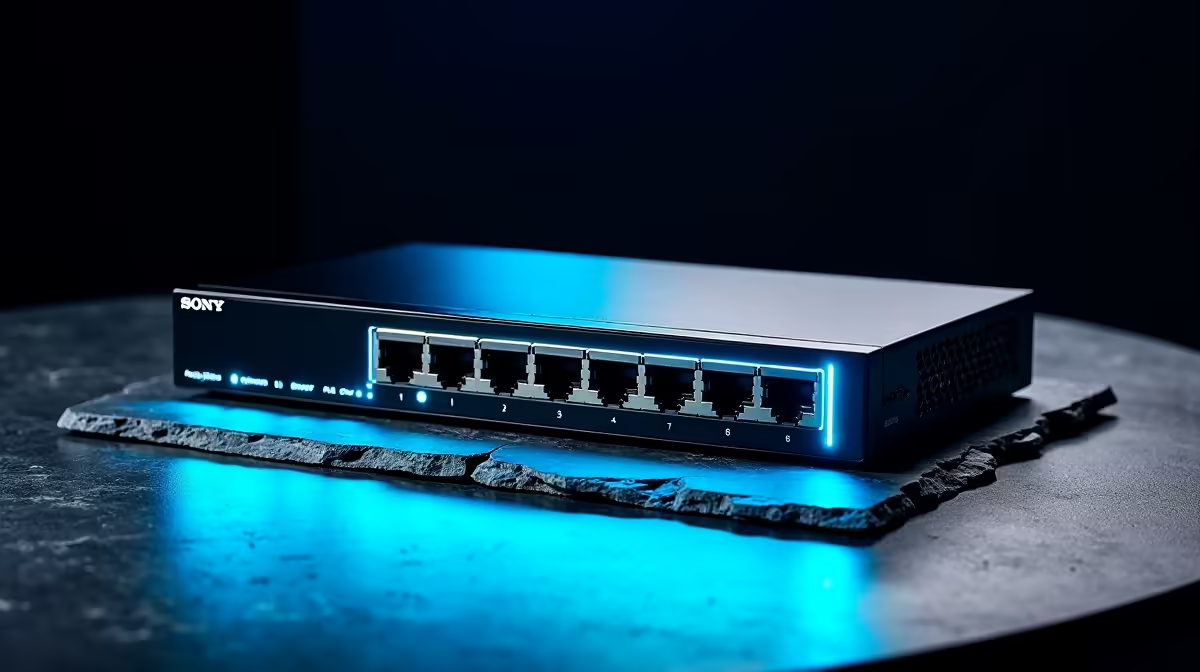
This is the heart of your new network. Most consumer-grade fibre routers in South Africa top out at 1GbE or 2.5GbE on their LAN ports. To get true 10GbE speeds between your devices, you'll need a dedicated switch. Investing in multi-gig switches with at least a few 10GbE ports is the most common starting point for this upgrade path.
The Endpoints: Network Adapters
Your PC's motherboard almost certainly has a 1GbE port. To connect to your new super-fast network, each device will need a 10GbE network interface card (NIC). Luckily, you can find a range of affordable PCIe network adapters that make this a relatively easy upgrade for any desktop PC.
What About Wireless? Isn't Wi-Fi 7 Here?
This is a great question. The latest wireless networking standards like Wi-Fi 6E and the upcoming Wi-Fi 7 promise incredible speeds that can theoretically surpass 10Gbps. However, these are best-case-scenario speeds achieved in perfect lab conditions. In a real-world home with walls and interference, a wired 10GbE connection will always be faster and more reliable.
For most people, a top-tier Wi-Fi 6E system from our range of wireless routers is more than enough. And if you just have a few dead spots, a simple set of wireless range extenders is a far more cost-effective solution.
The Verdict: Is 10GbE Worth It For You? ✨
As we look towards 10GbE home networking in 2026, the answer is nuanced.
For the average South African user... probably not yet. The cost is still high, and your internet connection remains the primary bottleneck. Optimising your existing 1GbE network will deliver better value for money.
For content creators, data-heavy professionals, and home lab builders... absolutely. The productivity gains are undeniable. The cost is dropping, and the hardware is becoming more accessible. Building a small home server with a clean and efficient full modular power supply to act as the hub for your 10GbE network is a powerful and increasingly popular upgrade.
The future is fast, but for now, this upgrade path is for the enthusiast who needs to move massive amounts of data locally... and fast.
Ready to Supercharge Your Connection?
Whether you're making the leap to 10GbE or just optimising your current setup, a fast and reliable network is non-negotiable. Explore our massive range of networking components and build a home network that never holds you back.