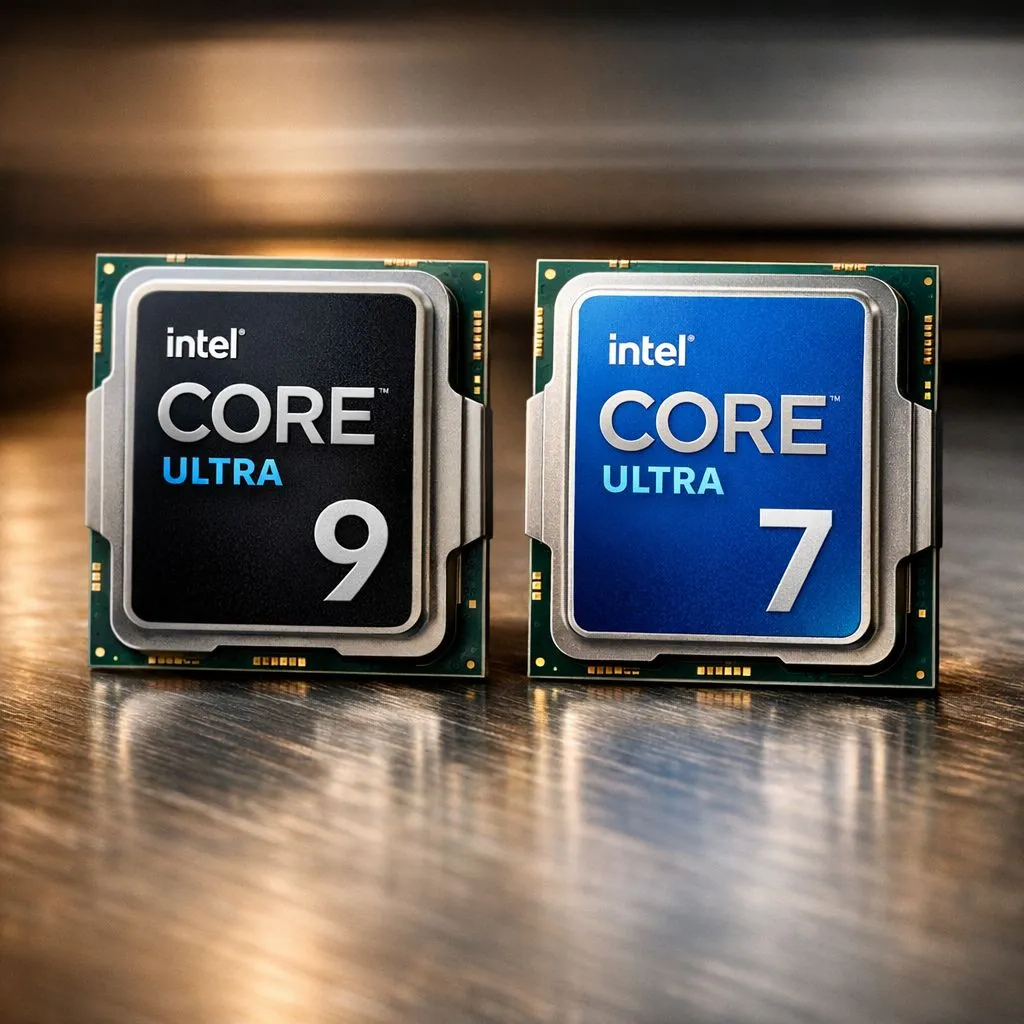
Intel’s new Arrow Lake chips have landed in South Africa, sparking a familiar debate for local builders. Should you go for the flagship Core Ultra 9 285K or save some Rands with the Core Ultra 7 265K? Both offer impressive efficiency gains, but the price gap is real. Choosing the right one depends on whether you're chasing frames or finishing renders before your next load-shedding block hits. 🚀
Core Ultra 9 285K vs Core Ultra 7 265K: The Architecture Shift
The move to the LGA 1851 socket marks a new era for Intel. These chips ditch Hyper-Threading to focus on raw efficiency and instructions per clock. When you look to buy Intel CPUs from this generation, you are getting the new Lion Cove P-cores and Skymont E-cores.
The Core Ultra 9 285K boasts 24 cores (8P + 16E) with a max turbo frequency of 5.7GHz. In contrast, the Core Ultra 7 265K offers 20 cores (8P + 12E) reaching up to 5.5GHz. While the numbers look close on paper, the extra E-cores on the Ultra 9 provide a significant cushion for heavy multitasking. If you often have Discord, Chrome, and a heavy game running simultaneously, those extra cores start to earn their keep.
Gaming Performance: Is the Flagship Worth the Premium?
For most South African gamers, the Core Ultra 9 285K vs Core Ultra 7 265K debate comes down to frame rates. At 1080p, the Ultra 9 holds a slight lead... usually around 3% to 5% depending on the title. However, as you move to 1440p or 4K, the bottleneck shifts to your GPU.
If you are rocking an RTX 4080 or 4090, the Ultra 9 helps you squeeze out every possible frame. But if your budget is tighter, the Ultra 7 265K delivers nearly identical gaming results for a much lower price. Even if you’re a die-hard Blue Team fan, it’s worth checking out the latest deals on AMD CPUs for context on how the market currently sits.
Optimising for Arrow Lake ⚡
Ensure your BIOS is updated to the latest version before installing your new Core Ultra chip. The LGA 1851 platform is fresh... early firmware updates often provide significant stability and memory compatibility improvements for high-speed DDR5 kits.
Productivity and Workstation Power
This is where the Core Ultra 9 285K truly justifies its existence. For video editors using Premiere Pro or 3D artists in Blender, the 24-core configuration is a monster. It handles multi-threaded workloads with a level of composure we haven't seen in previous generations.
For those who don't need the bleeding edge, high-performance 14-core Intel processors from the previous generation still offer incredible value. However, the Arrow Lake architecture runs much cooler. This is a massive plus for South African summers. You won't need a massive custom loop to keep these chips from throttling during a long rendering session.
The Final Verdict for South African Builders
Choosing between the Core Ultra 9 285K vs Core Ultra 7 265K requires an honest look at your daily usage. The Ultra 9 is for the enthusiast who wants the absolute best and uses their PC for more than just gaming. It is a workstation powerhouse that happens to be great at gaming too.
The Ultra 7 265K is the smarter buy for the majority of users. It offers 95% of the gaming performance and plenty of productivity power for a more reasonable ZAR price point. The 265K often finds itself competing directly with the AMD Ryzen 7 series in terms of pricing, making it a very competitive middle-ground option for high-end builds. ✨
Ready to Find Your Perfect Match? The Core Ultra 9 285K vs Core Ultra 7 265K debate is complex, but for maximum power, choice, and value in South Africa, Intel's latest chips are hard to beat. Explore our massive range of Intel CPUs and find the perfect machine to conquer your world.