Got a shiny new handheld but feeling torn between the slick console interface of SteamOS and the sheer compatibility of Windows? You aren't alone. South African gamers want the best of both worlds... playing Game Pass titles on the go without sacrificing that optimised, battery-saving UI. Let's dive into how you can dual boot Windows & SteamOS on a single drive for the ultimate portable experience. 🚀
Why Choose a Dual Boot Setup?
The debate isn't about which operating system is better; it's about using the right tool for the job. SteamOS (and its variants like Bazzite or ChimeraOS) offers a seamless, controller-friendly experience perfect for your Steam library. However, it hits a wall with anti-cheat games like Call of Duty or Fortnite, and accessing PC Game Pass can be a headache.
By partitioning your drive, you keep your competitive shooters on Windows and your single-player adventures on SteamOS. This is the ultimate way to maximise the potential of the comprehensive range of handheld gaming consoles currently available in SA.
The Hardware: Size Matters
Before you start slicing up your SSD, you need to ensure you have enough space. A dual-boot setup on a 512GB drive is tight; a 1TB or 2TB SSD is the sweet spot. This allows you to allocate roughly 150GB to Windows (it’s a storage hog) and leave the rest for your SteamOS partition and game library.
If you are rocking a Lenovo Legion Go, that massive screen makes navigating the Windows desktop environment much easier compared to smaller devices. However, the overhead of Windows can still drain battery faster than a stripped-down Linux-based OS, which is why having the option to switch is so valuable.
Partitioning Pro Tip ⚡
When setting up your partitions, consider creating a third 'Shared' partition formatted as exFAT or NTFS. This allows you to install DRM-free games or store ROMs that can be accessed by both Windows and SteamOS, saving you from downloading the same 50GB game twice!
Setting Up the "One Drive" Ecosystem
The goal is a seamless boot menu—like rEFInd or Clover—that greets you when you power on, asking, "What are we playing today?"
- Partitioning: You will need to shrink your existing partition to make room for the second OS.
- The Windows Factor: If you own an ASUS ROG Ally, you already have Windows 11. Your path involves installing a SteamOS alternative (like Bazzite) alongside it to get that console-like sleep/resume functionality that Windows sometimes struggles with.
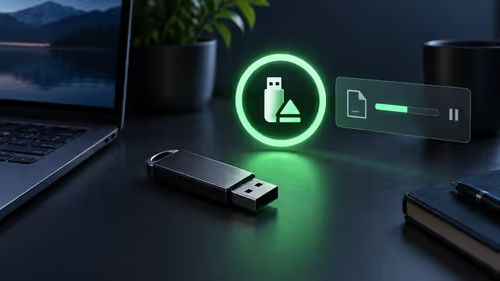
- Drivers: This is critical. Ensure you have the specific WiFi and audio drivers downloaded to a USB stick before you wipe anything.
Performance Expectations
Will you lose frames? Generally, no. Running an OS from a partitioned internal NVMe SSD is significantly faster than booting Windows off a MicroSD card, which can stutter and overheat.
Whether you are tweaking TDP settings on an MSI Claw or optimising fan curves on an Ally, a dual-boot system runs natively on the hardware. You get full performance, provided you manage your storage space wisely. Just remember to keep an eye on your updates; sometimes a BIOS update from the manufacturer can reset your boot priority, requiring a quick fix in the settings.
Ready to Level Up Your Handheld?
Whether you need a massive SSD upgrade to fit two operating systems or you're looking for the latest portable powerhouse, we've got you sorted. Shop our Handheld Gaming Console deals and take your gaming anywhere in South Africa.