So, you did it. You saved up, snagged that shiny new GPU or CPU, and spent the afternoon carefully installing it. You hit the power button, ready for glorious high-frame-rate gaming… and nothing. Just a black screen and the sad hum of fans. We’ve all been there. This guide to gaming PC troubleshooting is for every South African gamer who has faced the frustration of a failed upgrade. Let's get your rig running properly. 🚀
First Steps: The Simple Fixes for Upgrade Problems
Before you start panicking, let's cover the basics. More often than not, the solution to your PC upgrade problems is surprisingly simple. It's easy to miss a small detail when you're excited. Run through this checklist first.
The "Is It Plugged In?" Checklist
- Power Cables: Double-check that every power cable is firmly seated. This includes the main 24-pin motherboard connector, the 8-pin CPU connector, and any PCIe power cables for your new graphics card. Some high-end GPUs need two or even three!
- RAM Sticks: Did you bump your RAM during the install? A slightly unseated memory stick is a classic cause of a PC failing to POST (Power-On Self-Test). Push down firmly on both ends of each stick until the clips click into place.
- Display Cable: Are you plugged into the right port? After installing a new graphics card, make sure your HDMI or DisplayPort cable is connected to the GPU itself, not the motherboard's onboard video output.
Quick Troubleshooting Tip 🔧
If your PC powers on but there's no signal, try booting with just one stick of RAM. Test each stick in each slot one by one. This helps you quickly identify if you have a faulty memory module or a problematic DIMM slot on your motherboard. It's a simple process of elimination that can save you hours of guesswork.
Software Snags: When Drivers and BIOS Cause Drama
If the physical connections are all solid, the next step in our gaming PC troubleshooting journey is the software. Incompatibilities here can stop a new component from working correctly, even if it's installed perfectly.
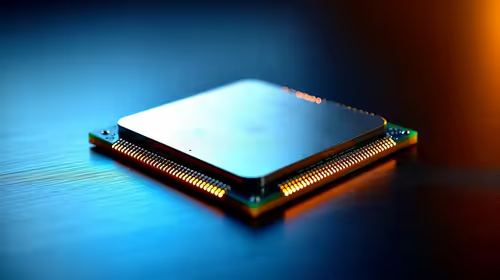
A crucial step, especially after installing one of the latest CPU processors, is to ensure your motherboard's BIOS/UEFI is up to date. Motherboard manufacturers regularly release updates to support new hardware. You can usually download the latest version from your motherboard's official support page and flash it using a USB stick.
For graphics cards, it’s vital to do a clean driver installation. We recommend using a tool like Display Driver Uninstaller (DDU) to completely remove all traces of your old drivers before installing the new ones from the NVIDIA or AMD website.
Hardware Headaches: Identifying Deeper Conflicts
Still no luck? Now we need to investigate potential hardware conflicts or compatibility issues. This is where many DIY upgraders in SA get stuck.
Is Your Power Supply (PSU) Up to the Task?
Modern components are powerful, but they're also thirsty for electricity. Your old 550W power supply might have been fine for your GTX 1660, but it will struggle with a new RTX 4070. Check the recommended PSU wattage for your new component and ensure yours meets or exceeds it. An underpowered PSU can cause random shutdowns, instability, or prevent the PC from booting at all.
The Compatibility Conundrum
This is the big one. PC hardware isn't universal Lego. A new CPU needs a compatible motherboard with the right socket (e.g., AM5 for modern AMD, LGA 1700 for modern Intel). Likewise, DDR5 RAM won't fit in a DDR4 motherboard. If you've mismatched core components, they simply won't work together. This is where planning your upgrade path becomes essential. Sometimes, the most effective way to fix your upgrade problems is to prevent them from happening in the first place. ✨
For those looking to avoid these headaches entirely, a platform upgrade using a pre-tested bundle is a fantastic option. These bundles ensure your core components are a perfect match from the start. For example, powerful AMD barebone kits give you a motherboard and CPU combo that's guaranteed to work together seamlessly. Similarly, pre-configured Intel barebone kits take all the compatibility guesswork out of a major system overhaul, letting you get back to gaming faster.
Ready to Skip the Troubleshooting? PC building is rewarding, but compatibility issues can be a real headache. If you'd rather spend your time gaming than diagnosing, we've got you covered. Explore our massive range of PC components, guaranteed to work and backed by local support.