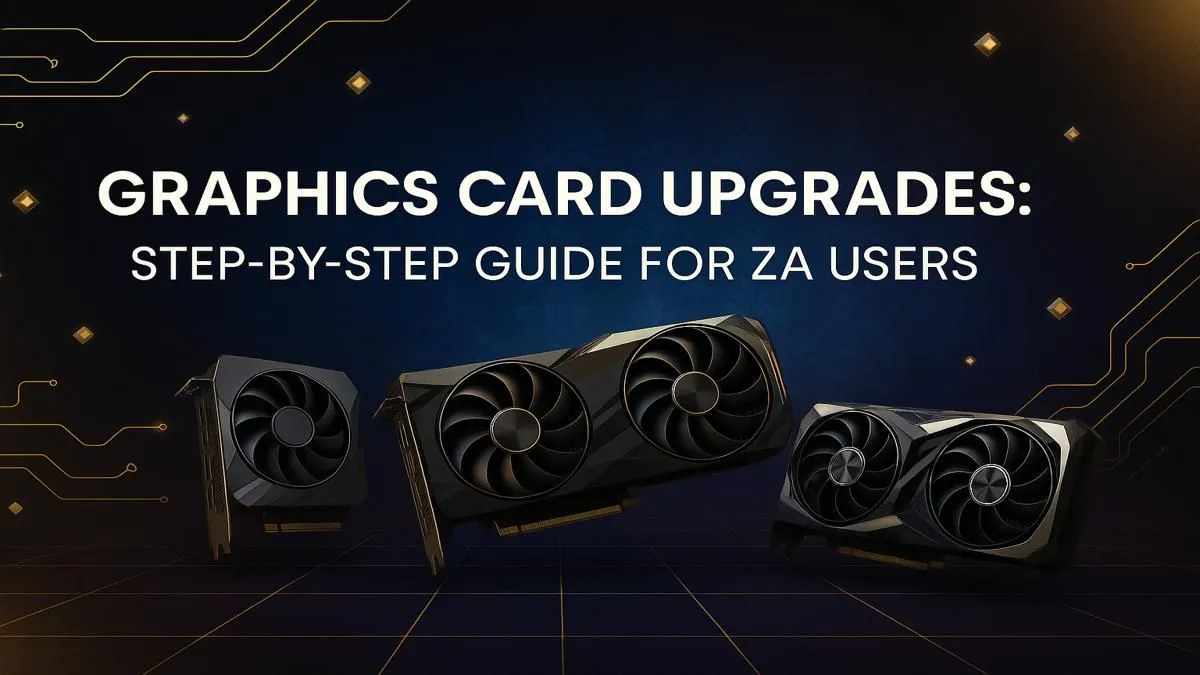
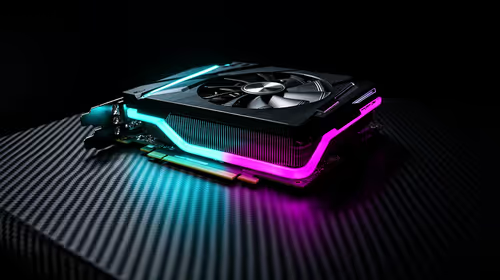
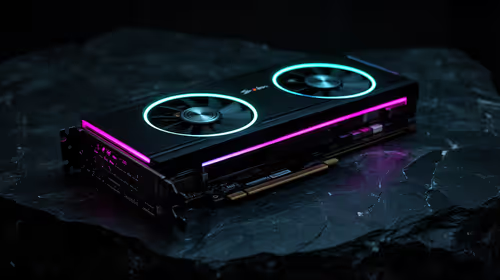
Is your PC starting to feel a bit sluggish? Are you tired of seeing choppy frame rates in the latest titles while your mates are enjoying silky-smooth gameplay? You're not alone. For many South African gamers, a graphics card upgrade is the single most impactful way to breathe new life into a gaming rig. This step-by-step guide will walk you through the entire process, from choosing the right card to getting it installed, ensuring your next upgrade is a massive success. 🚀
Your Graphics Card Upgrade Checklist
Before you even think about adding a shiny new GPU to your cart, a little prep work is essential. A successful graphics card upgrade depends on compatibility. Getting this part right saves you a massive headache later. Let's break down the three critical checks.
### Physical Space & Connections
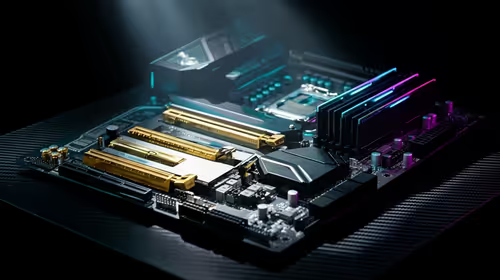
Modern graphics cards can be chunky. Seriously, some high-end models are absolute units. Grab a measuring tape and check the maximum GPU length your PC case supports (you can usually find this on the case's spec sheet). Also, peek inside and confirm you have a free PCIe x16 slot—it's the long one closest to your CPU.
### Power Supply Unit (PSU)
This is the big one. Your PSU is the heart of your PC, and a new GPU is a thirsty component. You need to check two things:
- Wattage: Does your PSU have enough total power? A new card's product page will list a recommended PSU wattage.
- Connectors: Does your PSU have the right power cables? GPUs need 6-pin, 8-pin, or the newer 12-pin connectors. Make sure your PSU has the ones your potential new card requires.
PSU Pro Tip ⚡
Can't find your PSU's wattage? It's usually printed on a sticker on the side of the power supply itself. You might need to open your PC's side panel to see it. If your PSU is underpowered, it's not just a performance issue—it can cause system instability and crashes. Always factor a potential PSU upgrade into your budget.
### The Bottleneck Question
In simple terms, a bottleneck is when one component holds back the performance of another. Pairing a brand-new, top-tier GPU with a very old CPU means your processor won't be able to keep up, and you won't get the full performance you paid for. You don't need the absolute best CPU, but aim for a balanced system.
Finding the Right GPU for Your Rig and Budget
Now for the exciting part—choosing your weapon! The GPU market is competitive, which is great news for us gamers. Your decision will likely come down to your budget and which ecosystem you prefer.
A solid budget for a great 1080p experience often starts around the R5,000 - R8,000 mark, while 1440p and 4K gaming will push you into higher brackets. The key is to find the sweet spot for the resolution you play at.
Team Green, or NVIDIA, is famous for its powerful ray tracing performance and DLSS technology, which uses AI to boost frame rates. If you want the best visual bells and whistles, exploring the latest range of NVIDIA GeForce graphics cards is a fantastic place to start.
On the other side, you have Team Red. AMD often delivers incredible raw performance for your money, and their FSR upscaling tech is an open-source alternative to DLSS that works on a wider range of cards. For pure value, it's hard to ignore the impressive lineup of available AMD Radeon graphics cards.
Ultimately, there's no wrong answer. Check reviews for the specific games you play and keep an eye out for a good price. You can often find last-generation cards at a lekker discount, offering amazing value if you shop smart. We always recommend checking the best current graphics card deals to see where you can get the most bang for your buck.
The Fun Part: Installing Your New Graphics Card 🔧
You've done your homework and your new GPU has arrived. It's time for the hands-on part of your graphics card upgrade. Don't be intimidated; it's easier than it looks!
- Prepare Your PC: Completely shut down and unplug your computer from the wall. Before you open the case, touch a metal part of the chassis to ground yourself and discharge any static electricity. For a truly clean installation, it's a good idea to run a tool like Display Driver Uninstaller (DDU) to remove all your old graphics drivers first.
- Remove the Old Card: Open your case. Unscrew the bracket holding your old GPU to the back of the case. Then, find the small plastic clip at the end of the PCIe slot on the motherboard and press it down to release the card. Gently pull the card straight out.
- Install the New Card: Line up your new GPU with the same PCIe slot. Press down firmly and evenly until you hear a satisfying 'click' as the retention clip locks into place.
- Connect Power & Close Up: Secure the new card to the case with the screw(s). Now, connect the required PCIe power cables from your PSU to the GPU. Double-check that they are seated securely. Put the side panel back on your case.
- Install New Drivers: Plug everything back in and boot up your PC. Your resolution might look a bit weird at first—that's normal. Head straight to the NVIDIA or AMD website, download the latest drivers for your specific model, and install them. After a quick restart, you're ready to game!
Ready for a Performance Boost?
A graphics card upgrade is one of the most rewarding projects a PC gamer can tackle. The jump in visual quality and smoothness is something you'll appreciate every single time you play. Explore our full range of graphics cards and find the perfect GPU to level up your gaming experience.