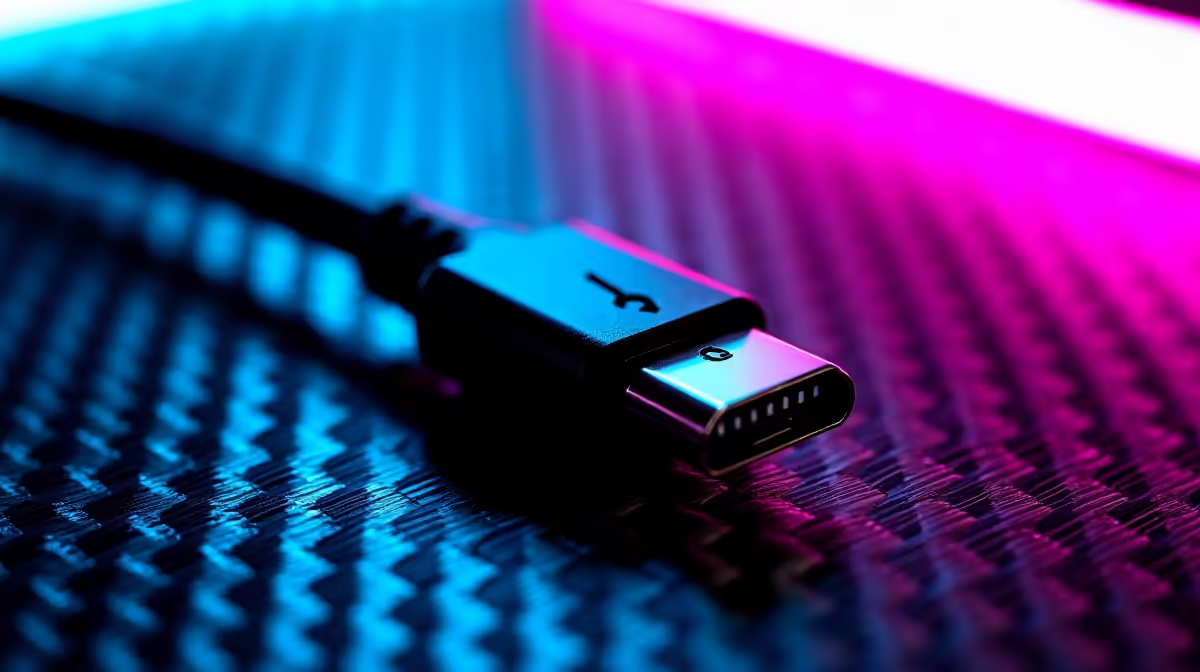
So, you’ve just unboxed a shiny new graphics card and a monitor that promises buttery-smooth frame rates. But wait... which cable do you use? That humble wire connecting your rig to your screen is more important than you think. The eternal HDMI vs. DisplayPort battle isn't just for tech purists; choosing incorrectly can literally bottleneck your performance. Let’s cut through the jargon and find the best cable for gaming in 2025 for your South African setup.
HDMI vs. DisplayPort: It's All About the Bandwidth
At its core, the debate comes down to one thing: data bandwidth. Think of it like a highway. A wider highway (more bandwidth) allows more cars (pixels) to travel at higher speeds (refresh rates). This is crucial for high-resolution gaming.
For years, DisplayPort was the undisputed champion for PC gamers, offering higher bandwidth than its HDMI counterpart. However, with the arrival of HDMI 2.1, the race has become much, much closer. The right choice now truly depends on your specific hardware and what you want to achieve.
When DisplayPort is Your Go-To Cable 🚀
DisplayPort is often the default choice for dedicated PC gamers, and for good reason. It was designed from the ground up for computer monitors and has historically been ahead of the curve in supporting the latest PC-centric features.
Key Advantages of DisplayPort:
- Higher Refresh Rates at Max Resolution: DisplayPort 2.1 offers a staggering 80 Gbps of bandwidth, comfortably handling resolutions like 4K at 240Hz or even 8K at 85Hz without compression. If you're pushing serious frames on a top-tier display, DP is your safest bet.
- NVIDIA G-Sync Compatibility: While some newer monitors are changing this, the gold standard for tear-free gaming has traditionally been a direct G-Sync certified monitor and a DisplayPort connection.
- Daisy-Chaining: Got a slick multi-monitor setup? DisplayPort's Multi-Stream Transport (MST) feature lets you connect multiple monitors to a single port on your graphics card. It’s a clean and efficient way to manage your cables.
For competitive gamers using high-refresh-rate screens from gaming specialists like AOC, DisplayPort is almost always the answer.
Check Your Ports! ⚡
Always check the version of the ports on both your GPU and your monitor. Having an HDMI 2.1 cable won't help if your monitor only has an HDMI 2.0 port. The connection will default to the lowest spec in the chain. You can usually find this info on the manufacturer's product page or in the manual.
When HDMI Fights Back
Don't count HDMI out. Once seen as the "console and TV" cable, the HDMI 2.1 standard is a powerhouse that makes it a serious contender for the PC gaming crown. It’s now found on many of today's high-performance PC monitors.
Key Advantages of HDMI:
- Console & TV King: If your gaming setup doubles as an entertainment hub, HDMI is essential. It's the standard for PlayStation 5, Xbox Series X, and virtually all modern TVs. Features like eARC (Enhanced Audio Return Channel) are perfect for connecting to soundbars.
- Variable Refresh Rate (VRR): The HDMI 2.1 specification fully supports VRR, which is the secret sauce behind smooth gameplay. This allows it to work beautifully with technologies like AMD FreeSync, found on a massive range of monitors with FreeSync support.
- Simplicity: One cable for your PC, your console, and your TV. For many gamers, especially those who aren't pushing the absolute limits of 4K 240Hz, the convenience of HDMI 2.1 is a major win. Many excellent Adaptive Sync displays offer fantastic performance over HDMI.
The Verdict: So, Which is the Best Gaming Cable?
For South African gamers in 2025, there’s no single "best" cable… there's only the best cable for your gear.
- For the Esports Pro / High-Refresh Enthusiast: If you have a 240Hz+ monitor and a top-end GPU, DisplayPort is your champion. It guarantees the maximum bandwidth for the highest frame rates.
- For the All-Rounder Gamer (PC + Console): If you have a PS5 or Xbox Series X alongside your PC connected to a 4K 120Hz or 144Hz monitor, HDMI 2.1 is likely your perfect match, offering incredible performance and versatility.
- For the Multi-Monitor Maverick: If you’re running two or three screens for gaming, streaming, or work, DisplayPort and its daisy-chaining capability is a lifesaver.
Ultimately, the choice between HDMI and DisplayPort depends on the ports on your devices. Always check what your monitor supports. Brands like HP and emerging Dahua gaming screens often include both, giving you the flexibility to choose what's right for your rig.
Ready to Unleash Your PC's Full Potential? The HDMI vs. DisplayPort debate ends with the right monitor. Your cable is only as good as the screen it's plugged into. Explore our massive range of PC monitors and find the perfect display to make every frame count.