Is your PC starting to feel sluggish, especially when you're multitasking or in the middle of an intense gaming session? Before you start thinking about a whole new rig, there’s a simple, cost-effective upgrade that can make a massive difference: installing more RAM. This guide will walk you through exactly how to install RAM in your desktop PC. It’s one of the easiest DIY upgrades you can do, giving you a noticeable performance boost in under 30 minutes. 🚀
Preparing for Your RAM Upgrade
Before you even touch a screwdriver, the most critical step is ensuring you buy the right memory for your system. Mismatched RAM simply won't work.
Key Compatibility Checks:
- DDR Generation: Your motherboard supports a specific generation of RAM, like DDR4 or DDR5. They are not interchangeable. Check your motherboard's manual or use a tool like CPU-Z to see what you currently have.
- Speed & Capacity: Check your motherboard's maximum supported RAM speed (measured in MHz) and total capacity (e.g., 64GB). While you can mix speeds, all modules will run at the speed of the slowest stick, so it's best to match them.
- Form Factor: For desktop PCs, you'll need DIMM modules. Laptops use smaller SO-DIMM modules.
For gaming in South Africa today, 16GB is the sweet spot for great performance, while 32GB is becoming the new standard for future-proofing and heavy multitasking. If you're curious about what modern systems are packing, check out today's best gaming PC deals to see the latest spec trends.
How to Install RAM: Your Easy Step-by-Step Guide
Got your new RAM kit? Lekker! Now for the fun part. This PC RAM upgrade process is straightforward if you follow these steps carefully.
- Power Down & Prepare 🔧
Shut down your computer completely, then switch off the power supply unit (PSU) using the switch at the back. Unplug the main power cable. To be extra safe, press the PC's power button once more to discharge any residual electricity. Place your PC on a stable, non-conductive surface like a wooden table.
- Open Your Case
Unscrew the thumbscrews or regular screws holding the main side panel in place (usually the left side when viewed from the front) and gently slide it off.
- Locate the RAM Slots
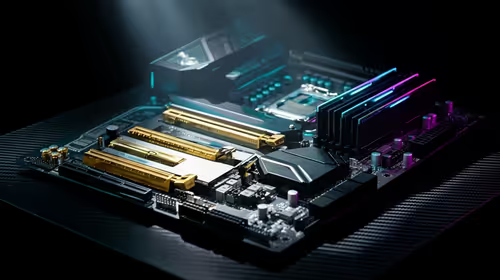
Look for the long, thin slots near your CPU cooler. Most motherboards have two or four of them. You’ll see small plastic clips or latches at one or both ends of each slot.
- Remove Old RAM (If Necessary)
If you're replacing old memory, gently push down on the clips at both ends of the RAM stick. They will pop open, and the module will tilt up, ready to be lifted straight out.
- Install the New RAM
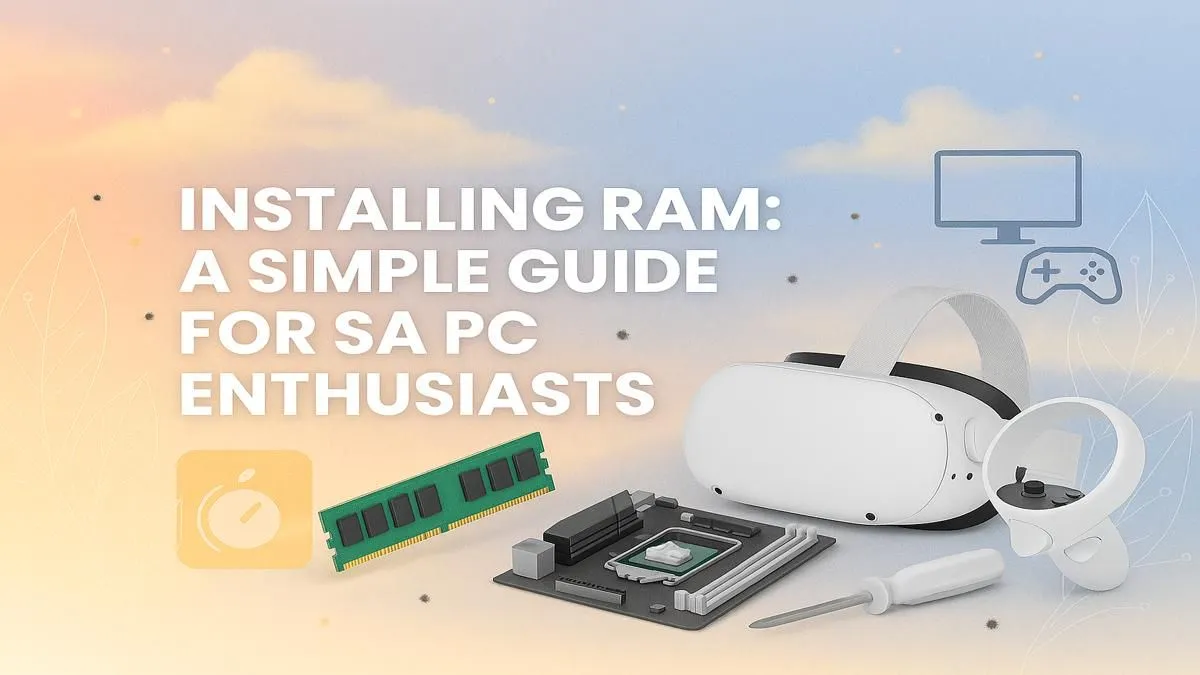
Align the small notch on the bottom of your new RAM stick with the corresponding bump in the motherboard slot—it only fits one way. Once aligned, apply firm, even pressure on both ends of the stick until it clicks securely into place. The side clips will automatically lock down. That satisfying click means your memory installation is likely correct.
Pro Tip: Dual-Channel Power ⚡
If you have four RAM slots and are installing two sticks, check your motherboard manual for which slots to use for optimal dual-channel performance. It's usually the second and fourth slots (often labelled A2 and B2), but it's always best to confirm!
If this process feels a bit daunting, or if your machine is showing its age in other ways, upgrading to one of our range of budget gaming PCs can give you a fresh start with modern components and a full warranty.
What to Do After Installing Your New RAM
You’re almost there! Before you jump back into your favourite game, there are a couple of quick checks to ensure everything is running perfectly.
First, close up your case, plug everything back in, and boot up your PC. Your computer should start normally. To confirm Windows recognises the new memory, right-click the taskbar, open Task Manager, and go to the Performance tab. Click on Memory, and you should see the new total amount of RAM listed.
Next, for the gamers and power users, restart your PC and enter the BIOS/UEFI (usually by pressing DEL or F2 during startup). Look for a setting called XMP (Extreme Memory Profile) for Intel or EXPO/DOCP for AMD. Enabling this will ensure your RAM runs at its advertised top speed, not the slower default setting. ✨
A simple RAM upgrade can breathe new life into many systems, especially if you're building one of the many well-balanced gaming PCs under R20k where every component choice matters.
Is a RAM Upgrade Enough?
While adding more RAM is a fantastic performance booster for multitasking and gaming, it can't solve every problem. If your PC still feels slow after the upgrade, you might be facing a bottleneck elsewhere in your system.
- CPU Bottleneck: An older processor might struggle to keep up, even with plenty of RAM.
- GPU Limitations: Your graphics card is the king of gaming performance. If your FPS is low, the GPU is the likely culprit.
- Slow Storage: Upgrading from a hard disk drive (HDD) to a solid-state drive (SSD) is another upgrade that delivers a huge, noticeable speed increase.
If you're running demanding new titles and need serious power across the board, it might be time to look at a complete system overhaul. The technology in high-performance PCs over R20k is designed to work in perfect harmony, eliminating bottlenecks entirely. For a hassle-free, expertly built solution, you can't go wrong with exploring our latest pre-built PC deals.
Ready for a Lag-Free Experience?
Installing new RAM is one of the quickest ways to boost your PC's power. Whether you're ready for a DIY upgrade or considering a brand-new rig built by pros, we've got you covered. Shop our massive range of RAM deals and give your PC the firepower it deserves.