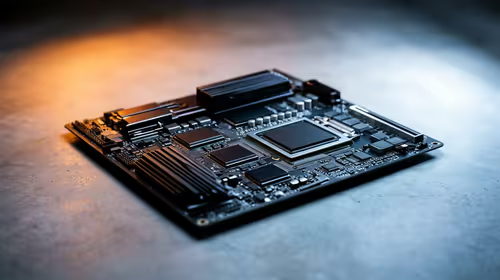
That tiny Mini PC on your desk is a marvel of engineering… until it spins up and sounds like a drone preparing for takeoff in your quiet home office. Is that constant hum driving you mad during late-night gaming sessions or Zoom calls? You’re not alone. Many South Africans love the compact power but hate the racket. The good news? You can significantly reduce Mini PC fan noise with a few clever tweaks, and this guide will show you exactly how.
Understanding Why Your Mini PC is So Loud
Before we can fix the problem, we need to understand it. A Mini PC packs high-performance components into a chassis a fraction of the size of a standard tower. This compact design is brilliant for saving space but creates a serious challenge for heat dissipation.
The main culprits behind excessive fan noise are:
- High Component Temperatures: The CPU and GPU generate heat. The hotter they get, the faster the fans must spin to cool them down.
- Blocked Airflow: Cramped spaces, both inside and outside the case, trap hot air.
- Dust Buildup 🧹: Dust is a great insulator… which is terrible for PC components. A layer of dust prevents heatsinks from working efficiently, forcing fans to work overtime.
- Aggressive Fan Curves: Default settings often prioritise performance over acoustics, spinning fans up at the slightest temperature increase.
The design of these compact powerhouses, like the ones found across our wide variety of Mini PCs, directly impacts their thermal performance and noise levels.
Simple Fixes to Reduce Mini PC Fan Noise Now
You don't need to be a tech wizard to achieve a quieter experience. These simple, effective steps can make a massive difference to your Mini PC's noise levels.
1. Give It Some Breathing Room
This is the easiest fix. Your Mini PC needs to breathe. Ensure its ventilation slots are not blocked by books, monitors, or pushed right up against a wall. Elevating it slightly on a small stand can also dramatically improve airflow from underneath, helping to lower temperatures and fan speeds.
2. A Thorough Dust-Out
Dust is the enemy of a quiet PC. Unplug your device, take it outside or to a well-ventilated area, and open the case according to the manufacturer's instructions. Use short, controlled bursts from a can of compressed air to blow dust out of the fans, heatsinks, and vents. Never use a vacuum cleaner, as it can create static electricity that may damage components.
Check for Rogue Processes ⚡
Before you blame your hardware, check your software! Open the Task Manager (Ctrl+Shift+Esc) in Windows and see if any unexpected application is using a high percentage of your CPU. A background process gone wild can max out your processor, forcing your fans to spin at 100% to cope with the heat.
3. Adjust Your Power & Fan Settings
Most Mini PCs allow you to control their performance profiles either in the system's BIOS/UEFI or through manufacturer-supplied software.
- Windows Power Plan: Navigate to
Settings > System > Power & battery and set the power mode to "Balanced" instead of "Best performance." This simple change can prevent the CPU from running at maximum speed unnecessarily. - BIOS/UEFI Fan Control: When your PC boots, press the designated key (often Del, F2, or F12) to enter the BIOS. Look for a "Hardware Monitor" or "Fan Control" section. Here, you can often select a "Silent" or "Quiet" profile, which tells the fans to spin slower at lower temperatures.
Advanced Tweaks for a Near-Silent Mini PC
If the basic steps aren't enough, it might be time for some more hands-on solutions. These require a bit more confidence but can deliver incredible results for achieving a truly quiet Mini PC.
- Apply New Thermal Paste: The thermal paste between your CPU and its heatsink can dry out over time, becoming less effective. Replacing it with a high-quality paste like Arctic MX-4 or Noctua NT-H1 can lower CPU temperatures by several degrees, directly reducing fan noise.
- Consider a Fanless Model: If absolute silence is your goal, the ultimate solution is to eliminate the fan entirely. If your current machine is still too loud after trying everything, it might be worth exploring the latest deals on Mini PCs, some of which are designed with passive, fanless cooling for whisper-quiet operation.
Choosing a Mini PC Designed for Quiet Performance
Sometimes, the best way to reduce mini PC fan noise is to choose a model that was engineered for quietness from the ground up. Brands that focus on superior thermal design often produce the quietest machines.
For example, many of the Minisforum Mini PCs available in South Africa are praised for their excellent cooling solutions that balance powerful performance with low noise levels. Investing in a well-designed unit from the start can save you the time and effort of trying to silence a poorly designed one later. It's the ultimate upgrade path to a peaceful and powerful setup. 🚀
Ready for Power Without the Noise?
Trying to silence a noisy PC can be a mission. Sometimes, the best upgrade is a new machine designed for quiet performance from the start. Explore our incredible range of Mini PCs and find the perfect silent powerhouse for your desk.