Staring at your screen, squinting to read tiny text or wishing you had more space for your timelines and tabs? You're not alone. It’s a classic PC user’s dilemma in South Africa, leading to the big debate: screen magnification vs high resolution. Is it better to digitally zoom in on your current display, or invest in a monitor with more pixels? Let's break it down so you can find the perfect visual setup for your rig. 🖥️
What Exactly is Screen Magnification?
Think of screen magnification as a digital magnifying glass built into your operating system (like Windows Magnifier or macOS Zoom). It enlarges a portion of your screen, making text and interface elements bigger and easier to see.
The Upside:
- Cost-Effective: It’s a free, built-in feature. No new hardware needed.
- Accessibility: It's an essential tool for users with visual impairments.
The Downside:
- Quality Loss: Because you’re just stretching existing pixels, images and text can become blurry, blocky, or pixelated.
- Lost Context: You can only see a small part of the screen at once, meaning you have to pan around constantly, which can be disorienting.
For many, it’s a temporary fix that works on all kinds of standard PC monitors, but it doesn't fundamentally improve the quality of what you're seeing.
The Crystal-Clear Case for High Resolution
High resolution, on the other hand, means packing more pixels into the same physical screen area. A 4K (3840x2160) monitor has four times the pixels of a standard 1080p (1920x1080) display. This isn't about making things bigger; it's about making them sharper and giving you more digital real estate.
The Upside:
- Incredible Sharpness: Text is razor-sharp, photos look true-to-life, and in-game details pop.
- More Workspace: You can fit multiple windows side-by-side without feeling cramped, which is a massive productivity boost.
- Better Scaling: A high-resolution display gives the operating system more pixels to work with when scaling text and icons, resulting in a much cleaner look.
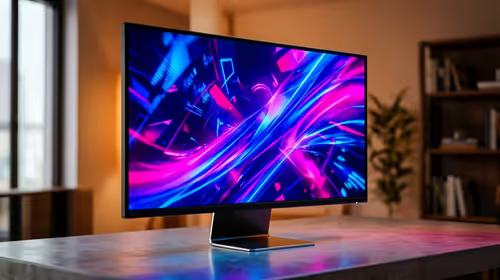
The difference is immediately noticeable on one of today's crisp 4K monitors, where everything looks incredibly detailed.
Get the Best of Both Worlds 🔧
A common complaint about 4K monitors is that text and icons can look tiny. The solution is display scaling. In Windows, right-click your desktop, go to 'Display settings', and set 'Scale' to 150% or 175%. This uses the high pixel density to render beautifully smooth, readable text that's a comfortable size, giving you sharpness and usability.
So... Screen Magnification vs High Resolution: The Showdown 🎯
The best choice really depends on your primary use case.
For the Gamers
There’s no contest here: high resolution wins. Spotting an enemy halfway across the map in Warzone or appreciating the stunning landscapes in Cyberpunk 2077 requires pixel-perfect detail. Screen magnification is simply not viable for fast-paced gaming. Investing in one of the many dedicated gaming monitors with a 1440p or 4K resolution and a high refresh rate is the way to go.
For Creators and Coders
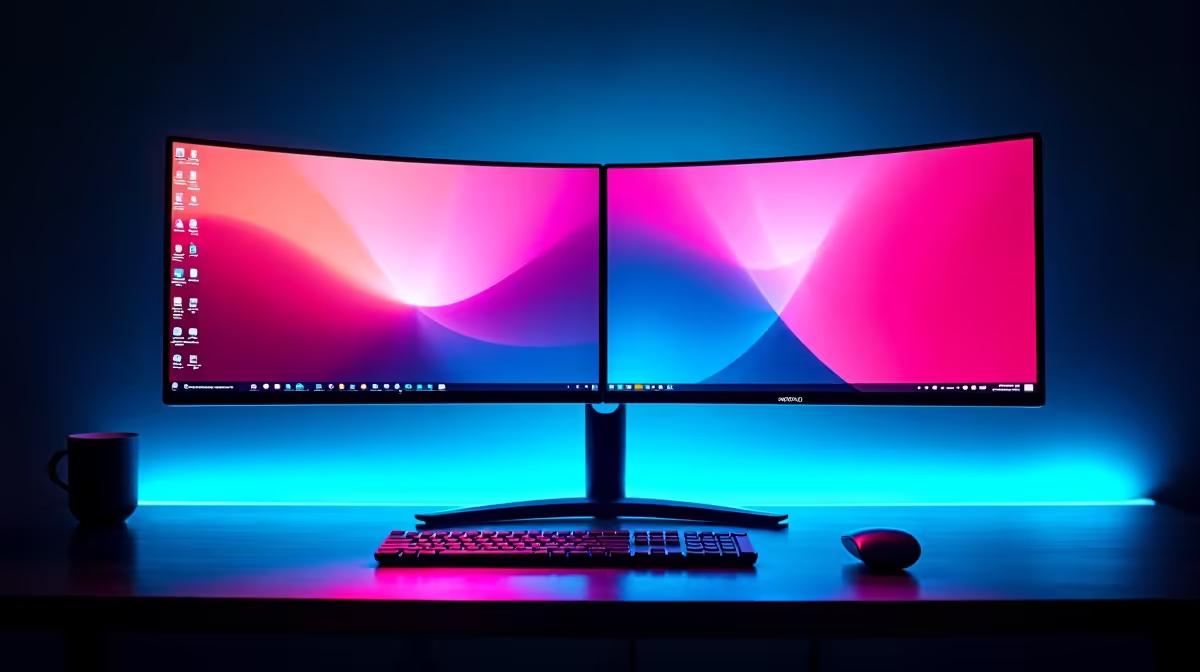
For video editors, graphic designers, programmers, and streamers, screen real estate is everything. A high-resolution monitor allows you to see your entire video timeline, have multiple code files open, or manage your stream and chat windows without constantly alt-tabbing. The clarity also reduces eye strain during long sessions. Many professionals in this space prefer immersive curved monitors to keep everything within their field of view.
For Accessibility Needs
This is where screen magnification is the undisputed champion. It’s designed specifically to assist users with visual impairments, and no resolution can replace its core function. However, a high-resolution screen can still be a powerful partner, as it provides a much clearer, sharper image for the magnification tool to work with, reducing blurriness.
Beyond the Pixels: Other Factors to Consider
While the debate between screen magnification vs high resolution is central, don't forget other elements. The right setup can be even more flexible with one of today's versatile portable monitors for a second screen on the go. And ensuring you have a solid monitor arm or stand from a selection of quality monitor accessories can perfect your ergonomic setup. ✨
Ultimately, screen magnification is a software tool, while high resolution is a hardware upgrade. For most users looking to improve their daily computing experience, investing in a higher resolution monitor is the superior long-term solution.
Ready to See the Bigger Picture?
The debate over screen magnification vs high resolution often points to one solution: a better monitor. Upgrading your display isn't just about size; it's about clarity, productivity, and a more immersive experience. Explore our massive range of PC monitor deals and find the perfect screen to conquer your world.